Aviation Safety

June 1, 2007, Loa, Utah, Christen Industries A-1 Husky

At 0825 Mountain time, the airplane collided with rugged terrain and was destroyed. The United States Department of Agriculture (USDA) was operating the airplane, owned by the Utah Department of Agriculture and Food as a public use flight to spot and shoot coyotes. The Commercial pilot and the passenger, who was serving as a gunner, sustained fatal injuries. Visual conditions prevailed.

Read More »

June 1, 2007, Chandler, Ariz., Cessna 340A

The pilot took off around 1530 to troubleshoot a landing gear anomaly. After departing the airport area, he cycled the landing gear, and upon getting questionable indications in the cockpit of gear position, he requested another aircraft confirm his landing gear configuration. Once he got the confirmation that all three wheels were down he proceeded back to the airport.

Read More »

June 2, 2007, Parowan, Utah, Lancair IV-P Experimental

At about 1315 Mountain time, the airplane made a forced landing following a loss of engine power. The Private pilot and single passenger were not injured; the airplane was substantially damaged. Visual conditions prevailed; an IFR flight plan had been filed. The pilot reported the airplane was cruising at FL260 when the engine quit and he saw smoke coming out of the exhaust. He performed an emergency descent to 15,000 feet, and at 12,500 feet attempted an engine restart, which was unsuccessful. He proceeded to the nearest airport and performed a no-power landing. After touchdown, the airplane continued down the runway, off the end, and into terrain and a fence.

Read More »

June 4, 2007, Upland, Calif., Piper PA-34-200

The airplane collided with houses while on final approach at about 1022 Pacific time. The Certified Flight Instructor received serious injuries while the Private pilot undergoing instruction and one passenger sustained minor injuries. The airplane sustained substantial damage. Instrument conditions prevailed; no flight plan had been filed.

Read More »

Flight Landing Alternates Made Easy

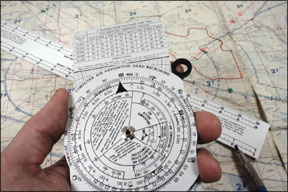
Flight under instrument flight rules (IFR) is largely procedural. Theres little room or tolerance for zany spontaneity so, if you love surprises, look elsewhere. But although we fly by the book, when the plot thickens, we do in fact have options (although theyre more like regulatory provisions) for choosing a different ending. Usually, the thickening agent affecting our best-laid plans is weather-related. Before we can exercise that freedom of choice, however, IFR pilots must fulfill certain obligations. Some of these rules are similar to those for VFR flight, such as how much fuel we should have on board. Some, however, go literally a step beyond, such as the requirement for specifying an alternate destination (as well as hopefully having some rough plan for getting there). The idea of even thinking of an alternate airport may be foreign for some newly anointed VFR pilots, but in the IFR world, its a well-known commodity.


Read More »

The Other Grounding

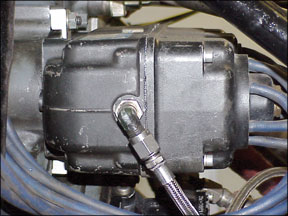
Those of us flying aircraft with reciprocating engines should be performing what is commonly referred to as a mag check, or magneto check, prior to every flight. During the engine run-up, we turn the ignition key to the Left position to disengage or ground the right magneto, noting the rpm change, before turning the key back to Both. We then repeat this process by turning the key to Right to ground the left magneto. In addition to noting the rpm drop, if any, we also should be examining other instrument indications-fuel flow, if so equipped-and especially, the EGT values presented on a multi-probe engine monitor if one is installed.

Read More »

Cruise Flight Dynamics

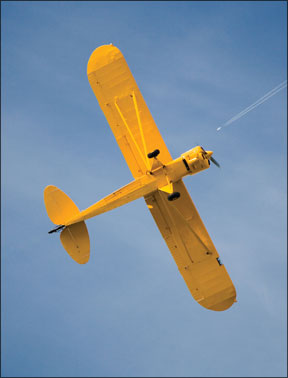
Unless youre someone like Sean Tucker or Patty Wagstaff, or one of the Blue Angels, you probably spend most of your time in the left seat of an airplane flying it straight and level. I know I do, since Im usually going somewhere, even if its only a quick flight to and from a nearby airport to warm the oil before changing it. Meanwhile, we spend a lot of time worrying about the aerodynamics associated with stalls, slips, spins and such, even though we rarely find ourselves performing those maneuvers.

Read More »

Its Not Just Aviation Talk

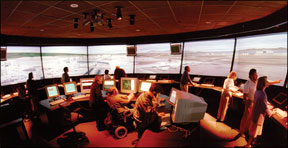
Communication is something we all take for granted; we talk, somebody else listens, somebody else talks, we listen, so whats so complicated about that? Actually, more than you might think. What, for example, if youre speaking French to someone who doesnt understand French? Or maybe someone who speaks your language misinterprets something you said, or doesnt understand something you were talking about. You were certainly speaking clearly enough.

Read More »

From Bad To Worse

The old saying about gear-up landings-“There are those who have and those who will”-applies to all of us flying retractables. Perhaps a fatalistic outlook, its also an admonition to perform those pre-landing checklists at least once each flight. Beyond that, the saying also admits few, if any, have died or were even seriously injured in a gear-up landing. Depending on the circumstances of such misfortune, the airplane might be only minimally damaged. While few of us fly DC-3s, that airplane and others like it are quite capable of landing without the gear extended, likely damaging only the props. Check the engines, hang new props, jack the airplane and its good to go.

Read More »
Pilot in aircraft
Sign-up for newsletters & special offers!

Get the latest stories & special offers delivered directly to your inbox.

SUBSCRIBE