Aviation Safety

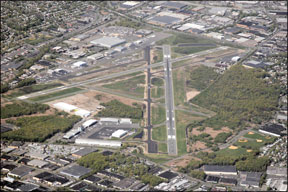
Letting Down Easy

Proper flight planning is extremely important and a vital component for your safety and the safety of your passengers. Just as we plan the takeoff, climb, cruise and landing phases of flight, we also should be thinking about and planning our letdown. Among the variables to consider are power settings to accommodate our approach profile, airspace or known ATC restrictions, aircraft operating limitations and any weather averse to a smooth, efficient descent. As our letdown continues, we monitor our progress, calculate for time and distance, adjust our plan by jockeying power, pitch and speed. The idea is to complete the flight with a textbook landing so we can score another victory for proper flight planning.

Read More »

IFR Into VMC

If youre Instrument-rated and current, you almost certainly own at least a modest complement of IFR charts and approach plates. Of course, the odds are you still make a number of flights under VFR and, if youre like me, you probably always have a couple of current Sectionals in your flight bag. But many Instrument-rated pilots from time to time find themselves so accustomed to the IFR “system” that the idea of going VFR and not talking to someone seated at a radar scope gives them the shakes. Also, flying a full VFR traffic pattern has been known to induce severe trauma in even the most jaded IFR pilots.

Read More »

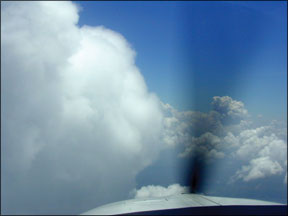
Why It Went Wrong

Mishaps happen for a number of reasons, but all too often theres a “what were they thinking?” element to an NTSB accident report. In the calm, clear skies of retrospect-or a motionless easy chair-its easy to condemn a bad decision and move on. But its not usually a single bad decision that causes tragedy. Pilots dont take off intentionally choosing to put themselves in a no-win situation; they dont mean to kill themselves, their families and friends.

Read More »

The New ADIZ

Some airspace designs are badly done. Some have “badness” thrust upon them. The Washington Air Defense Identification Zone (ADIZ), cobbled together by Notam in early 2003 as a “temporary” measure in preparation for the invasion of Iraq, managed to incorporate both extremes. Along with a “zero-tolerance” approach to even the most cursory and innocent violation, the Washington ADIZ became an operational burden, cartographic nightmare and growth industry for enforcement, all at the same time.

Read More »

Can I Land On That?

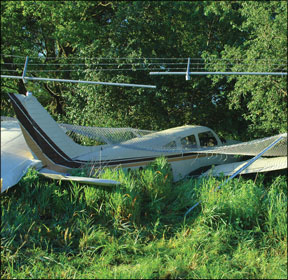
You are a skilled, proficient and responsible pilot. You do everything in your power to avoid dangerous situations but there are a few unavoidable moments during each flight where, if the unthinkable happened, youd be left with few options. Flying is, after all, an exercise in risk management, not risk elimination.Imagine that youre departing from Mega City Municipal. With a healthy climb rate established, you tuck away the landing gear, set climb power and prepare to enter the soup. Just as the airport fence slides underneath the belly, your sole engine shivers and goes silent. Youre only 500 feet above the ground, so turning back to the runway is not a reasonable option. You look out the window and all you see is a patchwork of gray and black boxes. Can you land on that stuff?

Read More »

Night Vision

Theres no question flying after the sun goes down is different. Many of the things we take for granted in the daylight-the scenery, the speed sensation, better terrain avoidance to name but three-simply arent available. The same airports we fly to and from in the daytime look…different. Ramps bathed partly in darkness and partly in yellowish or bluish glows appear cleaner, perhaps, more antiseptic. The runways and taxiways, too, take on a different appearance, hidden between rows of blue and white jewels.

Read More »

Ground Reference

I had been flying back and forth from Buffalo to New York City for some time. One weekend I decided to give my father his first airplane ride. He had never been off the ground, even in an airliner. On a nice calm weekend, I decided to fly him from his home in New York City to where I lived in Buffalo.

Read More »

Subsidies

Whos subsidizing whom? For months, the airlines and their trade association have been telling anyone who listens that airline passengers are subsidizing corporate jets and other non-scheduled air transportation system users. In-flight magazines, e-mail to frequent fliers and the odd editorial found in compliant newspapers, among other outlets, have been used to distribute this message.

Read More »

Leaks and Shorts

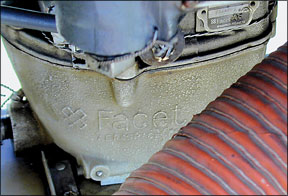
After sitting idle on a ramp for at least 10 months, the airplane underwent maintenance. A strong fuel odor was observed in the cabin; an exterior inspection failed to detect anomalies. The odor subsided. Once the engines were started and the fuel selector placed in crossfeed, the odor returned. After removing the floorboards, a heater duct running perpendicular to the crossfeed lines was observed to be in contact, causing corrosion. Pinhole leaks had developed in both lines, p/n 5300108-53 and -54.

Read More »

Stepping Out

Okay, okay, I know theres no such thing as “the step” (“Cruise Dynamics,” August). Or is there? Our Glasair One + One Half (half Glasair I, half Glasair II) has a strange cruise characteristic. Other Glasair FT pilots have observed this on their planes too, so were not alone. At cruise, at altitude, you can fly in level flight at one of two airspeeds, separated by only five knots and obtained by an almost imperceptible pitch change. My partner always flies at the slower of the two speeds because the airplane stops accelerating there as she levels from climb. Whereas I will set the nose to the known level flight attitude and fly at the higher speed. The only way she can get herself to fly five knots faster is to overshoot her final altitude by 100 ft and “dive” to get past the first level flight cruise speed, just like the proverbial step technique.

Read More »
Pilot in aircraft
Sign-up for newsletters & special offers!

Get the latest stories & special offers delivered directly to your inbox.

SUBSCRIBE