Aviation Safety

Busted Boost

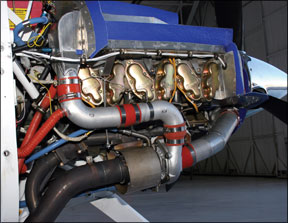
If you fly a turbocharged airplane, you know a different reality than the poor slugs who have to muddle along in the weather gasping for manifold pressure above 12,000 feet. Pilots with boost climb faster, fly higher and have more options in making altitude-related weather decisions. Nothing is for free, however, especially if you own an airplane with one or a pair of turbochargers. Youll pay more for overhauls and routine maintenance, and you may burn bit more fuel. You also know-or should know-a different reality with regard to potential system failures. Although theyre as simple as a bag of rocks, turbochargers are like any other mechanical device, so they occasionally fail, presenting sometimes perplexing symptoms you wont see from a normally aspirated engine. Lets consider some possibilities.
Read More »

Gliding With Precision

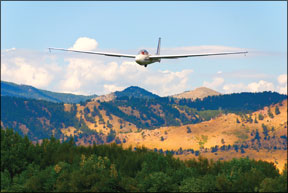
From almost our very first flying lesson, pilots are taught what to do in the event a single-engine airplanes lone powerplant fails. As with too many concepts at that early stage of our training, we basically accept what were taught without many questions. Later, as we gain experience, we begin to think more about those early lessons and try to apply to them what our experience has taught us. In turn, many questions can arise. If your airplane ever becomes a glider, you would suddenly become very interested in its new aerodynamics. How promptly and accurately you can remember to make the most of the variables at your disposal would play a large part in determining where and how softly you land. Lets take a look at those variables and how they can affect your emergency glide.

Read More »

Why Cant We Maneuver?

Most airplanes spend the vast majority of their lives in straight and level flight; climbing, turning and descending only as necessary to get on and off a runway. Its when pilots start yanking and banking, however gently and smoothly their control inputs, that problems start to arise-and the accident rate starts to increase. And when the yanking and banking takes place close to the ground, any error margin becomes slimmer still. In fact, according to the AOPA Air Safety Foundation (AOPA ASF) and its 2006 Nall Report, “maneuvering flight accounted for one-third of all fatal accidents” in 2005, the most recent year for which complete data is available.

Read More »

Flying In The Margins

In some ways VFR flying can be more challenging than flying under instrument flight rules. Apart from achieving the skill of being able to read and understand the instruments, controlling an aircraft solely by reference to them, talking to and taking notes from ATC and planning your next move-all at the same time-IFR flying is almost entirely built upon procedures. Compared to VFR flying, its about as intuitively challenging as rendering a picture by the use of numbered colored pencils. When the weather is marginal and youre flying under visual flight rules, the challenge comes from knowing how to interpret a different set of numbers.

Read More »

Someone To Watch Over You

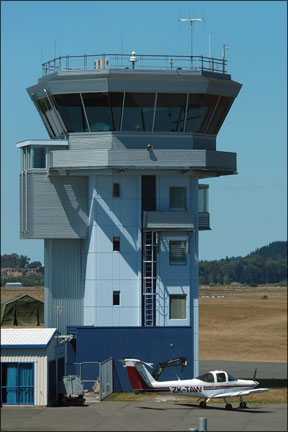
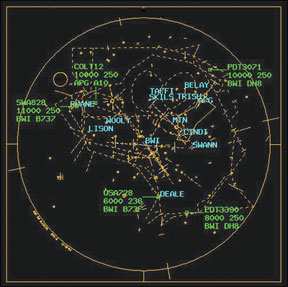
From their perches in the towers, approach controls and center work stations, air traffic controllers track us and guide us and provide valuable help when requested-and sometimes even when its not. Far from a separate society, controllers are an active part of the aviation safety team. From their unique vantage points, controllers have a pretty good idea of what works and what doesnt in aircraft movement. They know what pilots do right and what they might do better to fit into the system and get safely from departure to destination. I polled air traffic controllers to discover what we can be doing better to improve safety, fit into the flow of traffic, get the best possible information while en route, and perhaps expedite our handling and requests. Hear, then, the advice of aviations Watchers.

Read More »

Choice of Action

Almost by definition, pilots generally are self-reliant, often preferring to depend on their own talent and experience instead of someone elses. At the end of the day, choosing to fly a personal airplane is, well, personal. Sharing with others our enjoyment of aviation often is a trait among pilots, of course, but the take charge, Type A personality seems more prevalent. In the early years of commercial aviation, the lone pilot shepherding his or her flock of passengers across the country took on mythical proportion. Later, professionalism crept in, replacing “seat of the pants” flying with hard data. Soon, multiple pilots were added to the flight deck, becoming a crew, despite what some of the more hardened pilots may have wanted.

Read More »

Southern Exposure

As this issues deadline approached, the final disposition-if any-of the FAAs ill-considered proposal to impose user fees on general aviation is unknown. Although existing authorizations for the FAA and its programs are set to expire at the end of September, the final outcome of the user fee debate may not be known until well into October, if then. Two versions of the FAA legislation are moving in Congress, one in the House (H.R. 2881) and one in the Senate (S. 1300). Of the two, the House version lacks user fees; the Senate version would impose them, starting with turbine-powered aircraft.

Read More »

Its Not A VASI, Dummy

The sidebar discussion “Safer Descents” (September 2007) called the four horizontal lights in the pictures a “VASI” (Visual Approach Slope Indictor). In fact, what was photographed was a “PAPI” (Precision Approach Path Indicator). A VASI consists of two or three pairs of lights arranged in a vertical fashion. As its name suggests, a PAPI provides a more precise indication to the pilot of his aircrafts position relative to the set glidepath.

Read More »

July 9, 2007, Nichols, Fla., Piper PA-30

The airplane crashed on a dirt road in a mining facility at about 0815 Eastern time. Visual conditions prevailed. The Airline Transport pilot and passenger received fatal injuries; the airplane was destroyed. Shortly after takeoff, a witness working in the mining facility heard an airplanes engine go into idle or shut off. He looked up and the airplane was at about 800 feet agl in a nose-down dive, spiraling counter-clockwise.

Read More »

July 10, 2007, Sanford, Fla., Cessna 310R

At 0835 Eastern time, the airplane was destroyed during a collision with trees and structures in a residential area while attempting an emergency landing. The Commercial pilot and the Airline Transport pilot aboard were fatally injured. Three people on the ground were killed and four others were seriously injured. A postcrash fire consumed the airplane and two single-family homes. Visual conditions prevailed.

Read More »
Pilot in aircraft
Sign-up for newsletters & special offers!

Get the latest stories & special offers delivered directly to your inbox.

SUBSCRIBE