Aviation Safety

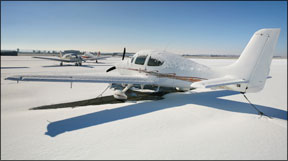
October 2, 2007, Green Valley, Ariz., Cessna 172N

At 1205 Mountain time, the airplane sustained substantial damage during a forced landing subsequent to a loss of engine power. The two occupants, a private pilot and a passenger, were not injured. Visual conditions prevailed; the flight originated approximately 20 minutes before the accident. The pilot later told investigators the airplane developed a rough running engine and he elected to land on a nearby road. The airplane collided with a road sign during the landing sequence, resulting in substantial damage to both wings.
Read More »

October 3, 2007, Grand Forks, N.D., Piper PA28-161

The aircraft was substantially damaged while exiting the runway after landing. The first-solo student pilot reported the tower controller requested the pilot exit at taxiway A2. The pilot reported that while he tried to comply with towers request, the airplane was still at 20-30 knots. The aircraft went off the runway into the grass and its left wing impacted the runway hold-short sign. There were no injuries. The pilot reported no mechanical malfunction.

Read More »

October 7, 2007, Naches, Wash., Cessna 208B

At about 1959 Pacific time, the airplane collided with terrain and was destroyed. The commercial pilot and nine passengers sustained fatal injuries. Visual conditions prevailed at the nearest official reporting station; a ground observer noted instrument conditions prevailed at the accident site.

Read More »

Cold Engine Starts

After watching me horse around with a Piper Cub one day years ago, an old timer gave me a stern look and the comment, “Son, that aint a car.” Even in my youth I realized it was a good point that applies to most aspects of aviation, but recently I recognized its wisdom concerning cold-weather starts. Everybody knows that preheating aircraft engines is recommended, but so is exercise and a good diet. You dont preheat your car to drive to the airport, so whats the big deal? One engine is much the same as another, isnt it? Not really. The main difference between automobile engines and airplane engines is the materials they are made of. And the oil they use. And the fuel they use. And the machines they power. And the way they are operated. Okay; just about everything involving airplane engines makes cold-weather preheating important.

Read More »

Blinded By The Night

Returning home from a week-long business trip late on a Sunday evening, you pull into your driveway and realize you forgot to leave on the lights inside your house. You fumble the key into the lock, push the door open and grope the foyer wall until you find the light switch. You know this place intimately by sight during the day, but in the dark it seems oddly unfamiliar. Landing at your home airport at night evokes a similar experience for many pilots, and arriving after dark at an airport youve never visited before can be quite disconcerting. But with thorough planning and the proper training, landing at night doesnt have to feel like stumbling into an amusement park fun house.

Read More »

Underrated

Way back in the Dark Ages, when we were younger and less experienced in airplanes, a buddy and I spent a long holiday weekend huddled in my cold, dark Washington, D.C., apartment waiting on better weather. We had a Piper Archer II reserved for the period, along with a hotel room in Key West, Fla. Try as we might, we couldnt figure out how to get around an area of low ceilings and visibility perched in our path over the Carolinas. Both of us were in the early stages of work on the instrument rating; two half ratings doesnt equal one full rating.

Read More »

Cockpit Noise

As recently as 10 or so years ago, the idea of an aviation headset incorporating active circuitry reducing cockpit noise wasnt commonplace. Earlier, cockpits had become extremely busy, and reaching for a microphone every time ATC called proved to be a major distraction. Finally gone were the days when pilots and crews strained to hear the radio and each other, evoking memories of the takeoff scene from the movie Airplane! Headsets have become such a common-place item that we tend to take them for granted-we dont often pause to think much about the broader implications of an inferior headset. Having recently had the pleasure to test headsets in a laboratory for sister publication Aviation Consumer, I came away with a new-found appreciation for the fssafety benefits a good headset can provide.

Read More »

My Payne Stewart Moment

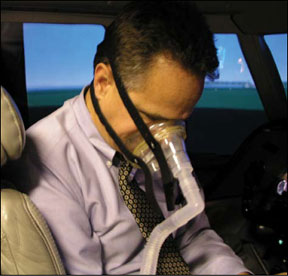
In that vast wasteland we call television, a clever commercial has been making the rounds lately. It depicts a hapless sad sack in a crumpled white suit bumbling through a nighttime cityscape setting off fires, floods and other assorted mayhem. The catchline is “risk never sleeps.” It sure enough doesnt, but the other essential element of accidents is opportunity. Consider this: In two years time, Cirrus Design will have sold more than 1000 turbocharged SR22s, each capable of effortless cruise in the mid-20s. The risk, of course, is hypoxia, and 1000 airplanes is enough opportunity to give an insurance executive ulcers.

Read More »

On a Mission: Managing Ice

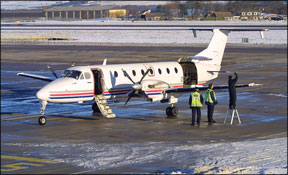
Aircraft utility can go down significantly in cold weather. Adverse weather is more common and tenacious than in warmer months, and along with the fog, low clouds and wind, there is often the threat of airframe ice. Yet we still want, and sometimes feel we need, to fly. How can we balance the possibility of airframe ice with the utility of our airplanes? How do the experts-those “on a mission” with their airplanes-predict, avoid and escape airframe ice? To answer these questions I spoke with professionals who slog through the weather every day (and night), flying high priority aeromedical, charter and air cargo in piston, turboprop and small jet aircraft.

Read More »

Judgment From Experience

Good judgment comes from experience, which often comes from bad judgment.” One sees that quote in many places and, on one level, its easy to understand. The irony is one must obtain some experience before understanding it on other levels. Like most young aspiring pilots of the day, I was building time flight instructing. This was in the early 1960s, when the trainer of choice was the Piper Colt. This was a very forgiving airplane, even though it didnt look like one. After shepherding a student through his private certificate, he purchased half interest in a Bonanza. He needed 25 hours of training to satisfy the insurance company, so off we went. After the required training, I endorsed his logbook. Soon, however, I watched him make a very short pattern with steep turns. Despite lecturing him many times on the respect he must have for this aircraft, I decided to show him first-hand.

Read More »
Pilot in aircraft
Sign-up for newsletters & special offers!

Get the latest stories & special offers delivered directly to your inbox.

SUBSCRIBE