Aviation Safety

March 2, 2008, Mammoth, Calif., Beech B36TC

At about 1620 Pacific time, the airplane collided with terrain, sustaining substantial damage. The private pilot received minor injuries and his passenger received serious injuries. According to the pilot, three or four minutes after takeoff, the engine started to lose power, but did not completely stop running. He therefore switched fuel tanks, checked the magnetos, activated the fuel boost pump, and switched to alternate inductions air. When none of these actions seemed to help, the pilot turned back toward the airport, but elected a forced landing on snow-covered terrain. He touched down with the landing gear extended in about three feet of snow. The impact resulted in crushing damage to the belly of the aircraft.
Read More »

March 3, 2008, Chandler, Ariz., Piper PA-28-161

The aircraft impacted terrain at about 0840 Mountain time during a go-around from a simulated engine-out landing. The flight instructor and his student were not injured, but the airplane sustained substantial damage. The flight was being operated in visual conditions. According to the flight instructor, his student was practicing a simulated engine-out approach, with the intention of executing a go-around during the last part of the final approach. The go-around was initiated when the airplane was about 100 feet agl by the student, who pushed the throttle to the full-forward position. The engine momentarily coughed and the airplane continued to sink. Just as the engine accelerated to full power, the airplane struck the ground on rough/uneven terrain. The accident sequence resulted in both external and internal damage to both wings.

Read More »

March 10, 2008, Abbeville, La., Cessna T210M

The airplane was destroyed at approximately 2023 Central time following a collision with terrain. The instrument-rated commercial pilot and passenger were fatally injured. Instrument conditions prevailed. The pilot was receiving vectors for an instrument approach to runway 04R. After acknowledging a heading of 335 degrees, radar showed the airplane turning through the assigned heading and continuing a clockwise turn. The last radar plot shows the airplane heading approximately 046 degrees at 1600 feet, with a groundspeed of 207 knots. The initial impact point consisted of a crater that measured roughly two feet deep, four feet wide and six feet long.

Read More »

March 16, 2008, Wildwood, Fla., Cessna 182B

At 0525 Eastern time, the airplane collided with a swamp and the ground while maneuvering. Night visual conditions prevailed. The airplane received substantial damage; the non-instrument-rated private pilot and one passenger were fatally injured. A witness later stated he heard an airplane approaching. He looked towards the west; the ceilings were between 800 to 1000 feet, and it was dark with very little ambient light. He observed the airplane flying from the west to the east, and the navigation and landing lights were on. The airplane appeared to be near the base of the clouds, and it passed north of his house and started a turn to the north. The airplane disappeared from view and he did not hear any change in engine noise.

Read More »

March 24, 2008, Venice, Fla., Piper PA 28-161

The airplane was substantially damaged when it impacted water at about 2240 Eastern time, shortly after takeoff. The solo pilot was fatally injured. Night visual conditions prevailed. The accident flight was the pilots first solo flight after completing a checkout with a local FBO. According to preliminary information, the airplane departed Runway 31 and was on a left crosswind leg when it descended and impacted the Gulf of Mexico, approximately -mile west of the shore. The wreckage was recovered the following day. Fifteen threads were measured on the stabilator trim jackscrew. According to the aircraft manufacturer, fifteen threads corresponds to a near full nose-up trim position, with 16 threads equating to full nose-up trim, and five threads equating to neutral trim. The airspeed indicator displayed 75 knots, the attitude indicator was tumbled to the right, and the vertical speed indicator displayed an approximate 2000-fpm descent.

Read More »

March 25, 2008, Bridger, Mont., Piper PA-28-181

At about 2150 Mountain time, the airplane collided with terrain, sustaining substantial damage. The solo private pilot sustained minor injuries. Night visual conditions prevailed. The pilot was conducting a solo, night, cross-country in preparation for obtaining a commercial pilot certificate. Approximately 45 to 60 minutes into the flight, the pilot subsequently reported encountering rain and snow at 7500 feet msl. He entered a standard rate turn to the left but received a terrain warning. The pilot immediately pulled up and did not recall the impact.

Read More »

LSA Engine Safety

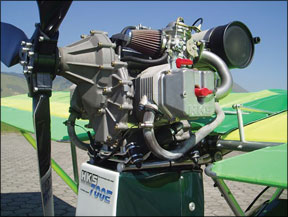
Aircraft engines these days come in a lot more flavors and configurations than they used to, thanks largely to the advent of two forms of alternative aviation: most recently, the light sport aircraft (LSA) market and, much earlier, the 1990s surge in experimental/amateur kit-built aircraft. Where some of the more-popular experimental designs and several legacy-S-LSA models employ familiar powerplants, the majority fly with engines from BRP-Rotax in Austria, HKS in Japan and Jabiru in Australia. Who are these companies and whats their track record in making flying-machine engines? How do they compare to the “traditional,” FAA-certified offerings from Continental and Lycoming? Who sets the standards? And whats their safety record? These newer engines can spur concerns among ardent fans of the familiar, tried-and-true air-cooled flat aircraft engines from Textron Lycoming and Teledyne Continental Motors. Often, it seems, those concerns grow out of unfamiliarity. The differences in care and feeding and in systems fuels debates about their reliability and, in turn, safety of the newer engines.

Read More »

The Problem With Flight Instruction

Perhaps youve heard the riddle, “What do you call the person who graduates at the bottom of the class in medical school?” The answer: Doctor. The maxim being conveyed applies equally well to aviation: What do you call the pilot who has met the minimum standards set forth in FAR 61.183-187? Answer: Certificated Flight Instructor. Yet whether acting in the capacity of doctor or flight instructor, that individual is directly responsible for another persons well being. Others literally may live or die based directly on the doctors and the flight instructors knowledge and skills. The path to becoming a practicing doctor evolved to include a rigorous course of study and years of apprenticeship: college, med school, internship, residency, fellowship. The tradition in aviation, on the other hand, has been to treat flight instructing as the bullpen for corporate and airline flying. Still clinging to this model, many instructors teach largely for their own benefit and not the benefit of their students. Instructing, after all, is supposed to be a transient phase; building time, the primary goal; low pay and high turnover at flight schools, expected.

Read More »

Compensating For Pilot Inexperience

Flight time and experience requirements are dropping nearly everywhere pilots are being hired. Some airlines will now hire pilots and put them in the right seat of a jet with no more than a commercial multi-engine ticket and the couple hundred hours required to get it. Critics think this will cause airplanes to fall out of the sky. Others claim improved training and rigorous attention to procedures makes the difference. Lets take a look at both sides of that debate, and see what lessons we can learn from that to improve our own flying. Theres no argument that experience builds skill and with that experience, hopefully, good judgment follows. Judgment can be taught to some extent, but as the saying goes, there is no substitute for experience. Were reminded of one instructor we knew who tried to pass along the lessons learned from his own experience. But he was quick to point out that he was just one person and with an infinite number of possible mistakes, hed only made half a lifetime of his own, so its important to have the judgment to avoid as many as possible and the skill to survive the rest.

Read More »

Flying an Aging Airplane

In 1985, I purchased a then-39-year-old 1946 Cessna 120. Several times my friends asked, “Is it safe to fly a 40-year-old airplane?” Their question was based on perceptions of the typical condition of 40-year-old cars, tools and houses. My answer was always a version of this: Properly maintained, a 40-year-old airplane is as safe as one much newer. Unlike cars and houses, airplanes are inspected annually and maintained to a high standard. As long as the pilot puts the time and money into it, and takes it to a mechanic experienced in the peculiarities of the type, it is indeed safe to fly a 40-year-old airplane. Fast-forward to 2008. According to AOPA, the average piston-powered general aviation airplane is more than 35 years old. Leisure suits, my high school graduation and the end of mass production of light propeller airplanes-1978 to 1979-were that long ago. Unlike when I bought my Cessna, now its not unusual at all for a light airplane to be 40 years old; 50- and even 60-year-old piston airplanes are increasingly common. Are airplanes this old still safe? What does it take to safely operate aging airplanes?

Read More »
Pilot in aircraft
Sign-up for newsletters & special offers!

Get the latest stories & special offers delivered directly to your inbox.

SUBSCRIBE