Aviation Safety

Flying Your Aircraft Above Its Gross Weight

I regularly fly my airplane some 250 pounds overgross. But, I do it legally, since its equipped with an STCd tip tank installation. The STC (supplemental type certificate) allows operation at a maximum gross takeoff weight of 3550 pounds, an increase of around 7.5 percent from the airplanes original 3300-pound gross weight when it left the factory. But theres no paperwork accompanying the admittedly older STC providing performance charts at the higher gross weight. Theres no question performance suffers at the higher weight, but Im legally allowed to use the older, lighter weight in computing performance. To compensate, I make sure I use runways of adequate length when operating at the higher weight and higher-than-published airspeeds, accepting a lower climb rate. The tradeoff is worth it. Whether by placing too much aboard, or putting it in the wrong place, loading an airplane outside its weight and balance envelope is relatively easy to do with most GA aircraft. Its one thing to know youre slightly over the gross weight and have the runway to handle it. Its quite another to overload the airplane and then fail to consider the impact on performance.
Read More »

Ahead Of The Airplane

Im a private pilot with (at the time) 1800 hours over 35 years. I have owned three airplanes, and now fly a Piper Archer. I had decided to reward myself with an instrument rating as a retirement present. I had to work during my ground school as the 60-year-old mind does not function like that of the 20-year-old, and the flying also was a challenge since hand/eye coordination is in about the same shape. Still, I had a fun time learning from my young CFI-I, who had been a good friend for some time. We flew mostly by his schedule, in weather, and even picked up ice during some training flights. It was great experience. When the time came for the long dual cross-country, we planned to fly from our base in Davenport, Iowa, to Iowa City and make a VOR approach to a full stop. We then would pick up a new clearance, fly to Omaha for an NDB approach and pick up my daughter who was stationed at Offutt AFB. Wed fly back to Davenport for an ILS.

Read More »

Chicken? Or Egg?

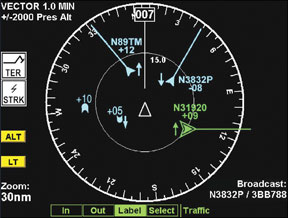
A news story appearing in August quoted a Washington think-tank member as blaming general aviation for the delays in implementing ADS-B, the underlying technology in the FAAs latest scheme to modernize the national airspace system and improve efficiency. Robert Poole of the ironically named Reason Foundation was quoted by online sister publication AVweb.com as saying, “Because aircraft owners balk at being forced to buy and install new gear until they get real benefits from it (and this is especially true of GA owners), FAA felt under strong political pressure to make the deadline as far off as possible (hence, 2020).” Itd be a wonderful thing if GA had that much clout at the FAA.

Read More »

Chafed, Cracked, Seized

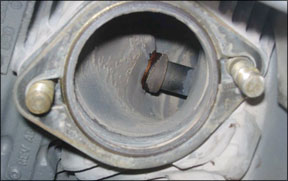
A mechanic writes, “Two aileron cables, one flap cable, and the fuel line are all routed through the l/h lower aft door post area. This fuel line is protected by a plastic sleeve, but an (aileron) cable wore through the sleeve (and began cutting) into the fuel line. This line (p/n 0500106-326) is approximately 20 inches long with four bends. I suggest a one-time inspection in case other aircraft might have this problem.”

Read More »

Aviation Questions And Comments

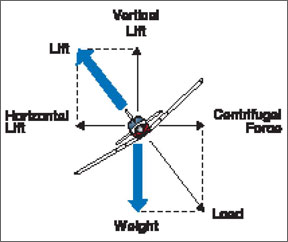
Referring to your September 2008 article, “Batteries Not Required”-a nice review of cross-country basics-I have a question and two comments. The question refers to the flight log: Why is “1.2” in the logs Time box when the block time was 1+35 or 1.6? One comment involves missing a possible teaching opportunity by not discussing MOAs, the planned route and altitude, and the floor of the Lemoore C MOA. The other comment involves the sidebar, “Lifts Horizontal Component,” which discusses steep turns and includes a quote from an FAA publication on the need to create additional lift in a turn. You then add your conclusion that “Increasing angle of attack, of course, increases the stall speed.” This is not the message I would want my students to gain from your article. Your statement is not true in the commonly practiced stall entries from 1G straight and level flight. There the increasing angle of attack doesnt “increase” stall speed. In truth, even in the situation under discussion-stalls while turning-it is the increased load factor that increases the stall speed. It can be argued that increasing angle of attack does often increase load factor (pull ups, turns, etc.) but wouldnt it be preferable to instead conclude that stall speed increases as a result of increasing load factor? That is a true statement always.

Read More »

July 22, 2008, Bountiful, Utah, Cessna 172M

The airplane experienced a loss of engine power on takeoff at about 1725 Mountain time and made a forced landing in a field. The certified flight instructor (CFI) and the student pilot sustained minor injuries; the airplane sustained substantial damage. Visual conditions prevailed. This was the first flight of the aircraft that day. The airplane could not maintain altitude. During the landing, the airplanes wheels sank into mud and the airplane nosed over. The CFI stated the fuel tanks were full before takeoff, and carburetor heat was off during the takeoff and emergency landing.

Read More »

July 23, 2008, Longmont, Colo., Beech 35-C33A Debonair

At 1008 Mountain time, the airplane was substantially damaged when its engine lost power and it landed short of the runway. Visual conditions prevailed. There were no injuries to the pilot and his passenger. According to the pilot, he was on final approach and, when he tried to adjust the power setting with throttle, the engine did not respond. He made a forced landing on uneven terrain short of the runway.

Read More »

July 25, 2008, Rosharon, Texas, Robinson R22

The commercial pilot was maneuvering the helicopter over a rice field when the tail rotor “dipped into the rice causing it to fail.” As a result, he lost control of the helicopter and it impacted the ground hard, causing the main rotor blade to flex and sever the tail boom.

Read More »

July 27, 2008, McMurray, Wash., Cessna 172N

At 1439 Pacific time the airplane was substantially damaged when it impacted trees while maneuvering. The commercial pilot and two passengers were killed. Visual conditions prevailed. The left and right wing were found separated from the fuselage and were located within the approximate 200-foot wreckage debris path. All primary flight controls were located at the accident site.

Read More »

July 30, 2008, West Chester, Penn., Eclipse Aviation EA500

The airplane sustained substantial damage at about 1830 Eastern time after running off the runway while landing. The airline transport pilot and the sole passenger were not injured. Day visual conditions prevailed. The pilot subsequently reported during a visual approach, he “set up for a normal approach” and “dropped gear” and “one notch of flaps.” A short time later he selected landing flaps. He believed that he was “a little high” on the approach so he “dipped down.” As he passed the runway threshold his speed was “a little high,” but he thought it was manageable. After touchdown, he “got on the brakes” and felt the airplane skid, but decided not to “go around” due to the “distance left.”

Read More »
Pilot in aircraft
Sign-up for newsletters & special offers!

Get the latest stories & special offers delivered directly to your inbox.

SUBSCRIBE