Aviation Safety

January 6, 2009, Three Rivers, Mich., Beech A36TC Bonanza

At 1729 Eastern time, the airplane collided with a frozen river. The commercial pilot and passenger on board were not injured. The airplane was substantially damaged. Visual conditions prevailed. The airplane picked up light rime ice during descent, breaking out at around 1700 feet MSL, or 900 feet AGL. The pilot was unable to see out of the forward windscreen so he had to look out the side window during the landing. As he neared the airport he attempted to add engine power, but was able to maintain only 17 inches of manifold pressure.

Read More »

January 10, 2009, Carson City, Nev., Cessna 172RG

The airplane landed with its right main landing gear partially at about 1130 Pacific time. The commercial pilot and flight examiner were not injured; the airplane sustained substantial damage. Visual conditions prevailed. When the pilot extended the landing gear, he did not receive a down-and-locked indication, observing the right landing gear was partially extended.

Read More »

January 1, 2009, Lancaster, N.Y., Cessna 172SP

The student pilot was conducting his first solo flight and had performed two uneventful stop and go landings. As the airplane accelerated during the third takeoff, it veered to the left. He applied right rudder; however, the airplane contacted a snow bank and nosed over, substantially damaging the airplane. The winds were calm and the ailerons were in a neutral position during the takeoff. He did not report any mechanical failures or malfunctions

Read More »

Anatomy of a Crosswind Landing

It never fails. You reserve the airplane for an early morning departure on the family vacation. Then the kids and the packing and the delays add up, so you launch hours late, and arrive at beautiful Lake Runamuck as one of the kids becomes spectacularly ill, the other is screaming about the dead batteries in the GameBoy, the turbulence reaches its glorious maximum, the winds are 270 at 15 gusting to 20, and the 75-foot wide runway is oriented north and south. The last two pilots in the pattern were using Runway 18, so you figure youll follow the crowd. You remember the maximum demonstrated crosswind component for this airplane is 17 knots. You know its not a limitation, but you consider it was a professional test pilot who did the demonstration, so, as you havent really done any serious crosswind practice for at least a month-okay, okay! It was six months ago and it wasnt pretty-so, maybe, despite your ingrained determination to complete the mission, you should admit to yourself your ability to control the airplane and make a safe landing under these conditions is not a sure thing. As common sense kicks in, you leave the pattern, add a little power and climb about 500 feet, then pull the power back, lean the mixture and take a minute to decide what to do. You recheck the airport diagram and see there is an east-west grass runway. Its only 2000 feet long. Why didnt you consider it? Well, because no one else is using it, its not paved and the FBO where you rented the airplane says no grass runway operations. It seems to you that right now, in high summer, landing on a grass runway into the teeth of a 15-to-20 knot breeze is a heck of lot smarter than landing at a 90-degree angle to that same wind. So, you announce your intention to land on Runway 27, fly the pattern and make a normal landing. Your spouse comments on how nice it is to land on the grass. You taxi in, holding the ailerons carefully for the wind and tie down the airplane. As you are picking up the bags to walk into the FBO you hear a horrible squealing noise as one of those airplanes in the pattern for Runway 18 loses control on the rollout, scrapes a wingtip and describes a graceful curling path right into the airport fence. You run to the site and help the stunned pilot and passengers out of the airplane.

Read More »

Flight Training for Fatigue Awareness

The news stories were hard to miss: On February 13, 2008, a go! Airlines flight crew, already weary from prior days of cycle-intensive flying, felt the warmth of the sun through the cockpit windscreen as they guided their 50-seat Bombardier regional jet to Hilo from Honolulu. The captain felt he just had to close his eyes for a minute; he succumbed, as did his first officer. The next thing they knew, ATC was calling. The flight was already well past the destination after some 20 minutes of snoozing, the crew mumbled something about radio problems, turned around and landed safely. They later conceded to investigators they had slept through prior calls. The first officer even noted he could hear the calls in his sleep-he just couldnt respond. go! Airlines, a division of Mesa Air Group, suspended the two pilots that day; in April the airline terminated them citing evidence that both airline pilots apparently fell asleep on the flight deck. The outcome for other sleepy pilots has too often been more tragic than comic. Even though studied to near exhaustion, the insidious effects of fatigue, sleep interruption and sleep deficit continue to plague pilots in their planes. You dont need to be an airline or corporate pilot, flying multiple segments two and three days in a row, to find yourself struggling to stay awake in the cockpit. You dont even need to fly long leaps across multiple time zones. Fatigue sets in from issues as innocuous as a business or vacation trips with upset routines-later bedtimes, earlier rising, more late-night alcohol or unusual eating times all can contribute. Even something as simple as disrupted rest cycles for two or three days contributes to a sleep deficit. And like financial deficits, a shortage of good rest must eventually be repaid. If not, the body may force compensation against your will-and next thing you know, youre asleep at the yoke.

Read More »

FIKI: Do You Really Need It?

The phrases “all weather” and “single-engine airplane” belong in the same sentence only for a select few pilots whose tolerance for risk is best described as elastic. What has always been true, remains true: One mans routine trip through cold clouds is another mans (or womans) agita-inducing nightmare. Of late, the industry has made remarkable strides in giving even the most risk-tolerant pilots better tools to detect threatening weather and deal with its consequences. Still, even for many experienced pilots, structural icing represents an exceptional terror. Ice forecasting has improved-even in the last five years-but intensity forecasting is still uncertain at best. And many pilots worry-irrationally in our view-about the FAA-legal definition of known icing. When is it legal to depart? When is it not? Do so-called inadvertent ice protection systems really buy you any risk mitigation? (Short answer: yes.) For some pilots, worrying about these fine details leads to distracting hand wringing. It really shouldnt. Seeing an opportunity in this conundrum, Cirrus Aircraft (formerly Cirrus Design) recently developed and will soon certify and ship what is, in our view, the most sophisticated and possibly effective integrated approach to ice protection for any single-engine piston airplane weve seen. And thats saying a lot, given the excellent TKS-based known-ice package that Mooney has offered for years, not to mention inadvertent and certified systems for Beechcraft and Cessna models, including the composite Bend, Oregon-built Corvallis line. Prior to Cessna buying the then-Columbia Aircraft Company, Columbia had dabbled in electric ice protection systems, but without much success. TKS is now the market leader in new aircraft de-icing systems. By way of definition, “inadvertent” means a system is designed to provide some margin of protection without being certified for flight into known ice.

Read More »

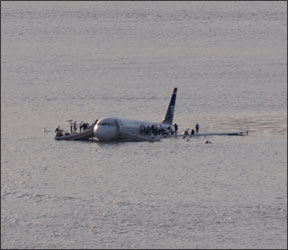
Successfully Ditching Jet Transports

The FAAs Aeronautical Information Manual, at paragraph 6-3-3, puts it bluntly: “A successful aircraft ditching is dependent on three primary factors. In order of importance they are: sea conditions and wind, type of aircraft, and the skill and technique of the pilot.” I maintain that the AIM leaves out one critical component of a truly successful ditching: The performance of the crew and passengers, together, during the aircraft ditching and subsequent evacuation of the aircraft. You want to know how I know? Ive been there. On June 14, 2001, I was piloting a Cessna 210 out of Key West, Fla., on an IFR flight plan heading to Grand Cayman Island. Onboard were my two daughters, ages 8 and 9, their babysitter, age 15, and a 20-year-old first-timer in my airplane. I was the only pilot and we were loaded to maximum gross weight. I did myself a favor the evening before by briefing the babysitter at the airplane, about her responsibilities both during the flight, and if there was a problem. Being a bantam weight, I decided her best seat would be in the rear, since it was probably the most difficult seat from which to egress. We talked about the slim chance that a problem would occur, and we talked about the options and safety equipment that I had onboard. I showed her how to don her life vest, where the life vests lived, and we talked about the importance of wearing them for takeoff and landing, when wed be low over the water, with no time for donning them. We briefed on the life raft, which sat between the seats and just behind me. Finally, I showed her the mini SCUBA rescue bottle, with its own regulator, that sits in the seat pocket directly in front of the rear seat passenger. I told her it would give her a couple of minutes, even if she was underwater, and I had her turn it on and take a breath, just so shed know.


Read More »

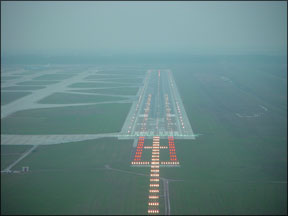
The Approach and Runway Lighting Patterns

The Boeing 737 collided with 75-foot high electronic transmission cables, approximately 7000 feet short of the runway. The crew had been flying a Runway 27 localizer back course approach when the first officer misidentified street lights on a stretch of interstate highway along the east airport perimeter, thinking the lights were part of the runway environment. The FOs callout influenced the captain to continue below minimums for the approach and into the power lines. The crew executed a missed approach and recovered successfully at a former military airfield. No one was hurt. The NTSB found several errors that contributed to the mishap. For one, ATC failed to provide accurate weather information to the crew, which might have warned them not to expect visual contact with the runway environment while still more than a mile short of the threshold. Controllers also failed to vector the aircraft onto the localizer outside the Final Approach Fix and “committed other errors in handling the flight,” according to NTSB, contributing to full-scale deflection of the localizer needle inside the FAF that called for a missed approach the crew did not make before impacting wires. Further, an FAA inspector conducting an en route inspection of the flight from the 737s jump seat did not inform the crew of the errors they were committing in the planning and execution of the approach. Ultimately, however, NTSB found the crews lack of approach planning, which among other things would have helped them visualize the type of approach lights to expect and when in the approach to expect them, was the probable cause of the crash.

Read More »

Night Flying In The Mountains

Our current flight training regime does a pretty good job at getting people with little or no aviation knowledge or experience through a checkride. However, it does a really lousy job of preparing people for the “real world” of operating personal aircraft. The popular way to express this characteristic is to label a private certificate as “a license to learn.” The same can be said for the commercial and flight instructor certificates, also. As but one example, it took me a long time after earning my private before becoming comfortable with the quality of my flight planning before I could launch on a cross-country flight with confidence. That confidence had less to do with whether Id reach my destination than it did whether I had the tools and knowledge to deal with problems cropping up along the way. Relatively fresh pilots with whom Ive met recently remind me of those days, so its easy for me to conclude things havent changed much. One example: So little of our flight training is spent climbing to cruising altitude and establishing an efficient cruise configuration. It took me forever to figure out that 2200 rpm in a Skyhawk at 1500 feet MSL was a lot different in power output and speed than the same 2200 rpm at 9500 feet. The former is a great way to putt around and train; the latter is a waste of time if youre trying to go somewhere and paying hourly rental fees. Another example is brought to the fore this month: How to predict and handle in-flight turbulence. Except for an elementary understanding of a VG diagram, theres very little in current curricula to help new pilots understand and predict where there will be major turbulence. Even relatively experienced pilots-at least by dint of certificates-havent picked up this knowledge nor have they learned what to do if they encounter it. Exhibit A of our evidence is offered herewith.

Read More »

Staying Okay

Im fortunate my wife wanted to learn to fly when I decided it was time for me to learn. We shared (and truly understood) the emotional highs and lows experienced by each other during our three-month journey to the private certificate. July 5 of 2004 was very foggy. Our instructors were bored, so they called us to see if we wanted to do some actual IMC. We jumped at the chance. At this point I was six weeks into my training, Id soloed and done one cross-country, but I didnt know what an approach was. The forecast was 800 overcast for the day, so all was good for an ILS return. I took off first; my wife was 10 minutes behind us with her instructor. After VOR tracking and other exercises, it was time for an approach back into home plate. My instructor “remembered” the localizer frequency, but never identified it. He reviewed the plate as I flew the vectors provided by ATC. Once I was on course, he took the controls.

Read More »
Pilot in aircraft
Sign-up for newsletters & special offers!

Get the latest stories & special offers delivered directly to your inbox.

SUBSCRIBE