Aviation Safety

November 5, 2010, Winchester, Tenn., Glasair III Experimental

At about 0918 Central time, the airplane was destroyed during collision with wooded, mountainous terrain following an uncontrolled descent while maneuvering. The private pilot and the pilot-rated passenger/builder were fatally injured. Visual conditions prevailed. The flight of two airplanes, lead by an airline transport-rated pilot (ATP) in a Swearingen SX300 Experimental originated in Florida with a planned fuel stop in Shelbyville, Tenn.

Read More »

Slow Down, You Move Too Fast

One of the reasons people become pilots is we like the idea of going fast. As children with a Radio Flyer wagon at the top of a hill, we learn very early going fast can be fun but also has some associated dangers, usually summarized as “going too fast.” Even though were older, presumably wiser and flying what might be the latest airframe with all the whiz-bang gadgetry in it we can afford, theres still such a thing as going too fast. Once the aircraft leaves the surface, using visual cues to determine the speed at which we are moving through the air isnt possible. Even while on the runway, if there is any surface wind, pilots know airspeed can be substantially different than the speed we appear to be moving.

Read More »

Trainings Future

The FAA rightly has taken its lumps on many things, leading to a healthy dose of skepticism among many in the industry whenever the agency tries something new. This is especially true whenever theres a rulemaking activity affecting general aviation training. I knew this, of course, when I began work as manager of the FAAs General Aviation and Commercial Division. After a few months in my new job, I began surveying the landscape, which included the Garmin 430 phenomenon (I installed one in my Bonanza, as well as a multifunction display and weather data link) and a visit to Cirrus highlighted the coming “glass cockpit” revolution.

Read More »

Self-Induced Pressure

Whenever we use a personal airplane for travel, we impose on ourselves pressure to complete the flight. The same is true of driving a car, weeding a garden or writing a magazine article: There is at least one thing we want to accomplish by engaging in an activity. The pressure may be subtle, and most of the time it doesnt affect the flights outcome, but its there. But pressure often is not the least bit subtle. On one extreme, maybe weve simply told someone were going to fly over someones house at such and such a time. If were late, or dont make the flight at all, we might be accused of wimping out, or perhaps of not being a good enough pilot to find the house.


Read More »

Gadgetry 101

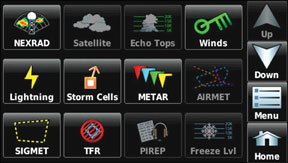
Those of us using a moving map with datalinked weather depiction-especially Nexrad radar-should be careful of relying on it too heavily. There are numerous stories of Nexrad not matching what the Mk. I, Mod. 1 eyeball displays. Heres mine. Last summer, my wife and I flew our 1976 Piper Arrow over to Great Harbor Cay Bahamas from Miami, Fla.s Tamiami Airport. We typically leave late morning to avoid afternoon thunderstorms. With our briefing, DVFR flightplan and Eapis paperwork taken care of, all we had to do was fly the route. Everything looked good from the weather standpoint, but in the summer things can and do change rapidly.

Read More »

Charting 2.0

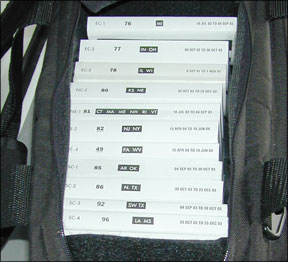
Although Ive been accused of having Luddite tendencies, Im usually open to trying new things and doing old things differently. That said, a few years ago, I regularly ranted about proliferating portable electronic devices (PEDs) in the cockpit, usually focusing on the maze of power and data cables required. “A safety hazard,” I pointed out to anyone who would listen.

Read More »

Bound To Fail

Several reports of cracked nose landing gear forks (p/n: 20-3220-08-00) on both left and right sides have been received by the FAAs Service Difficulty Reporting System (SDRS). The SDRS database records at least five such discrepancies, with in-service times ranging from 1926.7 to 573.6 hours.

Read More »

Right-Seaters

I appreciated your article and will endeavor to be more conscious of dealing when pilots are in the right seat (“Right Seat Tips,” October 2010) in the future. Several years ago, in a rented 172, while on final for Runway 27 at Oshkosh, Wis., to attend EAAs AirVenture, and after controllers directed a turn to base sooner than I would have done, I let a presumed more-experienced pilot in the right seat take the controls to demonstrate a slideslip. I will not do that again.

Read More »

October 1, 2010, Sparta, Mich., Cessna 182Q

The pilot observed two deer crossing the runway from left to right just after lifting off during the night takeoff. One deer was in front of him and the other was to the left of his path. He pulled back on the yoke in an attempt to avoid the deer, at which time he heard a loud “bang.”

Read More »
Pilot in aircraft
Sign-up for newsletters & special offers!

Get the latest stories & special offers delivered directly to your inbox.

SUBSCRIBE