











Aviation Safety

Assimilating Winter Weather

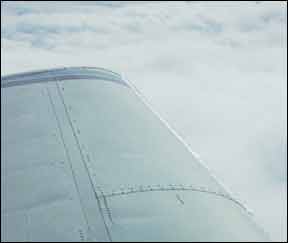
For those of us in the Northern Hemisphere, winter has arrived. Parts of the U.S. already have seen their first snowstorm of the season and some fair-weather pilots have resolved to hang up their headsets until spring. That’s unfortunate, since winter flying offers some of the most satisfaction pilots can have.Think about it: The air is colder and denser, so the aircraft performs better, the air is clearer, so you can see farther, and fewer of your peers will be clogging the traffic pattern. Flying over a snow-covered countryside can be a special treat, too.

Read More »

Turning The Prop

I frequently glance at sidebars to gauge the depth/value of an article before reading the piece itself. As a round-engine pilot, I got a chuckle out of the first item in the “Don’ts” list (“Preflight Inspections,” November 2011). “Don’t rotate a propeller. Ever.” Really? If you are talking about a round engine and you want to destroy it, that advice works. If not, you might want to check for hydraulic lock by rotating the propeller enough to make sure all cylinders go through at least one compression stroke before you attempt a start.

Read More »

September 1, 2011, Baton Rouge, La., Bombardier Inc. CL-600-2B19

At about 1642 Central time, a Bombardier CL-600-2B19 operated as Delta Connection Flight 5058, landed with its left main landing gear in the retracted position. The airline transport pilot captain, first officer, flight attendant, and 50 passengers were not injured. The airplane received minor damage. Visual conditions prevailed.

Read More »

September 3, 2011, Heber City, Utah, Enstrom 280FX

The helicopter was substantially damaged during an autorotation to the ground at 1221 Mountain time following a loss of engine power. The commercial pilot and his two passengers were seriously injured. Visual conditions prevailed for the local tour flight, which had originated approximately 20 minutes before the accident.

Read More »

September 4, 2011, Georgetown, Del., North American TB-25N

At about 1745 Eastern time, the airplane was substantially damaged during the landing rollout. The two pilots and crew chief aboard were not injured. Visual conditions prevailed. During the landing rollout, both pilots felt the right wing drop and heard a noise like “a blown tire.” They attempted to maintain directional control of the airplane, but the right wing dropped further and the airplane veered off the right side of the runway.

Read More »

September 4, 2011, Tehachapi, Calif., Cessna P210 Pressurized Centurion

The airplane sustained substantial damage from impact forces and a post-crash fire when it collided with trees at 1125 Pacific time. The pilot and passenger sustained fatal injuries. Visual conditions prevailed. Before takeoff, the pilot indicated to a friend he would fly over the friend’s home later that morning. The pilot’s friend, who is also a pilot, observed the airplane circling his home. He noted the landing gear and flaps were down.

Read More »
Pilot in aircraft
Sign-up for newsletters & special offers!

Get the latest stories & special offers delivered directly to your inbox.

SUBSCRIBE