Aviation Safety

October 12, 2011, Cornelius, Ore., Cessna 172P Skyhawk

During the training flight, the CFI initiated a simulated engine power failure. The student pilot trimmed the airplane for 65 knots and maneuvered to a nearby grass runway. During the landing roll, the airplane hit a “hole or obstacle” and the airplane bounced. The CFI applied power and aborted the landing.

Read More »

Slips Who Needs ‘Em?

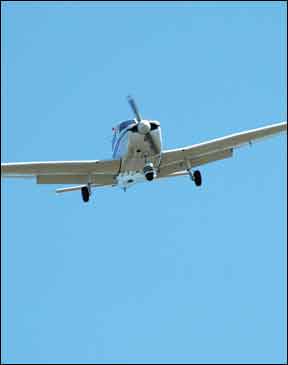
When was the last time you flew a slip? Are slips a necessary maneuver belonging in every pilot’s skill set? Or are they an aerial anachronism, a holdover from earlier flying days, with little application to the modern world? Slips originated in aviation’s early days, when most, if not all, airplanes lacked wing flaps. They were and are used to increase the angle of descent on approach, and to get the airplane’s nose out of the way of the pilot (who often sat well aft) to better see the runway ahead when landing. Given the genesis of the art of slipping, should we still be expected to master it?

Read More »

Trailing Edge Avionics Upgrades

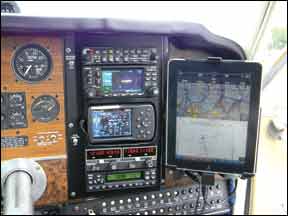
The dismal economy has been no help to the average aircraft upgrade budget. If you’ve recently solicited proposals for an ultra-modern avionics retrofit, you may have discovered the soup-to-nuts avionics upgrade you lust for probably isn’t affordable. Moreover, sinking half or more of the aircraft’s value into the panel pushes the boundaries of smart economics. Even the most modest of modern avionics upgrades could put the aircraft upside down financially. But that doesn’t mean you shouldn’t upgrade at all. In many cases, a budget that can’t afford the latest and greatest gear has the owner sitting on his hands. This leads to neglected panels while safety and utility hang in the balance.

Read More »

Safety Pilot Concerns

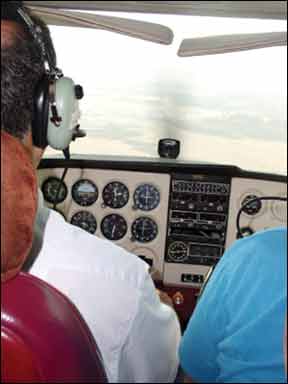
Staying current for IFR—with six approaches, some holding and course interceptions within the preceding six months—isn’t that hard for the active instrument pilot. When you enter engine replacements in your logbook instead of hours, you probably don’t need much in the way of practice. But the guy or gal who’s lucky to get their wings wet in some actual once or twice a year has a different challenge. Somewhere in the middle between the two extremes is where most instrument-rated pilots find themselves, of course. Regardless, even the ace of the base needs to go out occasionally and practice a few things, if for no other reason than to get through the next check ride.

Read More »

Midnight Special

The private pilot certificate is often referred to as a license to learn. In many ways, it is: Suddenly, that piece of plastic allows you to go pretty much where you want, when you want. Ideally, the private is a rung in the ladder of experience, leading to other ratings and certificates. Of course, there’s nothing wrong with remaining a VFR-only private pilot, as long as one recognizes and stays within its obvious limitations.

Read More »

Get Down, Slow Down

I am an active pilot with Pilots ‘N Paws, and was returning home to Wilkes-Barre, Penn., in my Piper Lance filled with dogs bound for their foster homes. The flight was progressing normally until we started picking up some trace icing at 7000 feet, so we elected to climb to 11,000 to find clear air and shed any ice. Without a turbocharger, I was not surprised to see the manifold pressure resting at 21 inches at 11,000 feet. But as I leveled off at 5000 approaching home plate, manifold pressure remained at 21 inches instead of returning to the 24 inches expected.

Read More »

Cracked, Shorted, Broken

When a new rear wing strut was received from the manufacturer, there were two longitudinal cracks in the strut in the electrically welded seam of the seamless strut tubing one foot from the upper wing strut fitting. The defect is obviously due to the tubing manufacturing process and not by secondary operations or weldments. It is likely the entire batch of raw tubing has multiple defects and should be located and inspected. It is also likely this batch of tubing was disseminated to multiple customers in addition to the manufacturer.

Read More »

Risk Management, Military Style

No matter what we do in an aircraft, we cannot eliminate risk entirely. Instead, we can manage that risk and take positive steps to mitigate or reduce it; in rare cases, we may even be able to eliminate it. An example of the latter might be cancelling a trip for poor weather, or because of a mechanical issue. But we should be mostly concerned with mitigating and reducing the risks our flying poses.. Of course, there are many ways to accomplish these goals. I believe most of us in general aviation have sat through a presentation or seminar discussing risk management.

Read More »

You Are The Judge

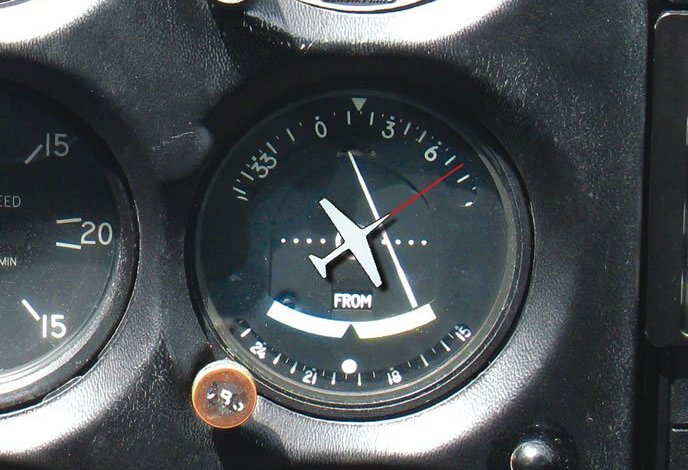
The little voice inside the pilot’s head nagged on and on: “Headwinds higher than forecast…groundspeed lower than planned…maybe you should recalculate your fuel?” The simple fact is pilots too often fail to act on their internal voices until it’s too late. Accident reports, NASA ASRS submissions and down-and-dirty, true-flight confessions in hangar flying debriefs tell the sad tale. According to NTSB data and analysis by the AOPA Air Safety Institute and the Flight Safety Foundation, improper decision-making—judgment failings, many of them—underpin the majority of the 75 percent of accidents attributed to “pilot error.” It’s not smart to ignore that little voice questioning why you’re ignoring your own best instincts. There are many scenarios where that little voice can start yammering in your ear, perhaps most especially whether there is sufficient fuel aboard.

Read More »
Pilot in aircraft
Sign-up for newsletters & special offers!

Get the latest stories & special offers delivered directly to your inbox.

SUBSCRIBE