Aviation Safety

November 23, 2011, West Milton, Ohio, Beech 23 Musketeer

At 2044 Eastern time, the airplane sustained substantial damage when it impacted terrain while maneuvering. The solo non-instrument rated private pilot sustained fatal injuries. Instrument conditions prevailed. According to friend of the pilot, he took off at 2038. Witnesses described the airplane as flying low near the tree tops.

Read More »

Three Out Of Four

As a 1700-hour pilot with what I consider a set of prudent and safe practices, I knew my initial 10-hour engine break-in flights would be VFR-only. Certainly, there was no reason to take chances. After liftoff on my second hour of break-in flights, I reported in to our local tower to make them aware I was out there flying around their Class C airspace, near Lexington, Ky. As I reported my altitude, 3000 feet, and well below the cloud deck, the friendly controller politely responded, “We show your Mode C as 2400.”

Read More »

AMOC For Cessna 150/152s

During an annual inspection, technicians found the l/h elevator balance weight (p/n 96-610022-7) detached from its mount. The r/h elevator balance weight was found both broken and loose on its mount. The detached l/h weight was able to shift position inside the elevator and cause an out-of-balance condition. This damage appears to be caused by vibration.

Read More »

IFR Emergencies

There you are, droning along in the clag, watching the autopilot watch things for you, monitoring the frequency and marveling at how the IFR system’s various parts mesh together. But you haven’t been paying attention to the ammeter, which is showing a steep discharge. Suddenly, your autopilot’s control panel goes dark, along with your older number two nav/comm, and the stable airplane you’ve been monitoring—not flying—for the last hour and half wants to pitch up and bank right. Congratulations: You’re about 15 minutes from completely draining the ship’s battery and total electrical failure in IMC. You’re also about 20 minutes from the nearest suitable airport, one with services like a maintenance shop. Did we mention it’s well past sundown?

Read More »

Gethomeitis

We’ve all been there: A personal or professional commitment encourages us to cut a corner or launch when otherwise we might not. The corner could be a mechanical deficiency with the aircraft, failing to obtain a weather briefing or taking off with minimal fuel. The pressure of schedules and commitments tempts us to do things like make a zero-zero instrument takeoff, shoot an approach in conditions below published minimums or stretch our fuel to the breaking point in the face of headwinds and the time it will take to make an en route fuel stop.

Read More »

Planning PFD Upgrades

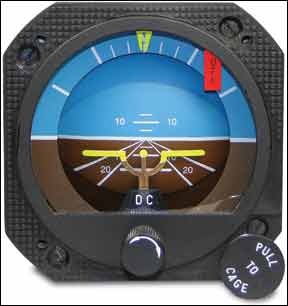
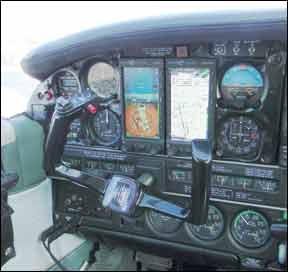
As an avionics guy, I tempt owners to pull the big-dollar trigger on PFD upgrades. At the end of the day, I usually sleep well because most new owners who take my advice to the bank marvel at the cutting-edge touch of a PFD. The jump from round-gauge to glass flight instrumentation brings serious automation, huge amounts of data in one screen and offers a needed jump-start to old autopilots. But wrapping your head around the electrical interface and how the PFD interacts with other critical systems is a necessary challenge for safe operations. This is a challenge for the information-challenged, and some pilots I’ve turned loose after upgrading their panel do make me lose sleep.

Read More »

Big Blows

One complication with which we pilots must always contend is wind. It can complicate a takeoff or landing, force heading changes while en route, mandate a fuel stop when stronger than forecast and make an otherwise smooth ride uncomfortable when blowing over uneven terrain. Learning to deal with the wind is one of the major lessons of primary training, yet the accident record demonstrates many of us still haven’t mastered the challenge.

Read More »

The Training Mix

In recent years, the general aviation community has complained our activity has grown too complicated and, as a result, applicants for the private pilot certificate now average about 70 or so hours before passing a checkride. Yes, aviation has gotten more complicated, but we should question the notion it takes that many hours in an airplane to become a competent private pilot. A corollary is that existing practices also can be improved to benefit existing pilots and enhance their recurrent training experience.

Read More »

Winter Flying Lessons

On the off chance you haven’t ventured outside in the last couple of months, it’s winter in the Northern Hemisphere. With it comes, of course, bitter cold in some areas, along with snow, ice, sleet, freezing rain, stiff winds and obscured runways. While winter flying can be some of the most satisfying of all, it’s best to approach this time of year with an open mind, a flexible schedule and warm clothing. And, as with so many other things involving aviation, experience counts.

Read More »

Interesting Times

May you live in interesting times” is often referred to as a Chinese curse, though its provenance isn’t clear. Unfortunately, the times have become increasingly “interesting” at the FAA. Most recently, Administrator Randy Babbitt’s resignation in the aftermath of his DUI arrest will leave the agency rudderless. Babbitt’s deputy, Michael Huerta, was named acting administrator but given next year’s looming general election, it’s likely Congress will refuse to even consider confirming a full-time replacement until at least January 2013.

Read More »
Pilot in aircraft
Sign-up for newsletters & special offers!

Get the latest stories & special offers delivered directly to your inbox.

SUBSCRIBE