Aviation Safety

The Day The Waypoints Died

Imagine you’re cruising high above an undercast, in smooth, clear skies. The GPS in your panel shows you making good time, with about an hour remaining to your destination. The Center frequency has been fairly quiet; you know there are a lot of other IFR airplanes out there, but everyone is settled into cruise so all you hear are the handoffs to the next sector or approach facility, or the occasional clearance for an approach into a rural airport. Then, without warning, your GPS advises it’s lost a usable signal. The magenta line by which you’ve been navigating direct to your destination airport disappears and you have no more groundspeed or position information. Everything else seems normal—it’s not an electrical failure, at least not to the airplane’s entire system—but you no longer have GPS navigation.


Read More »

Staying On The Runway

Ever wonder why we often refer to an airport as a “field?” One reason involves the relatively poor handling characteristics of early airplanes. What little was known about aerodynamics back in the day meant most airplanes were fairly unpleasant to fly and handled like the powered kites they were. Takeoffs and landings had to be into the wind, thanks to those abysmal handling characteristics. The airports in use then were, in fact, large fields, always allowing pilots to point into the wind for takeoff and landing. Thankfully, those days are gone, although those airplanes still can be fun to fly. Meanwhile, progress in designing both airplanes and airports has resulted in beautifully engineered facilities and machines capable of using them.

Read More »

When The Lights Go Out

Radio silence: that’s what most pilots say got their attention and made them realize they had encountered an in-flight electrical failure. Too bad, because by the time the radios no longer worked, odds are that your electrical system had sucked all the life out of your primary back-up device, your main battery. Many modern personal airplanes come with back-up electrical systems from the factory. But if you fly an airplane equipped as if was the standard just a few years ago, you had better hope you were in day VFR conditions if you found yourself in this pickle. Otherwise, it was going to be a mighty tough night and/or IFR flight without navigation equipment or communication radios (or lights, or power for flaps or landing gear). From my experience, electrical systems have to be an Achilles heel of any light piston aircraft. That said and even among modern aircraft, aircraft designers, in their infinite wisdom, have done anything but standardize the systems.

Read More »

Adding It All Up

Are we at risk of things that never happen? Can we be hurt by what we don’t know? The answers are “Yes” and “Yes.” From the start of training, one thing our instructors and mentors try to infuse in us is that knowledge is power, but only if we suitably use that knowledge and apply it to the tasks at hand. Conditions—of the weather, to be sure, but also the airplane and facilities we plan to use, as well as our own skills—tend to drive the risk to which we’re exposed. And the more conditions depart from the expected, the greater is the risk of something going wrong.

Read More »

Backing Up GPS

If you’ve been following the tale of LightSquared, a well-funded company which attempted to use radio frequency spectrum adjacent to that used by GPS, you may be aware how incredibly weak the satellite signals we use to navigate and shoot approaches really are. Thankfully, LightSquared, which I referenced in this space in our January issue, was recently denied approvals to build its terrestrial Wifi network in part because of its disastrous effect on GPS. But just because it appears LightSquared won’t be a continuing challenge to GPS doesn’t mean others might not appear.

Read More »

Engine Management

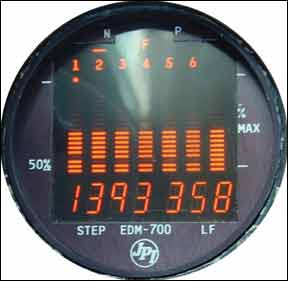
I am a huge fan of this publication and read it cover to cover every month. Thank you for this valuable contribution to aviation safety. The recent article by Amy Laboda (“Engine-Related,” February 2012) was excellent. I have a Cessna 182 with an engine monitor, but feel I need an education in using it properly. I do not find it in the manual provided. I recently lost a cylinder to a stuck exhaust valve but didn’t recognize the warning signs, if there were any. I know there are multiple models with different features, but a generic article on what to look for would be useful. Any help in this regard would be appreciated.

Read More »

January 1, 2012, Willimantic, Conn., Seastar XP Experimental

At about 1211 Eastern time, the airplane was substantially damaged during a forced water landing after a partial loss of power during initial climb. The private pilot/owner was not injured. Visual conditions prevailed. The pilot was executing a series of touch-and-go landings. After touching down, adding power and initiating climb, the airplane’s engine lost partial power, dropping to approximately 2000 rpm. The pilot elected to do a water landing on the Willimantic Reservoir, which was close to the end of the runway, but had too much speed. During a series of S-turns, the left lower wing’s float struck the water and separated from the airplane.

Read More »

January 2, 2012, Del Norte, Colo., Piper PA-18-135 Super Cub

The private pilot was receiving instruction to become familiar with his newly acquired tailwheel-equipped airplane. After practicing some standard flight maneuvers at altitude, the pilot returned to the departure airport to practice full stop landings and takeoffs. On the fifth landing, the pilot made a three-point touchdown and rolled straight ahead. During the rollout, the airplane suddenly swerved to the right.

Read More »

January 3, 2012, San Angelo, Texas., Piper PA-28-160 Cherokee 160

At approximately 1730 Central time, the airplane was substantially damaged during a forced landing. Visual conditions prevailed. The flight instructor and student pilot were not injured. The flight instructor reported they were performing touch-and-go landings in the traffic pattern. While on the downwind leg, the flight instructor changed fuel tanks in order to balance the fuel burn. Shortly thereafter, the student added power to adjust his approach path to the runway but the engine did not respond.

Read More »

January 3, 2012, Conroe, Texas, Cessna 172P Skyhawk

The solo pilot made a forced landing on a street at about 2145 Central time after the engine lost power. The airplane was substantially damaged but the pilot was not injured. The airplane was registered to and operated by the Civil Air Patrol, Maxwell AFB, Ala. Visual conditions prevailed.

Read More »
Pilot in aircraft
Sign-up for newsletters & special offers!

Get the latest stories & special offers delivered directly to your inbox.

SUBSCRIBE