Aviation Safety

Fixing Your Flare

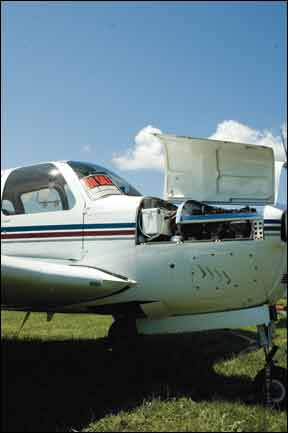
No matter how smooth and enjoyable the flight, your passengers always will remember the landing. Anything other than a single, bounce-free touchdown is ripe for comment and, if your passengers also are pilots, ridicule. While a good landing is a combination of many factors, the last chance you have to affect its outcome is in the flare. Whether you’re flaring too high above the runway or too low, at too high an airspeed or too enthusiastically, there’s usually a fix for what ails your landings. A lot of it can come down to how you transition from approaching the runway with the nose down to the ideal nose-up, power-off attitude, inches above the runway. It’s not that hard.
Read More »

IFR Weather Planning

It’s been said—and confirmed, in a conference I attended at the FAA’s Oklahoma City complex a couple of years ago—that you can miss every weather-related question on every FAA Knowledge Test (“written”), from Sport Pilot all the way through and including the ATP, and still pass each test…and ultimately, pass every checkride. Our instructors and aviation periodicals implore us to become students of aviation weather, but only on rare occasions are we actually given the tools we need to make weather-related go/no-go decisions. Certainly one of the most common requests I get from my recurrent flight students is for help in understanding weather well enough to make informed choices that protect their families when they fly. So how can we quickly and methodically sift through page after Internet page of aviation weather data to make informed decisions?

Read More »

NTSB To GA: You Can Do Better

The predominate causes of general aviation accidents aren’t a mystery. Each month in these pages, each year in the AOPA Aviation Safety Institute’s Nall Report and every day at the NTSB, mishaps are reviewed, dissected, catalogued and judged. The depressing thing about this process is the mind-numbing predictability of it all: Over time, some specific proportion of general aviation accidents will be caused by one thing while other causes will have their own percentage. The numbers don’t change that much from month to month, or year to year. It’s frustrating.

Read More »

The Downwind Turn

Low-level, low-speed maneuvering is always a challenge, something reflected in the accident record. Whether we engage in this type of maneuvering because we’re showing off or trying to get around the traffic pattern, the risks are the same: There simply isn’t enough altitude to recover from a stall/spin if we get into one. Add some stiff wind, gusty conditions and/or poor planning to our low-speed equation and things quickly can get out of hand. That’s presuming everything else is as it should be, including an airplane loaded within its weight and balance limitations. If it’s overweight, out of balance or both, you’ve just become a test pilot on a difficult day.

Read More »

Is Owning Safer?

Pilots decide to buy their own airplane for a variety of reasons. It could be a business decision, helping ensure coverage of a relatively wide sales area, or perhaps an aerial photography business. Specialized flight training—like acro, or a quicky instrument rating—also can be a reason. Recreation or personal transportation is yet another. One of my major motivations was safety.

Read More »

Autopilot Business

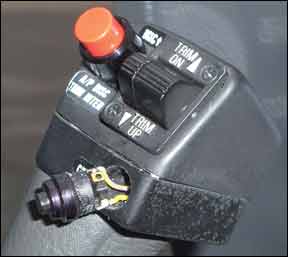
In 1984, after some 15 years flying mostly single-engine Cessnas and a Mooney 231, I bought a three-year-old Cessna 340 to handle my increasing number of business trips. I had noticed the 340’s autopilot did not always engage properly; the button was a little sticky and sometimes I had to push it pretty hard to get it to work. One business trip had me in Princeton, N.J., on a day with a low overcast. During the meeting, I kept looking out the window at the sky as the ceiling lowered below my comfort minimums.

Read More »

Failed, Broken, Leaking

The pilot observed smoke in the cockpit, declared an emergency and landed normally. On inspection, the muffler’s aft wall was missing and exhaust was directed onto the battery box, which melted the battery and battery contactor, clock fuse holder, both battery cables and boots. Also, the gascolator push/pull control knob was melted and all wiring into the engine compartment was destroyed. The owner recalls the engine backfiring when a student performed ignition test at high rpm.

Read More »

April 1, 2013, Guymon, Okla., Mooney M20E Super 21

The airplane was destroyed when it impacted terrain at an unknown time. The pilot and passenger were fatally injured. Instrument conditions prevailed at the time of departure; a flight plan had not been filed. The airplane took off from a nearby airport at 1203 Central time.

Read More »

April 1, 2013, Ft. Lauderdale, Fla., Cessna 402C

The airplane was substantially damaged at 1635 Eastern time when its nose landing gear collapsed during landing rollout. The airline transport pilot was not injured. Visual conditions prevailed; an IFR flight plan had been filed. The flight’s purpose of the flight was to return the airplane to its foreign base after maintenance.

Read More »

April 4, 2013, Phoenix, Ariz., Cessna 172S Skyhawk SP

The airplane was substantially damaged when it impacted airport terrain at about 0930 Mountain time during an attempted takeoff. The flight instructor (CFI), student pilot and passenger were uninjured. Visual conditions prevailed. The CFI’s logbook showed about 303 hours; the student had logged about four hours. During the takeoff roll, the airplane began to veer to the right and the CFI instructed the student to correct to the left.

Read More »
Pilot in aircraft
Sign-up for newsletters & special offers!

Get the latest stories & special offers delivered directly to your inbox.

SUBSCRIBE