











Features

Molehill or Mountain?

Telluride, Colo. Missoula, Mont. Kalispell, Mont. Jackson, Wyo. Aspen, Colo. Hayden, Colo. Sun Valley, Idaho. Welcome to the high and clean air of the Rockies.

Even if you havent been to Jackson, youve undoubtedly seen the pictures of the Tetons. Yes, they are very real, very gorgeous – and very high. The valley that houses the airport at Jackson is surrounded by high mountains that quickly reach over 13,000 feet. During a daylight approach in good weather, Jackson is gorgeous.

However, add night or bad weather and a place like Jackson is enough to make your blood chill. Back when I flew air ambulance, a co-captain friend of mine said he would hold his breath on the departures out…

Read More »

A Little Light in the Nose

Accident prevention is a big part of most pilots training. You learn whats most likely to go wrong, and then you try to figure out how to handle it with the highest probability of a safe landing.

Weather briefings, preflight inspections, recurrent training, annual inspections, proper maintenance and pilot proficiency are all important pieces in the risk management puzzle. Without all of them, the picture is ruined.

And so it was on one August morning that a Grumman Tiger was flying VFR from a private strip near Ketchum, Okla., to Oklahoma City. Skies were clear, the wind was calm and visibility was reported at 10 miles.

At the controls, and alone in the airplane, was a 66-year-o…

Read More »

Strike One, Youre Out

Airplanes share the air with birds and the ground with animals. Unfortunately, bird strikes and animal strikes are a serious economic and safety problem.

Researchers estimate that wildlife strikes have cost the civil aviation industry more than $300 million a year every year for the last decade. Add in the cost to military aircraft, and the costs resulting from wildlife strikes likely exceed $500 million a year in North America alone. The cost isnt just financial, either. More than 300 people have been killed worldwide from bird strikes.

Many airports are located close to water and have large expanses of grass – both of which are attractive to birds and other wildlife. Many times the…

Read More »

Rubber and Runways

The moment of truth often comes at the end of a flight, when the rubber reaches for the runway for the first time. All too often, thats when the ride begins. Watch the traffic at any airport for any length of time and youre sure to see ballooning and bouncing – control errors when the airplane is in its most vulnerable state.

Ballooning and bouncing are related in that they are both caused by over-controlling or misjudging the descent rate. They can happen in a hurry. Lower the flaps too late or flare before lift has decreased enough and you balloon upward. Similarly, you can expect a bounce if you flare too late or otherwise hit the runway with too much energy. Each problem has a solut…

Read More »

Rust Removal

An occasional layoff from flying isnt that uncommon for most general aviation pilots. There are many possible reasons: weather, workload, a family or personal emergency, a job change or move from one part of the country to another, illness, or a host of other reasons beyond your control.

A layoff from VFR flying isnt the end of the world, although your skills can certainly get rusty. A layoff from flying IFR, however, can result in a fairly rapid decline in important skills youll need to stay ahead of the airplane during poor weather.

Whats most important – regardless of how you got here – is recognizing that youve been out of the IFR cockpit for too long and want to get back.If…

Read More »

Follow the Leader

A balmy summer day. A low-and-slow taildragger. Some would say there is no better way to wind up a weekend fly-in than a leisurely trip back home, accompanied by a few friends in their nearly identical airplanes.

Flying with friends has its share of joys. The camaraderie is great when droning along. Theres always a friendly face – and someone to have lunch with – during fuel stops. And pooling experience gives some of the advantages of a multi-pilot cockpit, even if those multiple pilots are in different cockpits.

But there are also some dangers, as well. The temptation to fly in formation, even loosely, cannot be ignored. Peer pressure may lead you into weather conditions that make…

Read More »

Demon Speeds

Judging from the NTSBs files, more than a few pilots have had the misfortune of encountering flutter. Whether induced by the pilots actions or by improper maintenance procedures, flutter is a very serious problem that requires instant corrective action in flight. The stakes are high. Flutter can disfigure your airframe or even rip it apart.

I personally encountered flutter in flight a few years ago – and at a speed that greatly surprised me because it was relatively low.

I was in a sailplane working an afternoon thermal with my wife in the front seat. I was circling in the thermal at about 55 knots when the wing started to vibrate. It was enough that we definitely felt it in the coc…

Read More »

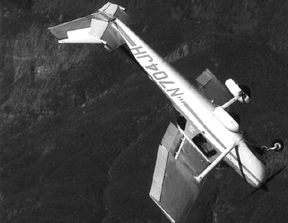
Spinning a Tangled Web

• Myth number 1: If you encounter an accidental spin, unload angle of attack and hold the control wheel/stick full forward.

• Myth number 2: If you snap out of control accidentally, hold full throttle to keep the air flowing over the tail and drive it out with power.

• Myth number 3: Weight and balance is not a problem as long as only one or two people are aboard.

• Myth number 4: I know the airplane is not certified for spins but I spin mine all the time so it must be safe.

• Myth number 5: In an accidental spin, use standard light plane spin recovery procedures.


Myth numbers 1 and 2 are alive and well. Consider the following mishaps:

Th…

Read More »

Dogfighting Thor

Just imagine an early U.S. Mail pilot boarding the train with his mail pouch to continue westbound to deliver the mail. This may have been one of the earliest encounters of pilot vs. thunderstorm, with the pilot being unable to complete the flight as planned.

Have the odds changed with the advent of new technologies? General aviation pilots now have lightning detectors, improved ATC radar and communications, and some even are equipped with on-board color weather radar. Armed with these tools, should pilots reconsider the advice of their first flight instructors, who preached the merits of not even flying in the same county as a thunderstorm?

My first experiences in flying around thund…

Read More »
Pilot in aircraft
Sign-up for newsletters & special offers!

Get the latest stories & special offers delivered directly to your inbox.

SUBSCRIBE