Editor’s Log

Good News, Bad News

In early April, the National Transportation Safety Board (NTSB) released its preliminary 2009 aviation accident statistics. There is good news in the NTSBs numbers, which “show an overall decrease in U. S. civil aviation accidents.” Most of the good news belongs to those engaged in on-demand operations under Part 135, which achieved the lowest number of accidents and fatal accidents the industry segment has enjoyed in two decades. Hats off to them. But that good news is tempered once again (see “One,” in our May 2009 issue) by a dismal showing among Part 91 operators. And Part 121, scheduled, operators would have had a perfect year except for the February 12, 2009, crash of a Colgan Air Bombardier DHC-8-400 operating as Continental Connection Flight 3407 outside Buffalo, N.Y., which killed 50.


Read More »

Take Your Kid To Work Day

The latest “were all gonna die” coverage of aviation occurred in early March as the general media uncovered an audio recording of a youngster appearing to issue takeoff clearances to airliners at John F. Kennedy International Airport (JFK). On the February 16 recording, JFK tower controller Glenn Duffys nine-year-old son relays takeoff clearances to departing traffic. (Use this link to listen to the recording: http://bit.ly/ccblJD.)

Read More »

Blame The Pilots

The NTSB recently issued its finding of probable cause in the February 12, 2009, crash of a Colgan Air Inc., Bombardier Dash 8-Q400, operating as Continental Connection Flight 3407 while on approach to the Buffalo-Niagara International Airport in Buffalo, New York. All 49 aboard, plus one person on the ground, died when the regional turboprop entered a stall and the flight crew failed to recover. To a total lack of surprise among those following the aftermath of this tragedy, the Board found the accidents probable cause to include a litany of failures in the cockpit and Colgan Airs procedures involving airspeed control in icing conditions. The NTSBs report included 46 conclusions and resulted in 24 recommendations to the FAA.

Read More »

Turning Back, Again

Recently, the AOPA Web site featured a video shot by Mooney pilot Dave Keller of an eventful takeoff. Unfortunately, the engine in Kellers Mooney failed shortly after liftoff on February 6, 2009. Fortunately for both the pilot and us, he had set up a video camera to record the flight. Equally fortunate, he was taking off from his home base, and was very familiar with the runway layout and the airplane. Keller turned back to the departure airport, where he managed to land, deadstick, on a different runway. He emerged uninjured and the airplane was undamaged. The video presentation is available online at http://tinyurl.com/yev96er.

Read More »

Winter Wonderland

I know this will come as a shock to many of you, but its full-bore winter in North America. Being warmly ensconced in Florida for the past couple of years, I had forgotten about the seasons treachery. A recent early-December round-trip up the coast to D.C. brought back vivid memories, as well as a wide range of weather. Starting out, there were low ceilings, decent tailwinds and widespread convective activity over central Florida. The front-inspired rain was mostly moderate in intensity, and there were a few bumps, but there wasnt anything in it all to be overly concerned about.

Read More »

A Lost Art

For anyone who knows me, or has subscribed to this magazine for very long, it shouldnt come as a surprise to learn I occasionally go off on an ATC-related rant. Usually, such a rant involves nonsensical-to me, anyway-instructions, a lost clearance or worse. This column isnt a rant on ATC. It is, however, one on the pilots who make ATCs job more difficult than it has to be.

Read More »

Whos Subsidizing Whom?

Alot has been said elsewhere about recent articles appearing in USA Today questioning federal, state and local investment in airports lacking scheduled service. The articles imply airline passengers are subsidizing general aviation airports and people traveling by air for worthwhile purposes only use the scheduled services provided by airlines; all other types of air transportation and airports lacking scheduled service are frivolous and unworthy of investment. The industrys alphabet soup has done an okay job of responding to these articles. I say “okay” because there is so much more to do, including going on offense, instead of once again adopting the defensive posture seen all too often. Its axiomatic that few people who read the initial articles saw the industrys response: Once something is “out there,” its out there. Of the many things omitted from McPapers attack on GA, heres another: The airlines themselves dont pay to use the infrastructure supplied by the federal government.

Read More »

Why Cant We Make Cylinders?

Every so often, it becomes apparent the general aviation industry suffers from some kind of systemic problem affecting its underlying infrastructure. A few years ago, first Continental and then Lycoming discovered issues with new crankshafts. A few years before that, it was Cessnas failure to properly prepare its new airplanes for a different paint technology, which resulted in widespread corrosion until they were stripped and properly repainted. Now, its cylinders. And its nothing new, either. In 2004, some 2000 cylinders manufactured by Engine Components, Inc. (ECi), were the target of an airworthiness directive (AD). Another AD, effective September 9, 2009, targets an estimated 8000 Superior Air Parts, Inc. (SAP) cylinders installed on big-bore Continental engines. And in July, Continental was forced to revise a recent service bulletin adding more cylinders to a recall program it established in February. To its credit, Continental is replacing cylinders subject to the new service bulletin at its expense. (Full disclosure: My airplane is equipped with SAP cylinders subject to the new AD.)

Read More »

Add-On

Last month, the stars finally aligned, the bank account wasnt empty for a change and I was able to accomplish something Ive been trying to work in for more than 10 years: add a seaplane rating. Though I had some seaplane stick time, it was long ago and far away. So, I went into it more or less from zero. It was a great learning experience, and will make me a better all-around pilot. Getting a seaplane rating isnt for everyone, of course, but the basic idea of spending a couple of days doing intensive training-especially for something youve never done or in an airplane type youve never flown before-is an excellent way to knock off some rust. Along the way, you might learn a few things useful later on. Another good thing about an add-on rating, of course, is it also resets the 24-month flight review clock. Youve probably read one or more urgings in pages similar to this one about how to use the BFR requirement to your benefit. Its all true, and a good idea next time you see the end of the 24th month approaching. But it doesnt have to be a seaplane rating you go after.

Read More »

Clueless In Paris

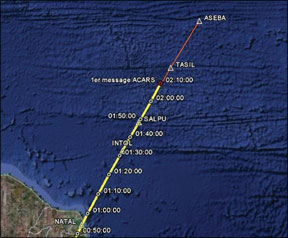
Frances equivalent to the NTSB-the Bureau dEnqutes et dAnalyses, or BEA-on July 2 released its interim report on the loss of Air France Flight 447, an Airbus A330 that crashed into the equatorial Atlantic Ocean early on the morning of June 1. To geeks like me who pore over these things, the interim report is extremely valuable in assembling and organizing in one place many-but not all-of the known facts about this tragedy. It is not, however, a final report and does not state a probable cause for the accident. Its initial findings and some of its details, however, are important. Just as important? The interim report highlights how clueless officials are in understanding what went wrong and how it might be prevented in the future.

Read More »
Pilot in aircraft
Sign-up for newsletters & special offers!

Get the latest stories & special offers delivered directly to your inbox.

SUBSCRIBE