










Alternate Realities
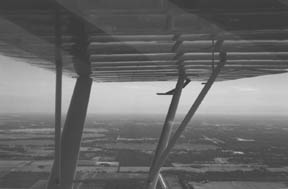
Picking a runner-up spot for a landing should be an exercise for all flights, not just those poor-weather instrument flights

Picking a runner-up spot for a landing should be an exercise for all flights, not just those poor-weather instrument flights
Get behind the power curve and you may run out of altitude, airspeed and power all at the same time
It doesnt take new pilots very long to realize the airplanes theyve trained in lack the payload, speed, and range to make serious trips, and they decide they need something bigger and faster.
The unfortunate result is that pilots new to complex, high performance aircraft have a lot of accidents. They may be able to handle things as long as nothing goes wrong, but throw in bad weather, gusty crosswinds at a short strip or a systems malfunction, and they are in over their heads. Some dont fully appreciate the tradeoffs in an airplane with six seats, oodles of baggage space, and six hours fuel capacity. Others find themselves in somebodys airspace before they know its there.
Checki…
The return trip from mid-state New York to Nashua, N.H., was being made with some urgency. The pilot had an important meeting to attend. The meeting became the last thing on his mind, however, when the engine coughed to a stop only part way home.
His very first thoughts: Oh damn! Im going to splatter myself among the trees below and kill myself! I can just hear my friends at the funeral. He seemed to be a pretty smart fellow, how could he do something so stupid?
After his initial shock at the silence, he became focused on the problem at hand. Rock the wings, theres always some fuel left in the tanks. The engine sputtered a few minutes and then quit again. He spied a small field…
The column of black smoke rose like an obscene gesture to the north west of our control tower at Reid Hillview airport in San Jose, Calif. Id just come off a break and saw it as I stepped into the tower cab. The ground controller was busy lining up a string of trainers from one of the flying schools.
The tower controller, or what we called the Local controller, had a loaded traffic pattern with two parallel runways – one full of touch and go traffic the other reserved for itinerants. It was a busy shift, no different than most, except for the black smoke.
The phone rang, Did you guys lose one? the unidentified caller asked. I looked around. Nothing seemed out of order. No, I sa…
Something about flying a twin grabs your attention. Sitting up high, a fistful of throttles, clear one, turning one – it all adds up to a feeling of power and control.
Thats appropriate, of course, because power and control are the big issues in learning to fly a light twin. Its not a matter of having power and control, its that you can lose them very quickly when something goes wrong. Flying a light twin isnt for everyone, and its not a panacea that takes all the risk out of flying. But with proper instruction, flying a twin is, in some ways, as good as it gets.
Are Two Better Than One?
The biggest myth of light twins is that they are inherently safer than singles…
Most of the time American aviators learn and study about American accidents, but accident reports and studies from other countries can also pack useful lessons. For example, one interesting difference between flying in the United States and many other countries is the freedom to fly VFR at night. Most countries require pilots to be instrument rated and to be on a IFR flight plan to fly at night. Many others do not allow single engine flying at night.
Within the U.S. and a handful of other countries, single engine night VFR flying is accepted without question. However, pilots and investigators from countries that do not allow single engine night VFR flying can cite relevant accident stati…
The FAA has set minimum requirements that pilots must meet in order to legally fly, but meeting those minimums probably arent enough to keep you safe.
A couple of years ago Daniel Webster College established an orientation program for incoming freshmen in which they would be indoctrinated into the ways of college life. One speaker, a professor of Humanities, discussed the virtues of the educated man in days gone by versus the learned man or woman of today. One of his points was that although there was a time when an individual could, in fact, read every book in existence and learn all that educated people should know, those days were long gone. His point was that it is no longer possib…
Success at a social function is judged by your entrance. If you stumble over the doorstep and land face first in the guacamole, youll definitely get noticed but probably not invited back.
Entering a traffic pattern requires the same dont-trip-over-your-joystick finesse. Unfortunately, there is no Emily Post guide for pattern etiquette, and it shows. Monitor the Unicom at any busy uncontrolled airport and youll hear pilots announcing modified downwinds (with no hint of what that modification is), the cursing that results from one pilot cutting another one off and multiple runways in use, even if theres only one strip of pavement.
Think its not a problem? Look at this issues Pre…
Safety is simple. Use the right tool, the right person and the right procedures for the job. In well-maintained certified airplanes the right tool is usually there. The pilot presumably has been trained to fly the airplane and navigate competently.
Sometimes, however, the third leg of the safety stool is missing. The right procedures for most operations and even some emergencies are specified in the aircraft manual, but sometimes pilots arent familiar with the proper procedures, or sometimes they use procedures from other aircraft or other sources that arent proper for the aircraft and environment in which theyre flying.
Failure to use the proper procedures is an important finding i…

Get the latest stories & special offers delivered directly to your inbox.
SUBSCRIBE