Airmanship

Why Do We Stall?

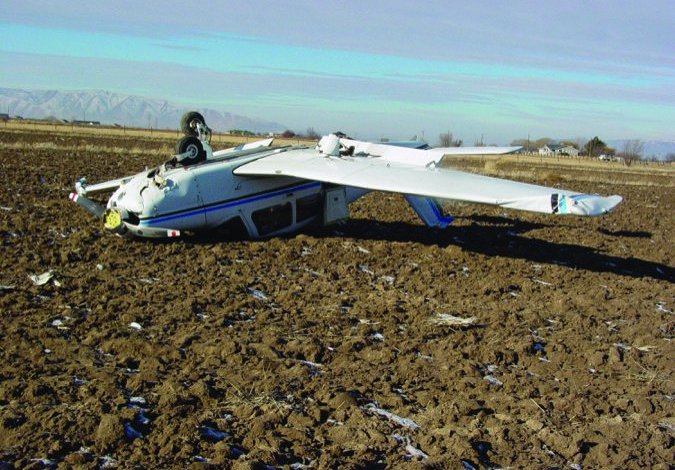
Fixed-wing pilots start learning stall recognition and avoidance during pre-solo training. The private and sport pilot checkrides require recovering from developed stalls with minimal loss of altitude, and stall and spin awareness are (or at least should be) refreshed during flight reviews for the duration of ones flying career. But unintended stalls still put dozens of airplanes into the ground every year. Is it possible that stall training as currently practiced isnt as effective as it might be?

Read More »

Props

Propellers often are not well understood by general aviation pilots. Their purpose-transferring the engines horsepower into thrust by moving a large volume of air to the rear-usually is obvious. How this feat is accomplished may not be. Looking at a propeller blade cross-section will reveal it is actually an airfoil, one moving at a right angle to the airplanes desired motion.

Read More »

Gust Front

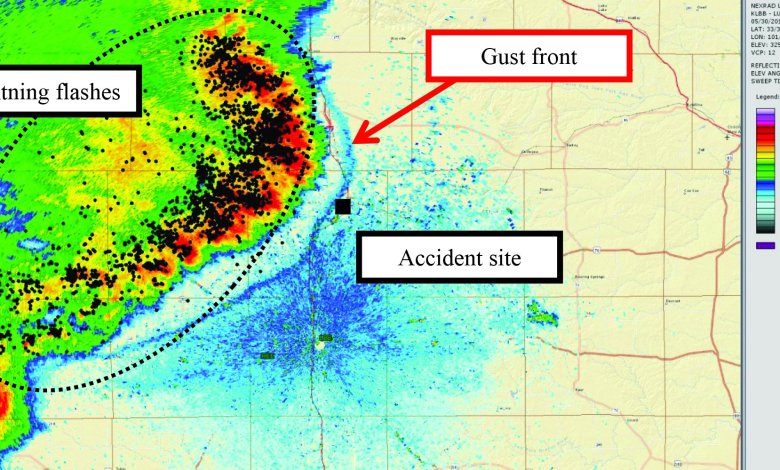
There are many old sayings sprinkled throughout aviation. One of them, Theres no such thing as an emergency takeoff, highlights the fact that deciding to initiate a flight is optional. As pilots, we get to decide many elements of our takeoffs, including whether to perform one in the first place. This is important since there are many unknowns in the first few minutes after a takeoff.

Read More »

Spinning Your Gyros

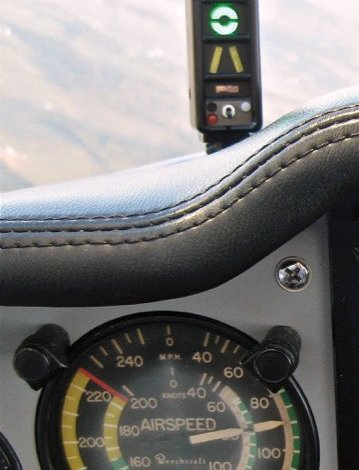
Over the last couple of years, Ive spent some time helping students transition to full-fledged private pilots. One of the first questions I do is ask them is to picture a standard six-pack of steam-gauge instruments and explain what they each do and where they get their energy. Most pilots can quickly rattle off the airspeed indicator, the altimeter and the vertical speed indicator. Those systems are relatively simple to understand and describe.

Read More »

Seeing The Invisible

Most pilots venture into windy conditions with enough skills and smarts to know how to either avoid or cope with them. But wind-related accidents are still commonplace, so clearly we dont always get it right. One reason for this may be fairly simple: With the exception of blowing snow, tornadoes, dust devils and some cloud formations, wind is usually invisible. To visualize what is going on, you have to visualize wind currents, which is where my experience whitewater rafting has served me well.

Read More »

Tune And Identify

Im a 63-year-old pilot completing my IFR training and obtaining a high-performance endorsement for a 182. Virtually all of my training has been with a large flight school in South Florida (name withheld to protect the guilty).In my regular life Im a senior faculty member for a respected trade association. After about 30 years as an educator, Ive learned that a successful learning outcome happens when the teacher is addressing the unique learning styles of each individual student. All of my students are adults with varying skill and education levels. If I teach in a manner that I think is the right way, but fail to connect with the individual student, Ive failed as an instructor.

Read More »

Procedure Vs. Technique

If youre lucky, youve gotten some of your aviation education from an instructor with extensive real-world experience. One CFI who fits that description-having flown freight, charter, airline and corporate without ever giving up teaching in the 35 years hes had his certificate-likes to remind students of the difference between procedure and technique. The former is what you have to do; the latter is how you choose to go about doing it. Before landing, for example, a constant-speed prop should be moved to its full-forward high-rpm setting to prepare for a possible go-around. Whether its done after turning final, on base or immediately after reducing power on downwind is entirely at the pilots discretion, provided it gets done. Reasonable arguments can be made for each alternative.

Read More »

E/AB Aircraft Safety

The Experimental/Amateur-Built aircraft category has been the fastest-growing segment of general aviation for some years. The term amateur-built suggests the aircraft was assembled by an individual instead of a factory. In fact, the FARs state that an amateur-built aircraft is one that the major portion of which has been fabricated and assembled by persons who undertook the construction project solely for their own education or recreation. The FAA requires that an amateur-built aircraft must be assembled or constructed at least 51 percent by an amateur, not including the engine(s), propeller(s) or accessories. Meanwhile, the term experimental encompasses much more than just amateur-built aircraft. Examples include those used for research and development, air racing, exhibition, etc.

Read More »
Pilot in aircraft
Sign-up for newsletters & special offers!

Get the latest stories & special offers delivered directly to your inbox.

SUBSCRIBE