Peter Garrison

Aftermath: Stricken by the Wind

At the end of February, the National Transportation Safety Board released the findings of its investigation of the crash of a Bell 206 JetRanger into New York’s East River in October 2011. The helicopter, with five aboard, had just taken off from the riverside East 34th Street Heliport when it began to yaw out of […]
Read More »

The Passion of Mixture

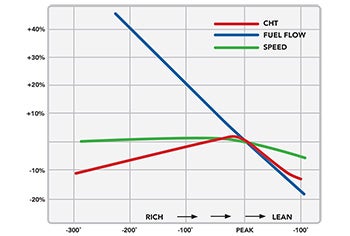
An incensed reader, reacting to my parenthetical remark “Making Range,” Technicalities, August 2012 that, contrary to widespread belief, a leaner-than-peak-EGT mixture reduces cylinder head temperatures, wrote: _Maybe I am missing something, but it is against the laws of physics that a leaner mixture can run cooler, as the more dense the mixture, the cooler the […]

Read More »

Technicalities: On Balance

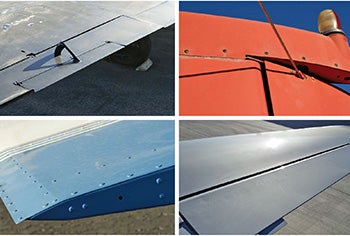
The ailerons of my homebuilt aircraft, Melmoth 2, are quite similar to those of a 1918 Fokker D.8. You would think that a great deal might have changed in nine decades, but apparently not. Perhaps it’s true, if not in biology then at least in aviation, that “ontogeny recapitulates phylogeny” — that is, the development […]

Read More »

Cessna 182 Crash Caused by Little Things

It is often pointed out that although people commonly imagine aircraft accidents as arising from a single big cause — engine failure, thunderstorm — they very often follow a series of small ones. Any small thing slightly out of order may, under sufficiently unlucky circumstances, become the cause of an accident. It is the inherently […]

Read More »

Wright Brothers: Little Known Secrets to their Success

The following article, Wrightophilia, is from the December 2003 print issue. The story of the achievement of powered flight by the Wright brothers, which in its bare outline is familiar to everyone, grows more interesting to me as I delve more deeply into it. Orville and Wilbur Wright, as indistinguishable at first glance as Tweedledum […]

Read More »

Aftermath: Good Intentions

The pilot-owner of a Cessna R172 — a six-cylinder, 195 hp version of the 172, based on the French-built Reims Rocket — was en route from ­Everett, Washington, to Albuquerque when he and his wife found themselves weathered in at Roseburg, Oregon. The pilot, who did not have an instrument rating, inquired at an FBO […]

Read More »

Aftermath: First There Is a Mountain

The 77-year-old, 8,000 hour pilot-owner of a Cessna 182, accompanied by his wife, flew from Anchorage to Juneau, Alaska, on a July afternoon. The couple was in the process of moving to Hoonah, about 31 nm west-southwest of Juneau; the ostensible purpose of this trip was to position the 182 there before the start of […]

Read More »

Robohorse

In 1992, Scaled Composites built a radio-controlled UAV intended for 48-hour flights at 65,000 feet. Called Quiver (it was later changed to Raptor, for “Responsive Aircraft Program for Theater Operations”), it had a wingspan of 66 feet and an 80 hp Rotax engine. Scaled also home-brewed the autopilot, and there was some uncertainty about how […]

Read More »

The Last Word on Downwind Turns, Really

The following article is from the January 2005 print issue. “Nope,” I said. “No way. There’s no way that a turn downwind, or upwind, or in any other direction, is any different from a turn in still air.” “Well, sonny,” said the Old-Timer, “maybe out your way the air’s made of different stuff. But I’ve […]

Read More »

Aftermath: Three Blades, Minus One

The velocity is a kit-built composite four-seater. Similar in configuration to Burt Rutan’s VariEze and Long-EZ, it has a swept wing with tall upturned tips, a pusher propeller and a rectangular foreplane of high aspect ratio. The landing gear may be fixed or retractable. Triangular leading-edge extensions, or “strakes,” along the sides of the fuselage […]

Read More »
Pilot in aircraft
Sign-up for newsletters & special offers!

Get the latest stories & special offers delivered directly to your inbox.

SUBSCRIBE