











Honeywell Receives FAA Approval for Aspen RNAV (RNP) Approach
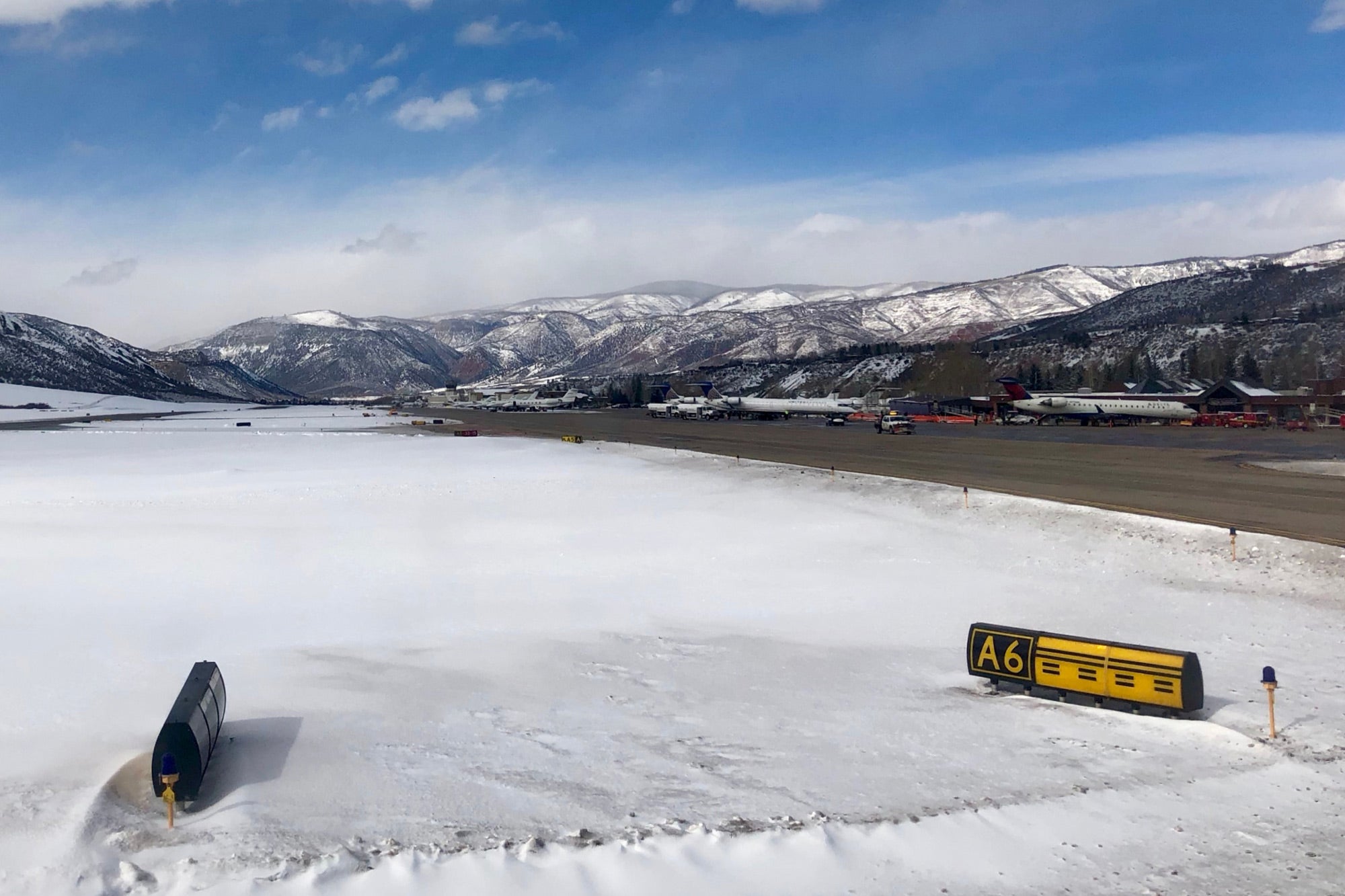
The airport at Aspen, Colorado, offers great access to the mountains and all its associated sports—and a challenging approach into a narrow valley often impacted by severe weather. Courtesy Honeywell
Gemini Sparkle

Key Takeaways:

  • RNP (Required Navigational Performance) is an advanced RNAV approach designed for challenging airports, like Aspen, allowing for curvilinear flight paths and steeper descents where standard precision approaches are not feasible.
  • The newly FAA-approved Runway 15 RNAV (RNP) N approach at Aspen provides significant operational benefits, including lower minimums (537 ft, 1.25-mile visibility), a stable 3.5-degree approach, guided missed approach procedures, and permits night operations for Category D aircraft.
  • Utilizing RNP approaches requires specific pilot training and approval, aircraft equipped with RNP capabilities (e.g., RNP 0.1, Radius to Fix legs), and operators must hold relevant FAA approvals such as LOA/Ops Spec C384 and C081.
See a mistake? Contact us.

RNP stands for “required navigational performance,” and it indicates a special level of RNAV instrument approach made possible by a collective effort between the approach designer—in this case, Honeywell—the operator, the airport, and the FAA. Alaska Airlines was an early pioneer of the concept, which helped open up airports in its route structure such as Juneau, Alaska, to improved instrument approaches as GPS-based RNAV came into maturity.

As outlined in a blog post by Jim Johnson on Honeywell’s site, challenging airports require special instrument approaches such as that at Aspen, Colorado—which on a good day demands an approach at Vref plus 15 or 20 knots and a steep descent angle into the deep valley, not to mention the specter of mountain weather that never goes away. An airport such as Aspen cannot accommodate an approach that conforms to standard precision-approach design parameters, which typically call for a 3-degree glide path along a 5-mile straight-in final approach segment. RNP approaches allow for a smooth curvilinear path, in general, and possible both on the approach to the runway and for the missed approach.

According to the post, the new Runway 15 RNAV (RNP) N approach has been approved by the FAA and it provides the following:

  • Lower minimums of 537 ft (height above touchdown) with 1-and-1/4-mile visibility
  • A stable 3.5-degree approach to the runway
  • Guided missed approach for safe extraction
  • Ability to conduct night operations
  • Ability to conduct approaches with Category D aircraft

In order to qualify to fly the approach, the blog said that pilots must be “trained for RNAV (RNP) using a training program approved by the regulatory agency. For operators of US-registered aircraft, this is already a requirement of LOA C384. [They must also] review the Aspen RNAV (RNP) Briefing package prior to using the approach. An approved briefing package will be available from Honeywell.” The aircraft must meet the following requirements as well:

  • RNAV (RNP) to RNP 0.1 lines of minima
  • RNP less than 1.0 in the missed approach
  • Radius to Fix (RF) legs

Approved aircraft currently include the Gulfstream G350, G450, G550, G500 and G600, and the Dassault Falcon 8X. Operators must also have the following approvals: LOA/Ops Spec C384— Approval for RNAV (RNP) Approach Operations and LOA/Ops Spec C081—Approval for Special Instrument Flight Procedures. Operators under foreign registration and certification will need to arrange approvals through their aviation authority. Those interested in pursuing use of the new approach are encouraged to contact Honeywell.

Ready to Sell Your Aircraft?

List your airplane on AircraftForSale.com and reach qualified buyers.

List Your Aircraft
AircraftForSale Logo | FLYING Logo
Pilot in aircraft
Sign-up for newsletters & special offers!

Get the latest stories & special offers delivered directly to your inbox.

SUBSCRIBE



