














Artemis Work Continues as NASA Shuts Down

Space agency has furloughed about 15,000 personnel, but employees working on ‘presidential priorities’ will stay on job.

NASA Artemis space launch system SLS
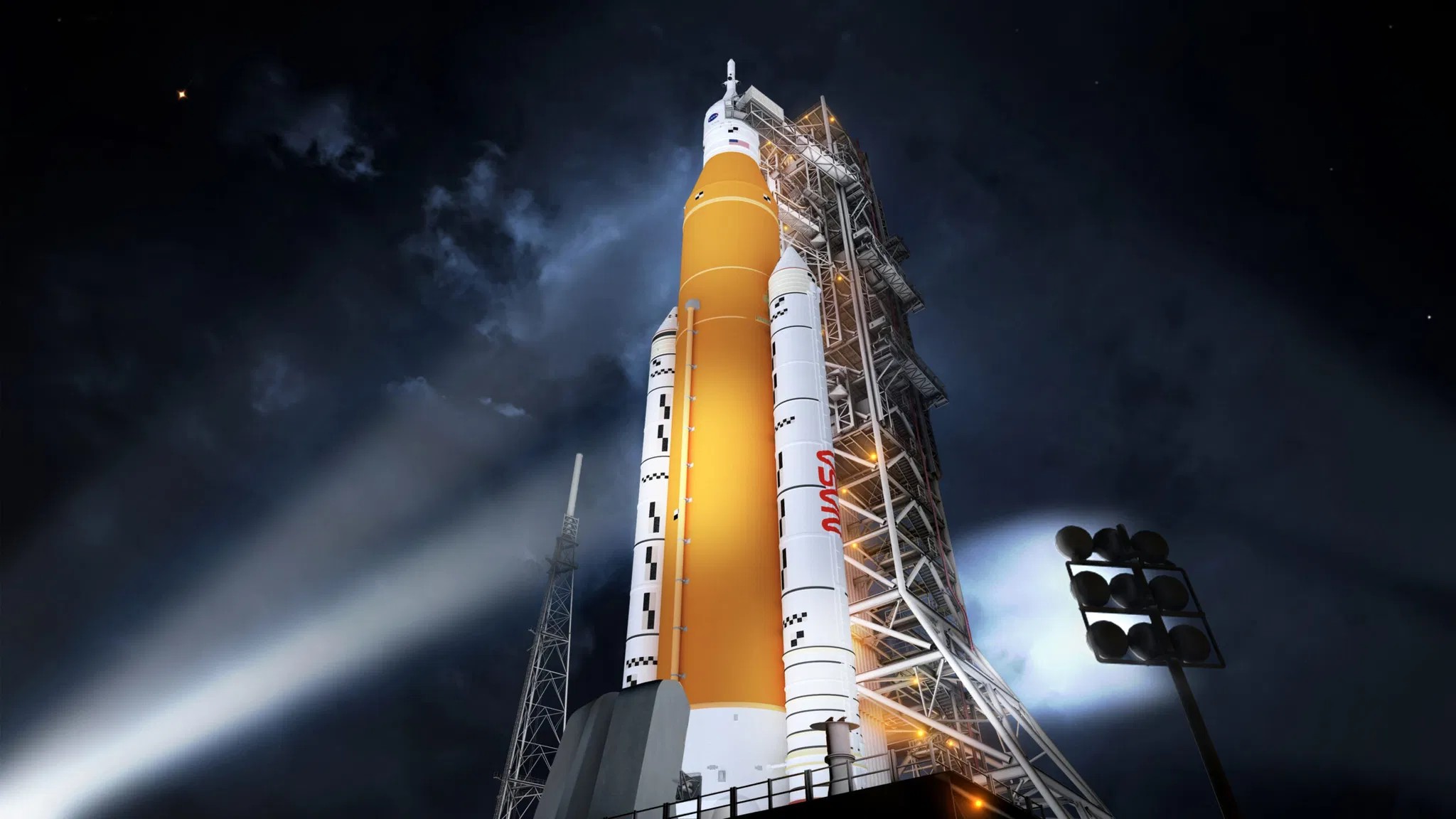
Employees working on NASA’s Space Launch System rocket are among those continuing to work during the government shutdown. [Courtesy: NASA]
Gemini Sparkle

Key Takeaways:

  • During the government shutdown, approximately 15,000 NASA employees have been furloughed, while about 3,500 personnel continue working without pay on "presidential priorities."
  • The Artemis moon mission program, International Space Station (ISS) operations, and critical active satellites are deemed "excepted activities" and remain operational, with staff expected to receive back pay once the shutdown ends.
  • Beyond the shutdown, the Trump administration aims to permanently reduce NASA's workforce by nearly one-third, potentially through involuntary reductions in force (RIFs).
See a mistake? Contact us.

As the government shutdown continues, thousands of NASA employees have been furloughed. But thousands more are continuing to work—without pay—on projects considered “presidential priorities” by President Donald Trump.

Among them is the Artemis moon mission program, according to a memo sent by Steve Shinn, NASA’s acting chief financial officer, to the White House Office of Management and Budget (OMB) on Monday. Despite proposing the largest single-year funding cut in NASA’s history, the Trump administration has requested additional funding for Artemis and other human exploration missions. Trump himself has not been shy about his ambitions to send astronauts to Mars.


NASA will also retain employees working on “planned” International Space Station (ISS) operations or active satellites that are “necessary for safety and protection of life and property,” as well as contractors for those missions. It could also authorize crew transport or cargo resupply missions to the ISS, if necessary.

Per Shinn’s memo, about 15,000 NASA employees have been furloughed. The remaining personnel—about 3,500—have been told to record their work in order to receive payment when the shutdown lifts. If it extends beyond five days, or in the case of an emergency or contingency, more employees could be recalled.

“Depending on the timing and length of a shutdown furlough event, receipt of backpay paychecks may be slightly delayed, may be processed over multiple pay periods and/or require corrective actions,” the memo reads.

Beyond these programs, NASA’s work will come to a standstill. It will cease the issuance of contracts, grants, task orders, and other actions for projects that are not considered to be aligned with Trump’s priorities.

Upon requesting comment from NASA, FLYING received an automated message from news chief Cheryl Warner: “NASA currently is closed due to a lapse in government funding. I am in furlough status; therefore, I am unable to respond to your message at this time.”

Artemis Excepted

Artemis is one of NASA’s most consequential programs and has long been considered a strategic priority.

The Artemis I mission—an uncrewed test flight of NASA’s Space Launch System (SLS) rocket and Orion capsule—is already in the books. Artemis II, scheduled for no later than April, will fly around the moon and back with four crewmembers. NASA earlier this week said the SLS for that mission is nearly completed.

Artemis II will serve as a dress rehearsal for Artemis III, scheduled for mid-2027. If successful, the latter would represent the first U.S. lunar landing since the Apollo era.

SLS and Orion—which in June received $10 billion to keep them funded through 2032, despite Trump’s desire to phase them out after Artemis III—are the key NASA vehicles in the program. But it is also supported by contractors SpaceX and Blue Origin, which are building human landing systems (HLS) for Artemis III and IV, respectively.

According to an internal NASA email shared by NASAWatch, the Artemis HLS program is considered an “excepted activity.” Employees working with SpaceX and Blue Origin, meanwhile, told CNBC that their projects will continue.

Given Trump’s prior comments, it comes as no surprise that Artemis will be treated like a golden goose.

Keeping the program operational may help SpaceX hit its HLS delivery target, which according to a NASA safety panel could be years delayed. Its Starship rocket, around which the landing system will be built, has suffered multiple failures in 2025—both in the air and on the ground. Starship must still complete several milestones before it is human-rated, including the transfer of propellant between two ships on orbit.

Blue Origin, which is developing its own HLS around its New Glenn rocket, has also faced setbacks. The company held a preliminary design review for its Blue Moon lander in February 2024. But according to a Government Accountability Office (GAO) report, follow-on work was required “because its lunar lander design did not meet NASA’s propellant and mass requirements.”

New Glenn, meanwhile, debuted in January and was supposed to fly again in the spring, per the GAO. That mission is now scheduled for no earlier than late October.

Thinning the Herd

Furloughed employees are expected to return to NASA once the government reopens. The White House, though, has vowed to permanently trim the space agency’s workforce. Its budget request calls to cut nearly one-third of employees, leaving it with just under 12,000.

A directive to fire about 1,000 probationary employees in February was overturned at the eleventh hour. But in June, NASA revealed that more than 3,800 personnel have taken OMB’s deferred resignation plan (DRP). DRPs were offered to nearly all federal employees, requiring them to vacate their positions in exchange for a few months of pay and benefits.

The agency projected that it will lose 4,000 personnel by January, leaving it with about 14,000—20 percent fewer than it had at the start of 2025. To get below 12,000, it could turn to involuntary reductions in force (RIFs).

In a memo last week, OMB directed federal agencies to begin drafting RIF plans for any program that would lose funding in the event of a shutdown. The move would represent a break from the tradition of temporary furloughs. Stakeholders, including Jack Kiraly, director of government relations for The Planetary Society, warn OMB could get its way during the shutdown.

“Congress has already made its intent clear: it rejects these reckless cuts and supports continued investment in NASA science,” Kiraly said in a statement. “OMB could override that intent, shutting down missions mid-stream, wasting taxpayer dollars, and undermining U.S. leadership in space exploration. Congress must act now to prevent irreversible harm.”

Like this story? We think you’ll also like the Future of FLYING newsletter sent every Thursday afternoon. Sign up now.

Jack Daleo

Jack is a staff writer covering advanced air mobility, including everything from drones to unmanned aircraft systems to space travel—and a whole lot more. He spent close to two years reporting on drone delivery for FreightWaves, covering the biggest news and developments in the space and connecting with industry executives and experts. Jack is also a basketball aficionado, a frequent traveler and a lover of all things logistics.
Pilot in aircraft
Sign-up for newsletters & special offers!

Get the latest stories & special offers delivered directly to your inbox.

SUBSCRIBE
