














Archer Nabs World Cup, Super Bowl Partnerships

Air taxi maker is developing a Los Angeles network for its electric aircraft, which could land there as soon as next year.

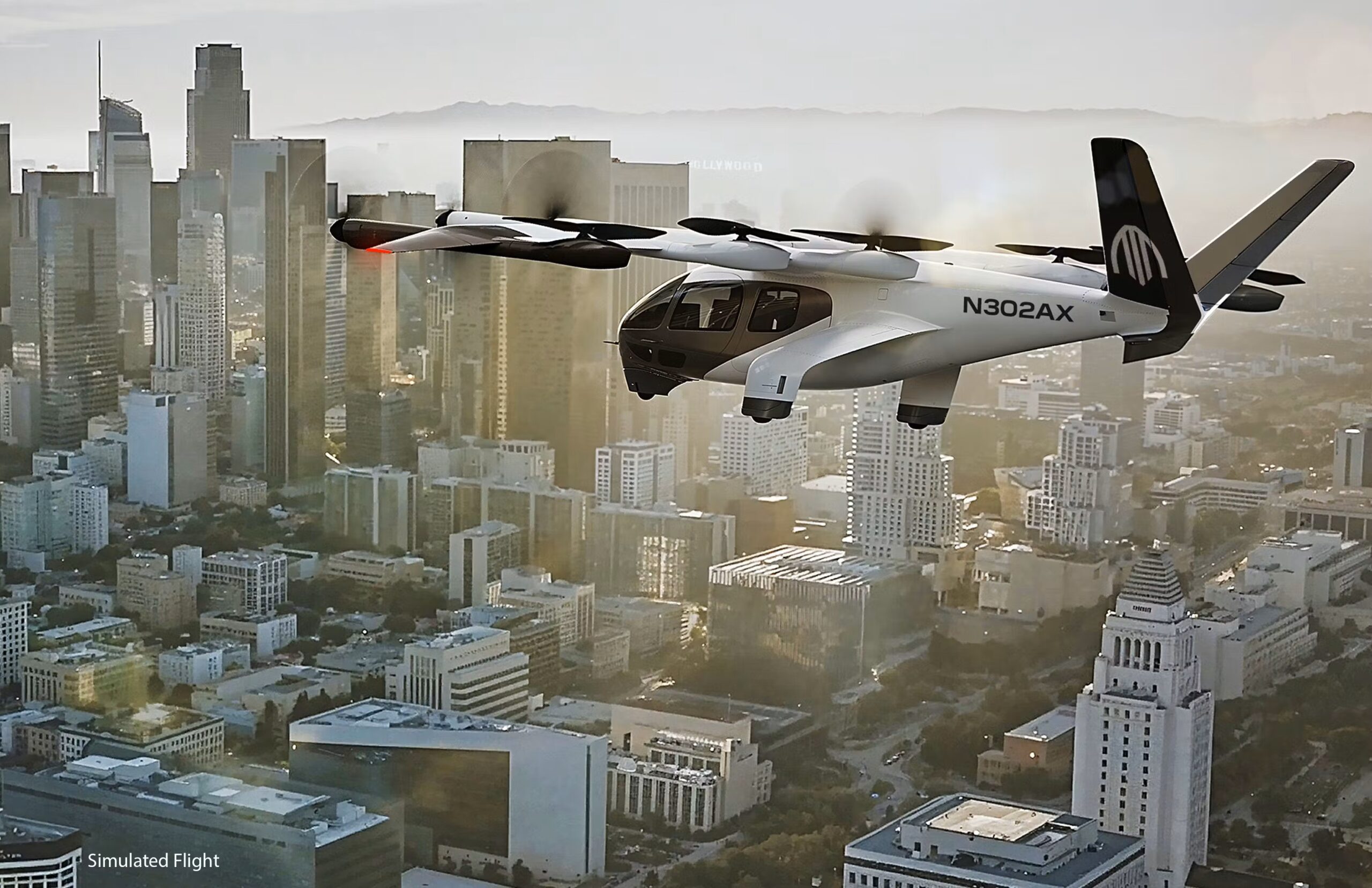
Archer Aviation Midnight electric air taxi in Los Angeles
Archer plans to build a Los Angeles air taxi network for its all-electric Midnight. [Courtesy: Archer Aviation]
Gemini Sparkle

Key Takeaways:

  • Archer Aviation has secured exclusive air taxi partnerships for major sporting events in Los Angeles, including the 2026 FIFA World Cup, 2027 Super Bowl LXI, and the 2028 Olympic Games, aiming to integrate its eVTOL service into these events.
  • The initial partnerships for the World Cup and Super Bowl primarily focus on community and official engagement, building anticipation for Archer's planned commercial air taxi network in LA and other major cities.
  • While Archer aims to launch commercial service by 2026 and ferry passengers during the 2028 Olympics, experts remain cautious due to ongoing development challenges, including critical flight tests and FAA type certification.
  • Despite these hurdles, the eVTOL industry is progressing with new FAA pilot training and certification guidelines, alongside the establishment of the eVTOL Integration Pilot Program, which will help develop operational rules and facilitate real-world testing.
See a mistake? Contact us.

Within months of being named the official air taxi provider for the 2028 Olympic Games in Los Angeles, electric aircraft developer Archer Aviation has secured partnerships with two more global sporting events—FIFA World Cup in 2026 and Super Bowl LXI in 2027.

The Los Angeles Sports & Entertainment Commission (LASEC), which leads the host committees for both events in LA, on Tuesday named Archer its exclusive air taxi partner. The company will be an official host city supporter for the World Cup and official host committee partner for Super Bowl LXI.


In 2028, Archer plans to ferry spectators, dignitaries, VIPs, and even athletes between Olympic venues—on-demand—using Midnight: its four-passenger, electric vertical takeoff and landing (eVTOL) air taxi. The eVTOL is designed for back-to-back, 20 to 50 sm hops, cruising at up to 150 mph and charging for only a few minutes between trips. Archer bills the model as more efficient and far quieter than a helicopter.

Tuesday’s announcement makes no mention of passenger or demonstration flights at the World Cup or Super Bowl. Instead, Archer plans to use the events as a way to engage the local community—and elected officials—ahead of the launch of its commercial service.

Super Bowl LXI and eight World Cup matches will be played at SoFi Stadium in Inglewood, California—one of the hubs of Archer’s planned LA network. It is coordinating with the NFL’s Los Angeles Rams on potentially exclusive vertiports, the eVTOL equivalent of heliports, in the nearby Woodland Hills and Hollywood Park areas.

The network is also expected to include Los Angeles International Airport (KLAX), Orange County’s John Wayne Airport (KSNA), Santa Monica Airport (KSMO), Hollywood Burbank Airport (KBUR), Long Beach Airport (KLGB), Van Nuys Airport (KVNY), and the University of Southern California. Archer in August 2024 said it could be online as soon as 2026. On Tuesday, it promised LA air taxi services would become a reality “in the coming years.”

In addition, Archer is working with real estate giant Kilroy Realty Corp. to build hubs linking South San Francisco, Napa, San Jose, Oakland, and Livermore. It also has an agreement with Southwest Airlines to explore a network connecting its California terminals.

Elsewhere, Archer has ambitions for home-to-airport services in New York and Chicago in partnership with United Airlines—an early investor and customer. It is working with FBO networks Atlantic Aviation and Signature Aviation to electrify their terminals in these locations and nationwide.

Air Taxis: Ready for Liftoff?

At the Paris Air Show in June, Archer founder and CEO Adam Goldstein told FLYING that an on-demand Olympic service in 2028 is “certainly the goal.” Sergio Cecutta, who leads SMG Consulting’s Advanced Air Mobility (AAM) Reality Index, was skeptical.

“Even if it happens, it’s going to be a very low-level service, meaning there’s going to be a few airplanes,” Cecutta said. “It’s not going to be like you can fly anytime, anywhere you want.”

Evidently, Midnight will not quite be ready for a public demonstration by the time the World Cup begins in June, despite Archer’s aim to begin flying passengers next year.

The company is conducting crewed flight testing and has delivered an aircraft to the United Arab Emirates, its core international market. Midnight has not yet begun type inspection authorization (TIA) with the FAA, but Goldstein on Archer’s recent earnings call predicted that would occur later this year.

Before that crucial step, though, Archer will need to complete a piloted transition from hover to forward flight—a key maneuver that rivals Joby Aviation and Beta Technologies have already demonstrated in testing.

Given the remaining work ahead, SMG’s AAM Reality Index forecasts Midnight’s entry into service in mid-2028—around the same time as Beta’s Alia 250 and a few months after Joby’s S4.

However, there is growing momentum for eVTOL developers.

In 2024, for example, the FAA released initial pilot training and operational guidelines for eVTOL and other powered-lift designs. It followed that up in July with the publication of powered-lift certification guidance, creating a blueprint for airworthiness.

Developers praised those moves, and they may soon have more to celebrate. In June, President Donald Trump issued an executive order creating the eVTOL Integration Pilot Program (eIPP)—a three-year effort to study eVTOL operations through a series of pilot projects.

By March, Transportation Secretary Sean Duffy will select at least five state, local, tribal, or territorial government eIPP lead participants. Each will partner with a private sector developer of eVTOL aircraft or technology. Archer, Joby, Beta, and Boeing’s Wisk Aero all intend to join the effort, which is intended to lead to the creation of new operational rules and standards.

If it begins in 2026 as expected, the eIPP would conclude after Archer’s planned Olympic flights. However, it represents an opportunity to get real-world flight hours under Midnight’s belt.

Jack Daleo

Jack is a staff writer covering advanced air mobility, including everything from drones to unmanned aircraft systems to space travel—and a whole lot more. He spent close to two years reporting on drone delivery for FreightWaves, covering the biggest news and developments in the space and connecting with industry executives and experts. Jack is also a basketball aficionado, a frequent traveler and a lover of all things logistics.
Pilot in aircraft
Sign-up for newsletters & special offers!

Get the latest stories & special offers delivered directly to your inbox.

SUBSCRIBE
