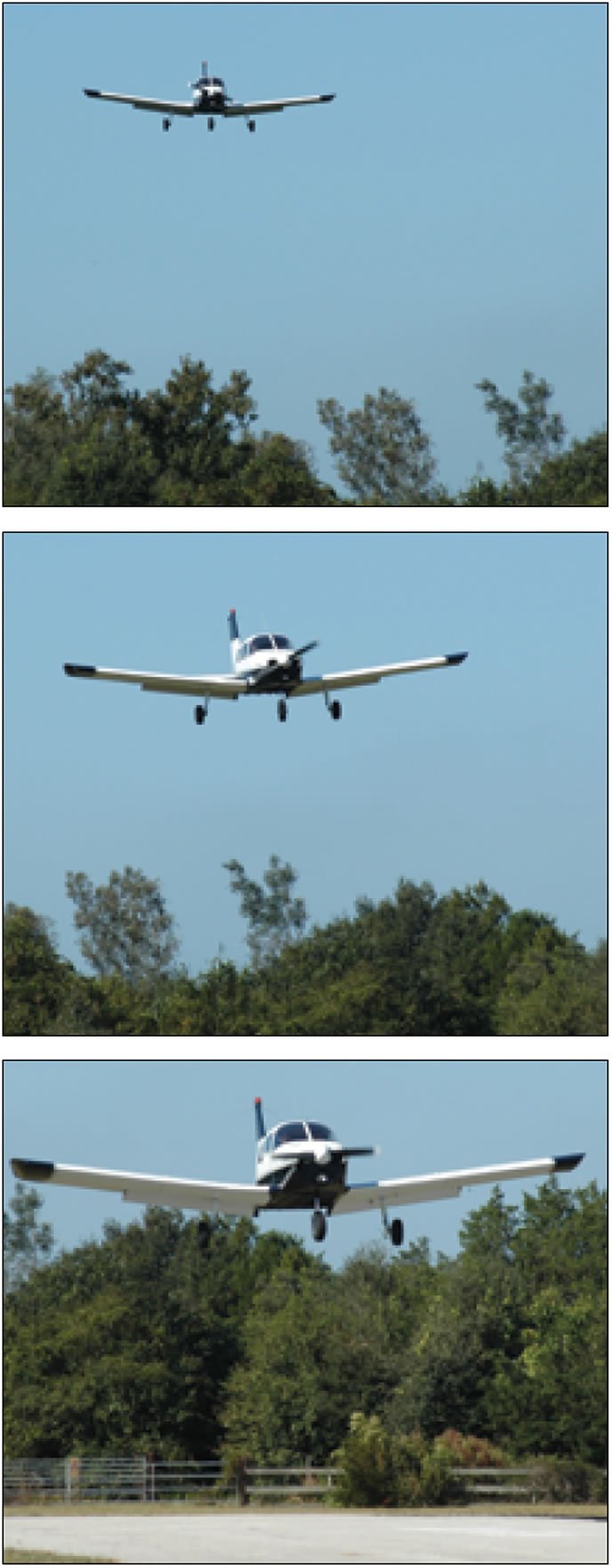
The ideal flare results from one continuous motion, beginning with raising the airplanes slight nose-down attitude to arrest the descent, all the way through touchdown on the mains in a nose-high attitude. Few of us are that good-or that lucky-so we fall back to doing it in stages: pitch slightly up to slow the descent rate and begin decelerating, wait for the effect to be known, then add more nose-up. Rinse, repeat. The timing and rapidity with which we pitch up the second time depends on everything thats happened before on this approach: How high are you? How fast? How much power are you carrying into the flare? How heavy (or light) is the airplane? How stiff is the headwind youre flying into, if any? Based on the answers to these questions, well either add more nose-up input or hold what weve got. Then we do it again until establishing the desired nose-up pitch attitude, right above the runway at stall speed.
While an ideal flare is a single, continuous motion, most pilots execute it in stages, incrementally pitching up based on factors like height, speed, and aircraft conditions until reaching a nose-up attitude just above the runway at stall speed.
During the flare, the nose should never be lowered beyond a level attitude to prevent risks such as nosewheel touchdown, bouncing, or pilot-induced oscillations.
If the aircraft balloons or pitches up too high, the correct action is to relax nose-up input, establishing a shallower pitch angle to allow continued deceleration.
The ideal flare results from one continuous motion, beginning with raising the airplane’s slight nose-down attitude to arrest the descent, all the way through touchdown on the mains in a nose-high attitude. Few of us are that good—or that lucky—so we fall back to doing it in stages:
CREATE A FREE ACCOUNT
Sign up to keep reading
Create a free account to continue. Already a member? Sign in below.