











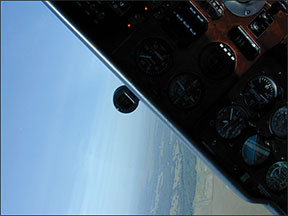


Every primary student who’s at least been ready to solo has experienced a few stalls and recoveries. If they’re lucky, they also are introduced to different kinds of stalls, and how the ways we enter them can help determine their characteristics. Along the way, we learn ways to recover from them. We learn these maneuvers for three reasons: So we’ll recognize, avoid and be able to recover from them.

At least in my experience, it’s not the simple, straight-ahead, power-off stall that poses the greatest risk to complete loss of control. But when some or all of a wing’s critical angle of attack (AoA) is exceeded in attitudes other than straight and level, stalls get more interesting, Variations on the simple stall—including accelerated, cross-control and elevator-trim—are where the greatest risk of losing control can be found. We’ll call them “advanced stalls.” Also in my experience, pilots are more likely to encounter these stalls than we are the more-benign, straight-ahead, power-off variety.

