











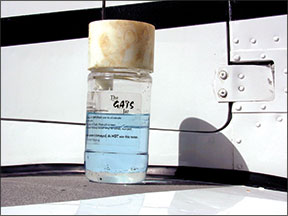


Ensuring adequate flow of clean fuel to your engine(s) would seem to be a pretty basic part of ownership and regular/pre-flight inspections. Yet, according to AOPA Air Safety Institute’s 2011 Nall Report, “Eight accidents were attributed to fuel contamination, six of them by water. Seven of those airplanes were more than 20 years old, and at least three had been tied down outdoors for extended periods during which they were not flown regularly.” Some people apparently didn’t get the memo.

Water in fuel systems is an easy thing to encounter when an airplane is parked outside for extended periods. And one of the reasons is fuel caps with recessed flip-to-unlock handles. Water can collect in the recesses and drain into the tank past poorly maintained O-rings, or it can seep past the outer seals. There are formal tests that can be conducted, on all fuel caps, but the flip style is easy to test for leakage via the handle recess: Remove the cap, lock it and pour some water into the recess. The seals in other fuel caps also need periodic inspection, and also can leak water.

