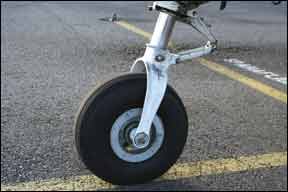
Just because the vast majority of the airplanes most of us fly have their little wheel mounted on the nose instead of the tail doesn’t mean the nosewheel is immune to abuse. Nor does it mean we can ignore the nosewheel’s peculiarities, even if an airplane with one is much easier to handle on the ground.
Nosewheel-equipped aircraft, despite being easier to handle than tailwheels, require specific pilot techniques during ground operations to prevent loss of control, prop strikes, and damage.
A key technique is managing weight distribution by consistently keeping the nosewheel light through appropriate nose-up pitch control during taxiing, takeoff roll, and landing rollout.
Pilots must always land on the main wheels first, never the nosewheel, and understand the difference in ground steering between steerable (rudder) and castering (differential braking) nosewheel types.
Just because the vast majority of the airplanes most of us fly have their little wheel mounted on the nose instead of the tail doesn’t mean the nosewheel is immune to abuse. Nor does it mean we can ignore the nosewheel’s peculiarities, even if an airplane with one is much easier to handle on the ground.
288
CREATE A FREE ACCOUNT
Sign up to keep reading
Create a free account to continue. Already a member? Sign in below.