














Register

The Scoop on Ice

Courtesy of NASA
Gemini Sparkle

Key Takeaways:

  • Icing is a critical winter flying hazard, responsible for about a quarter of weather-related accidents, and forms when moisture is present in freezing temperatures (typically 0 to -15°C, but potentially up to 5°C due to aerodynamic cooling).
  • Structural ice diminishes aircraft performance by reducing lift and thrust, and is most likely to form in clouds (especially cumulus), mountainous areas, on the downwind side of large lakes (Lake Effect), and near weather fronts.
  • The safest approach to mitigate icing risk is to understand its formation and actively avoid icing conditions by staying out of clouds, changing altitude, or landing, rather than relying on deicing equipment to fly into known icing.
See a mistake? Contact us.

Winter is rapidly approaching, bringing with it more challenging flying conditions. According to the AOPA Air Safety Institute’s annual Nall Report, one factor that causes about a quarter of weather-related accidents is ice. While you are not immune to icing conditions in the summer, you will more likely encounter this phenomenon in the winter. As the air gets colder, freezing temperatures are more likely to exist at the altitude at which you fly. But temperature alone doesn’t produce ice and the more you can learn about how and why ice forms, the more you can keep yourself flying safely through the winter months.

It’s a very discomforting feeling, watching ice form on the wings. It’s happened to me a few times and it always created a knot in my stomach. Unfortunately, structural ice forms on the most critical parts of a flying airplane: the leading edges of the wings, elevator and propeller blades. Since the first third of these surfaces create the most lift (and in the case of the propeller, the most thrust), ice accumulation diminishes the performance of the airplane. With enough ice, the airplane could literally drop out of the sky as the lift and thrust diminish.
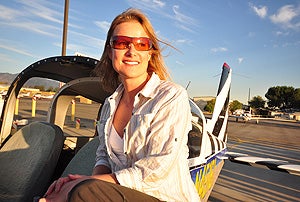

Pia Bergqvist

Pia Bergqvist joined FLYING in December 2010. A passionate aviator, Pia started flying in 1999 and quickly obtained her single- and multi-engine commercial, instrument and instructor ratings. After a decade of working in general aviation, Pia has accumulated almost 3,000 hours of flight time in nearly 40 different types of aircraft.

Ready to Sell Your Aircraft?

List your airplane on AircraftForSale.com and reach qualified buyers.

List Your Aircraft
AircraftForSale Logo | FLYING Logo
Pilot in aircraft
Sign-up for newsletters & special offers!

Get the latest stories & special offers delivered directly to your inbox.

SUBSCRIBE
