











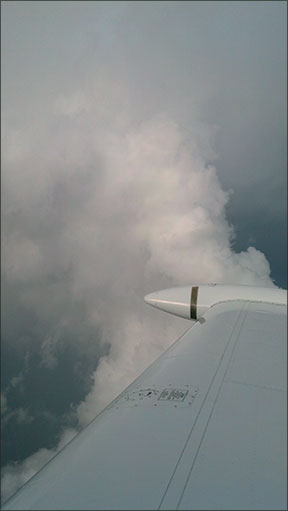


It’s that time of year again in the Northern Hemisphere, when the average cross-country flight is going to have to deal with thunderstorms. Where I live, in Florida, this time of year each mid-afternoon brings with it the rumble of thunder, usually followed by some hard rain, then cooler temperatures. That’s on the ground, of course.

Aloft is a different story, but predictable nonetheless. Even though Florida thunderstorms can be relatively benign when compared to the behemoths that march across the Great Plains in advance of cold fronts, they all feature torrential rain, icing, hail and airplane-shredding turbulence. They are to be avoided, if necessary by executing a 180-degree turn, landing before they arrive at your location or by circumnavigation. Period. How you handle thunderstorms depends greatly on the tools you have available—how you’re equipped. Generally, you’ll always have ATC and your Mk. 1, Mod. 1 eyeball, and that can be enough. A recent trip I flew highlighted for me how those and other tools can be used to avoid some relatively nasty weather but still get to your destination with unruffled feathers.

