
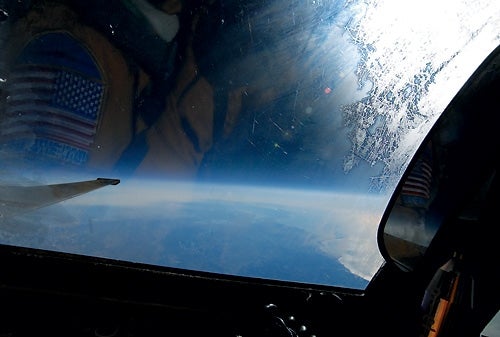


There is frost accumulating inside the windows of my cockpit. I reach a gloved hand up and scrape a clear opening in the ice. The long, graceful lines of the left wing extend almost 50 feet into the impossibly thin air surrounding us. Normally when I fly, I’m off the surface of the planet, but still deep within the ocean of air that cushions and protects us from the vast and icy universe beyond. But today, even the majority of that atmospheric ocean lies beneath me. I’m not so much flying in it as I am surfing just beneath its surface.
I look out along the long, dark wing of the U-2. If I leaned closer to the window — no mean feat in a cumbersome space suit and helmet — I could probably look down and identify some of the individual landmarks below. Certainly the U-2’s cameras and sensors are powerful enough to discern even minute movements in equipment and personnel on terrain lying more than 14 miles beneath us.