











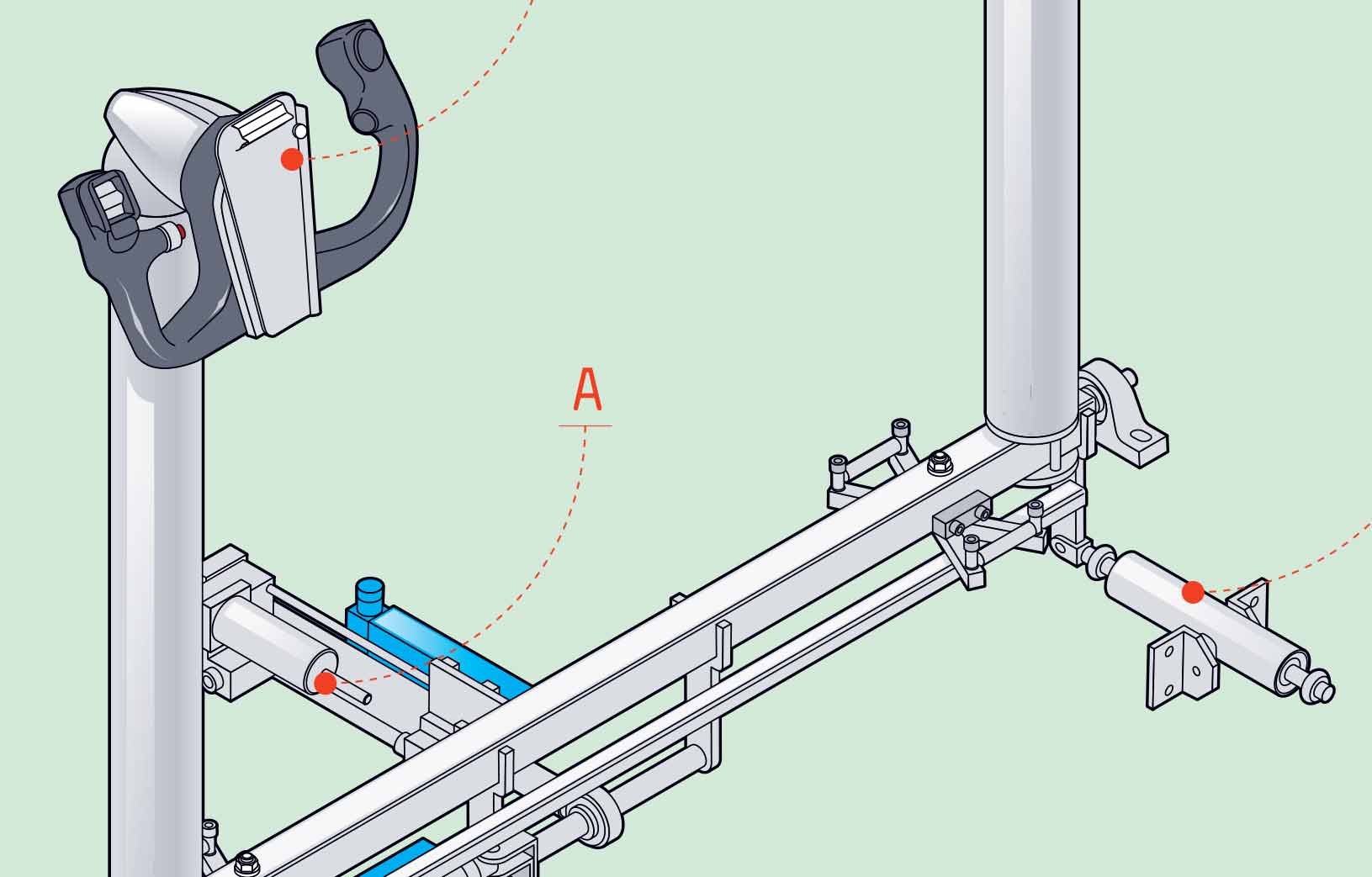
Think of the stick shaker/pusher found in transport-category aircraft as a bit of a lazy pilot’s angle of attack indicator. Should the flying pilot become distracted enough that they fail to notice an increasing angle of attack, to a point where the wing is about to cease producing sufficient lift, an airplane equipped with a shaker/pusher system will jump in to try to save the day by reducing the angle of attack. More precisely, the stick shaker acts as a stall-warning device, while the stick pusher’s job is one of stall avoidance.
How it Works: Stick Shaker/Pusher

Key Takeaways:
- The stick shaker/pusher system in transport aircraft is a safety mechanism designed to prevent stalls by automatically reducing the angle of attack.
- The stick shaker alerts the pilot to an increasing angle of attack through rapid vibrations of the control wheel, serving as a stall warning.
- If the shaker warning is ignored, the stick pusher takes over by mechanically (or electronically in some systems) pushing the control wheel forward to actively lower the aircraft's nose and reduce the angle of attack, thus avoiding a stall.
- These systems operate forcefully and immediately, with modern variations integrating functions like the pusher through the autopilot computer, ensuring stall avoidance even in critical situations.
Key takeaways sponsored by Aviator Pro | Start Your Training ->
See a mistake? Contact us.

