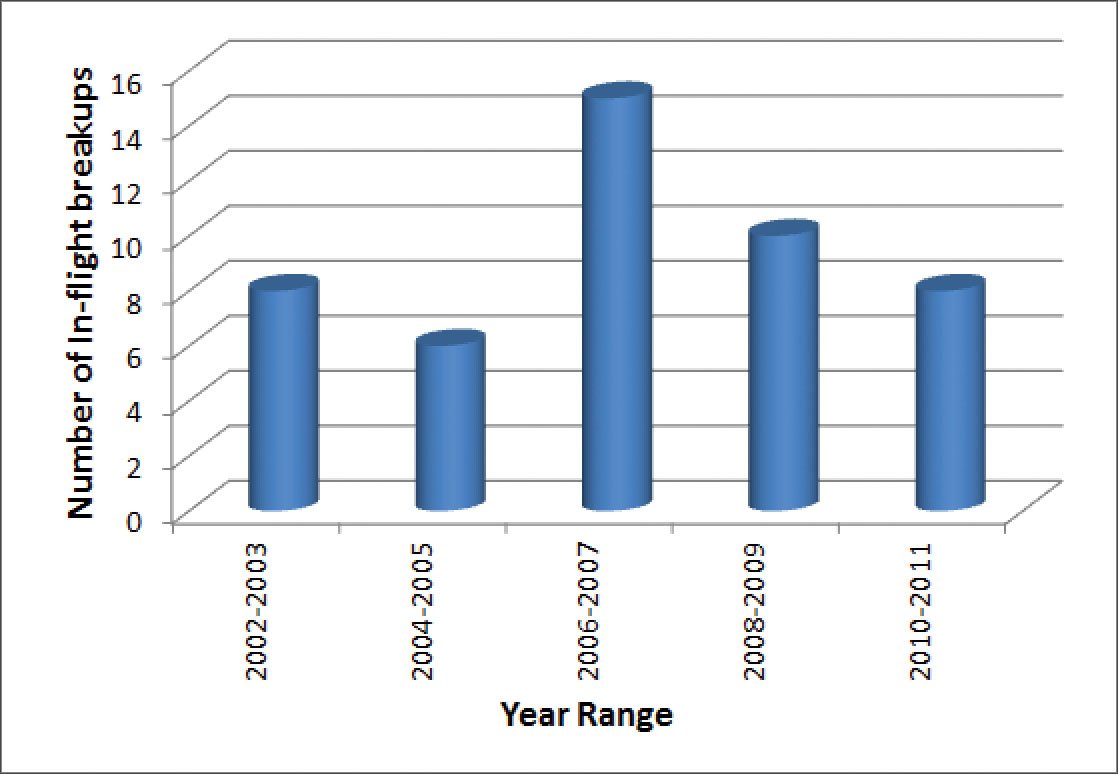
Structural failure accidents, often from getting too friendly with thunderstorms, kill both people and what little good press GA is able to garner. In the last decade, 50 accidents-about 10 per cent of all accidents-were due to in-flight structural failure. Worse, even with better weather data in flight, these accidents arent going away.
Structural failure remains a persistent safety issue in general aviation, often caused by turbulence, which is not accurately represented by weather radar showing precipitation.
The common instruction to slow to Maneuvering Speed (VA) in turbulence is insufficient; VA does not fully account for combined loads from pilot inputs and gust-induced airspeed fluctuations, which can still lead to structural overstress.
A safer practice is to fly at a Turbulence Penetration Speed (VB), typically 10-20 knots slower than VA for general aviation aircraft, and further adjust for lighter aircraft weights.
When encountering severe turbulence, pilots should disengage the autopilot, hand-fly to ride out the conditions (prioritizing stability over altitude), advise ATC, and consider extending landing gear for added drag and stability.
Structural failure accidents, often from getting too friendly with thunderstorms, kill both people and what little good press GA is able to garner. In the last decade, 50 accidents—about 10 per cent of all accidents—were due to in-flight structural failure. Worse, even with better weather data in flight, these accidents aren’t going away.
CREATE A FREE ACCOUNT
Sign up to keep reading
Create a free account to continue. Already a member? Sign in below.