













Register

Constant Angle Descent

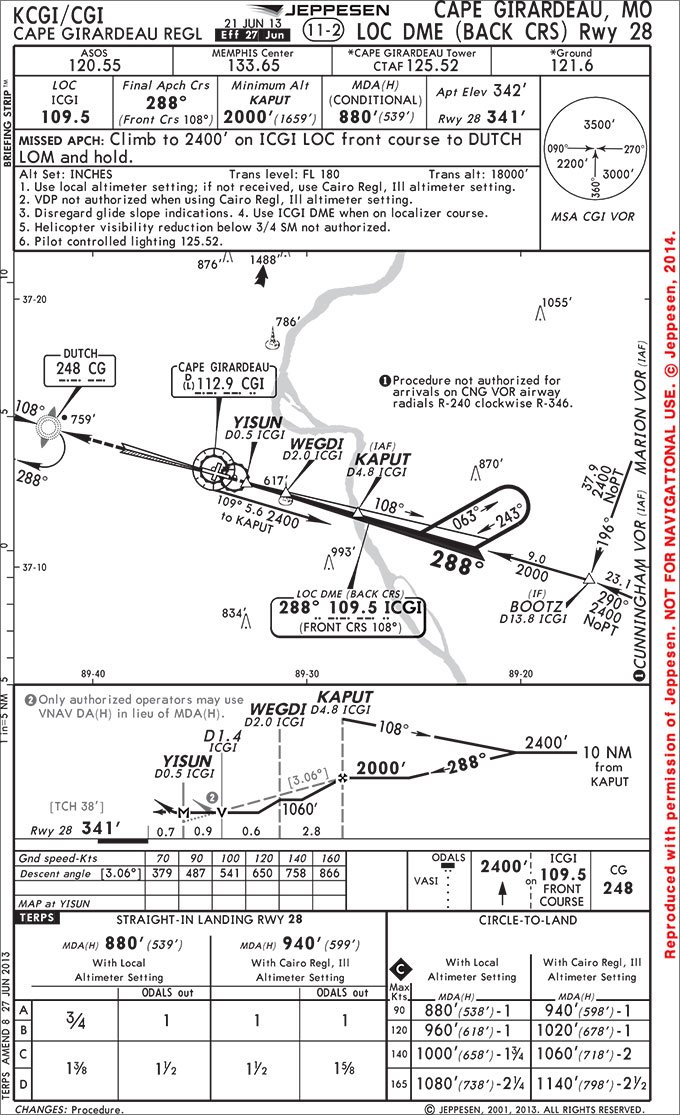
The opposite of a dive-n-drive descent on an approach is called a Continuous Descent Final Approach, or CDFA. You might think of an ILS as the ultimate CDFA. More specifically, though, this technique is applied to a non-precision approach. So, well use the synonym, Constant Angle Non-Precision Approach (CANPA) for a CDFA on a non-precision approach. What are they? Should you fly one?

Gemini Sparkle

Key Takeaways:

  • CANPA (Constant Angle Non-Precision Approach) is a Continuous Descent Final Approach (CDFA) technique for non-precision approaches, offering a stabilized descent from the FAF to the MDA/runway, which reduces pilot workload and enhances situational awareness.
  • Executing a CANPA requires pilots to calculate the appropriate descent rate based on groundspeed, meticulously monitor intermediate stepdown fixes for obstacle clearance, and verify that the visual area below the MDA is clear.
  • General aviation pilots must not descend below the MDA without the runway environment in sight, as they cannot treat MDA as a Decision Altitude; the article highlights that many non-precision approaches have minimums that make a normal descent from MDA challenging if the runway is only sighted at that point.
See a mistake? Contact us.

The opposite of a dive-n-drive descent on an approach is called a Continuous Descent Final Approach, or CDFA. You might think of an ILS as the ultimate CDFA. More specifically, though, this technique is applied to a non-precision approach. So, we’ll use the synonym, Constant Angle Non-Precision Approach (CANPA) for a CDFA on a non-precision approach. What are they? Should you fly one?

Ready to Sell Your Aircraft?

List your airplane on AircraftForSale.com and reach qualified buyers.

List Your Aircraft
AircraftForSale Logo | FLYING Logo
Pilot in aircraft
Sign-up for newsletters & special offers!

Get the latest stories & special offers delivered directly to your inbox.

SUBSCRIBE