Register

Our feathered friends

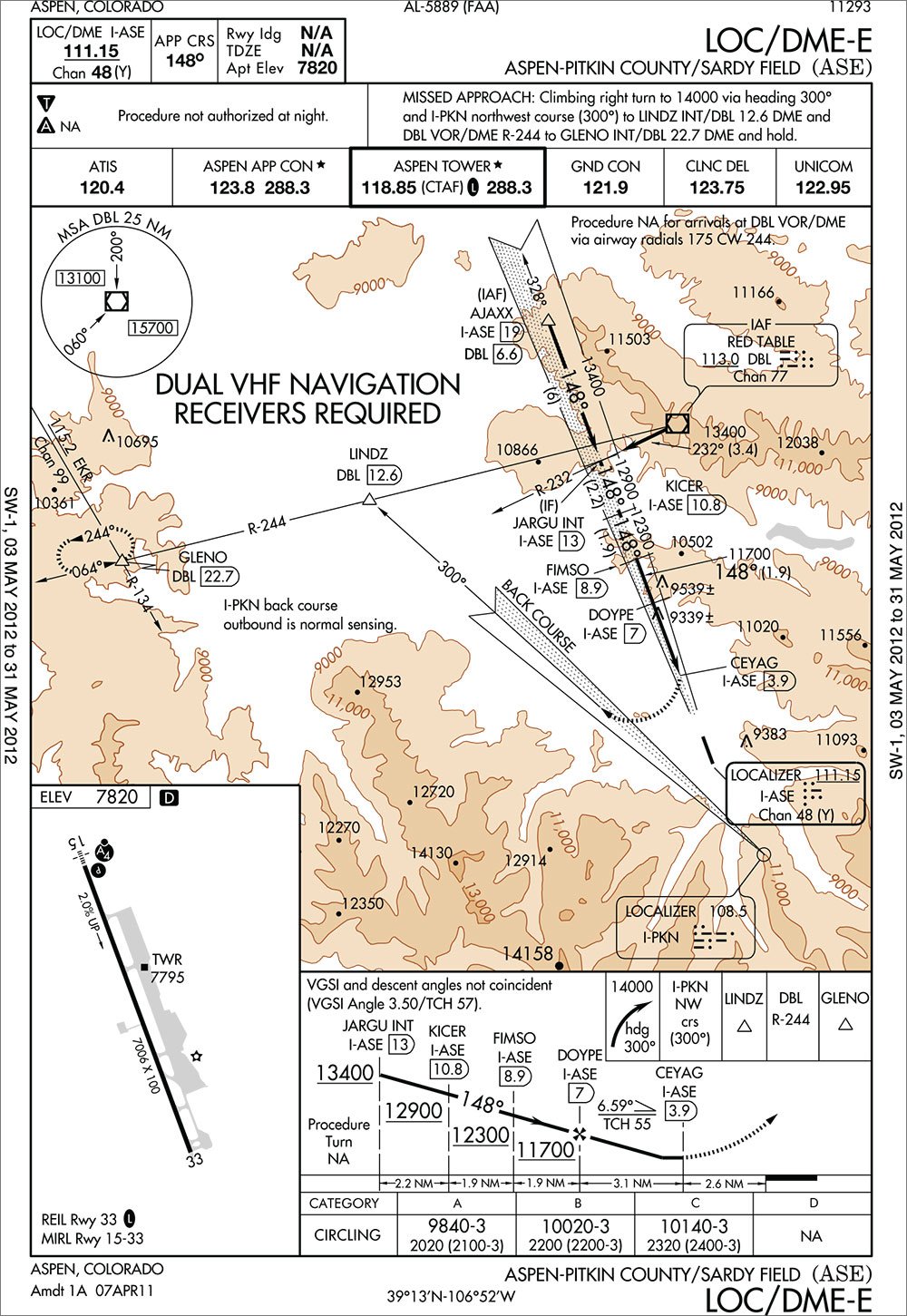
Some approaches achieve a certain celebrity status by nature of their difficulty or mind-bending design. Such is the famous (some say infamous) LOC/DME-E into Aspen, Colo. It leverages two different localizers to give you at least a remote chance of slipping down between the mountains and seeing the runway, or slipping back up between the mountains to tell the tale if you dont.

Gemini Sparkle

Key Takeaways:

  • The article describes the challenging LOC/DME-E approach into Aspen, notable for its use of two distinct localizers: one for the approach and a separate one for the missed approach due to severe terrain.
  • When flying the missed approach *outbound* on the second localizer (which functions as a backcourse), the localizer sensing remains *normal*, not reversed, which is a common point of confusion.
  • Pilots should set their HSI to the *front course* for the missed approach localizer to ensure normal sensing and avoid confusion, underscoring the enduring value of understanding traditional navigation principles even with modern GPS.
See a mistake? Contact us.

If you remember which side of a localizer is “blue” and which is “yellow,” you’re either a historian or a true pelican. You also have an edge when it comes to certain oddball approaches.


Ready to Sell Your Aircraft?

List your airplane on AircraftForSale.com and reach qualified buyers.

List Your Aircraft
AircraftForSale Logo | FLYING Logo
Pilot in aircraft
Sign-up for newsletters & special offers!

Get the latest stories & special offers delivered directly to your inbox.

SUBSCRIBE