













Readback—January 2025

Gemini Sparkle

Key Takeaways:

  • Pilots shared practical insights on non-standard approach procedures for safety, such as circling during a straight-in when conditions warrant, or using an approach to a nearby airport before proceeding VFR to the destination.
  • The critical role of aviation checklists was emphasized, tracing their origin to a 1935 accident and highlighting their ongoing importance in preventing errors, as evidenced by a similar incident in 2014.
  • Reader feedback included concerns about the magazine's balance of content, particularly the perceived overemphasis on flight simulators, and requests for improved legibility of published approach charts.
See a mistake? Contact us.

More Circle On a Straight-In

In your October 2024 issue, you were spot on, per usual, with your answer for the primary reason someone would circle when attempting a straight in: too high and too close upon breakout into VMC. If the conditions are just so, then why not? There’s no VFR traffic to contend with and the airspace is exclusively reserved for your use. 

However, what if the reason for your not being in a key position (where “normal” is the operative word for both maneuvers and rate of descent) is a bit more pedestrian? Like what? Breaking out into VFR or MVFR and failing to mind step downs, glide slopes or glide paths because there is VFR traffic and your attention division is rightfully weighted to the side of that task. 

My primary airport is so busy—even in marginal conditions—with VFR traffic, that if I break out before the FAF and I’ve been hearing position reports, I cancel and head straight to the appropriate 45-degree entry. 

The one time this happened where I chose the circle to descend, I was stunned to see a gyrocopter coming up behind me on a non-standard (unauthorized) right base. It occurred to me that if ever in this position again for any reason (weather or my own failures) I will first begin my pattern report with an upwind call (never required but a good practice in this scenario), overfly the runway at TPA if there’s traffic or at circling MDA and then circle back to make it safely down.

—Dan Anderson, Des Moines, Washington

You make good points worth careful consideration, Dan.

Fly An Approach to Elsewhere

In your October 2024 Readback, your response read in part “You can shoot an approach to one airport, cancel IFR, and land at another airport” took me back to my fresh IFR rating in 2004. I filed for a flight to Schaumberg, Illinois (06C), which then, and now, had no instrument approaches. 

It was a CAVU day and I expected to be given a visual approach. However, Chicago Approach had something different in mind; likely due to the traffic around O’Hare. They cleared me for an ILS to DuPage (KDPA) from 3000 feet and advised me to cancel IFR with the tower and then fly to Schaumberg below the Bravo shelf. It did the trick—kept me out of their way and I had a good dinner at Pilot Pete’s.

—Seán Franklin, Bella Vista, Arkansas

Thanks for sharing your story, Seán.

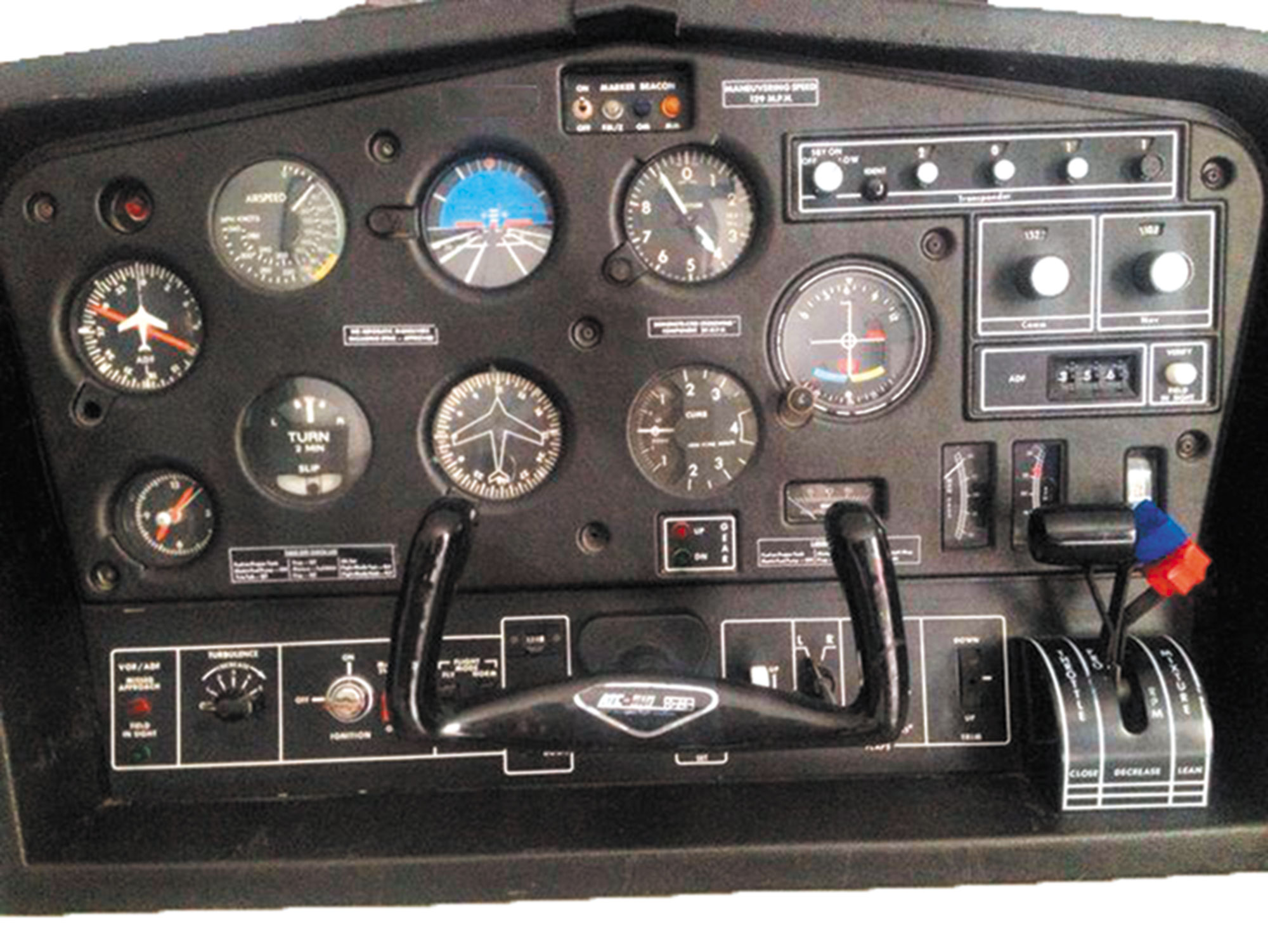
Yep: Too Much Sim Coverage

I read with dismay your November 2024 response to readers concerned about the amount of space devoted to sims. It was unmistakable that you have doubled down on sims given your response and that the November issue contained not one but two articles on sims. That amounts to 20 percent by page count of the issue devoted to sims.

I was recently on a national zoom meeting with about 100 pilots across the U.S. when the question of how many used sims came up. By actual zoom poll only 20 percent used sims or had ever used sims. This is to point out that clearly many of us do not have an $8500 budget or space to devote to a sim.

I understand they can be a part of continuing education but I don’t subscribe to your magazine for this much coverage. Elaine Kauh’s scenario-based articles yield far more education to a person like me than two articles on sims will.

Maybe you should consider launching another magazine called IFR-SIM magazine.

—Bill Bowser, Ellijay, Georgia

Yes, coincidentally, that issue did have more than its share of sim-related articles. On average we’ll have perhaps no more than six pages about sims per quarter and often just the three-page feature, Sim Challenge, which we strongly urge readers to at least arm-chair fly if you don’t have access to a sim.

While the cheapest certified sim we know of is Gleim’s at about $8500 new, there are other options. Watch for used sims. They’re out there, but need careful evaluation. Then, for proficiency (not legality, though, but we believe proficiency is more critical than legality), you can build a home sim for far less, especially if you’re willing to accept some modest compromises. 

But, a personal sim isn’t the only option. Many FBOs/training facilities have a sim that can be rented for far less than most of us pay to fly our own airplanes. 

For now we wouldn’t even consider a magazine devoted to sims. We don’t think there’s either enough demand nor enough material. And, yes, we have a lot of extremely useful and informative article types—beside the occasional foray into sims—that will continue to form the backbone of the magazine.

Lost Comm on Vectors?

I very much appreciated Mac Lawler’s article on “Thunderstorms and ATC” in the September 2024 issue of IFR. One question that I have had for a long time is what happens in a lost-comm situation when deviating with an open clearance like “Deviation left and right of course approved.” The article discusses the pilot’s responsibility to report to ATC when they are clear of the weather and can return to their original flight path, and that ATC will “clear you direct to a fix down the line.” What is ATC’s expectation of a NORDO aircraft that is now way off course, assuming IMC? 

Thanks for the great publication,

—John Tierney, Vonore, Tennessee

Every time that deviation clearance gets issued, the aircraft (should) get, “direct <FIX or POINT> when able.” Thus, if you go NORDO in the middle of that, you’re expected to go back to your course as soon as able. Obviously, you should squawk 7600. If you go NORDO because you lost all electricity, ATC will see the blip with no transponder and assume you lost everything. If you’re unable to complete that route/clearance, hopefully the pilot would try to find VFR conditions, descend and land. ATC will also call previous sector and next sector on your route, try guard or company, and follow the track. 

A more common scenario, though, is a temporary vector, such as for traffic. You should get an “expect” or other information, but controllers don’t always provide that when they’re busy. If you lose com then it’s less clear. Eventually, though, you must return to what you expect would be your next clearance.

Birth of Checklists

After reading Fred Simonds’ “Custom Checklists” in July 2024 and a reader question or two, I thought IFR readers might be interested in the accident that brought about the use of checklists as a standard in aviation safety. 

The crash of Model 299 (prototype B-17) at Wright Field, Dayton OH in 1935, was caused by the crew’s failure to perform a control check and attempt to takeoff with the controls locked. 

As a result of that accident, aviation officials created the Preflight Checklist.However, pilots refusal to use a preflight checklist causes history to repeat itself from time to time. A Gulfstream 4 crashed on takeoff at Bedford, Massachusetts, on May 31, 2014, with the controls locked. 

—George Shanks, Dallas, Texas

Editor, Pay Attention!

I love reading Elaine Kauh’s articles each month and find I get more out of them than anything else in the issues. I have two points. 

1. In the November 2024 article, “Taking The Beaten Path” she talks of the missed approach at KRYY and says, “top it all off with a parallel holding entry.” I can only see that a direct entry is possible. Am I missing something in the procedure?

2. I know the charts have to be shrunk to fit the pages but could something be done to make the print more legible? I can never read the fine print on the notes, missed instructions or radials and I would really enjoy “dissecting” the approach as Elaine describes. Maybe more bold font?

—Larry Levin, Long Island, The Bahamas

Oh, the irony! 

Elaine (and our editor) just glossed over that missed hold in the November 2024 article, just assuming it was like most others with the inbound leg being opposite the course to the holding fix. Then just one month later in December, Lee Smith wrote about gotchas and warns us to examine each approach looking closely for differences from what we might expect. Okay, lesson learned (hopefully).

Yes, you’re correct. That’s obviously a direct entry.

Yes, space for the approach charts is always a challenge. We’ve done what we can to make them as legible as possible, but when we need to put two charts on one page, they just get small. Since we’re reproducing the FAA Charts, we have very limited control over things like font to maybe make it larger or bolder. That’s the bad news.

But, there is good news coming. We are looking at ways to further improve legibility of the charts that we reproduce. Meanwhile, if you can download the electronic version of the issue, the resolution is there if you simply zoom in a bit.


We read ’em all and try to answer most e-mail, but it can take a month or more. Please be sure to include your full name and location for publication. Contact us at Frank@IFR-Magazine.com.

Ready to Sell Your Aircraft?

List your airplane on AircraftForSale.com and reach qualified buyers.

List Your Aircraft
AircraftForSale Logo | FLYING Logo
Pilot in aircraft
Sign-up for newsletters & special offers!

Get the latest stories & special offers delivered directly to your inbox.

SUBSCRIBE
