













Readback—December 2024

Gemini Sparkle

Key Takeaways:

  • Correctly reporting your ADS-B Out equipment type (Mode S/Extended Squitter vs. UAT) in flight plans is important due to UAT altitude limitations and for potential investigations, even if ATC may not differentiate in real-time.
  • The biennial transponder (§91.413) and IFR altimeter/static system (§91.411) checks are distinct and crucial for safety, ensuring proper transponder function, accurate altimetry, and leak-free static systems.
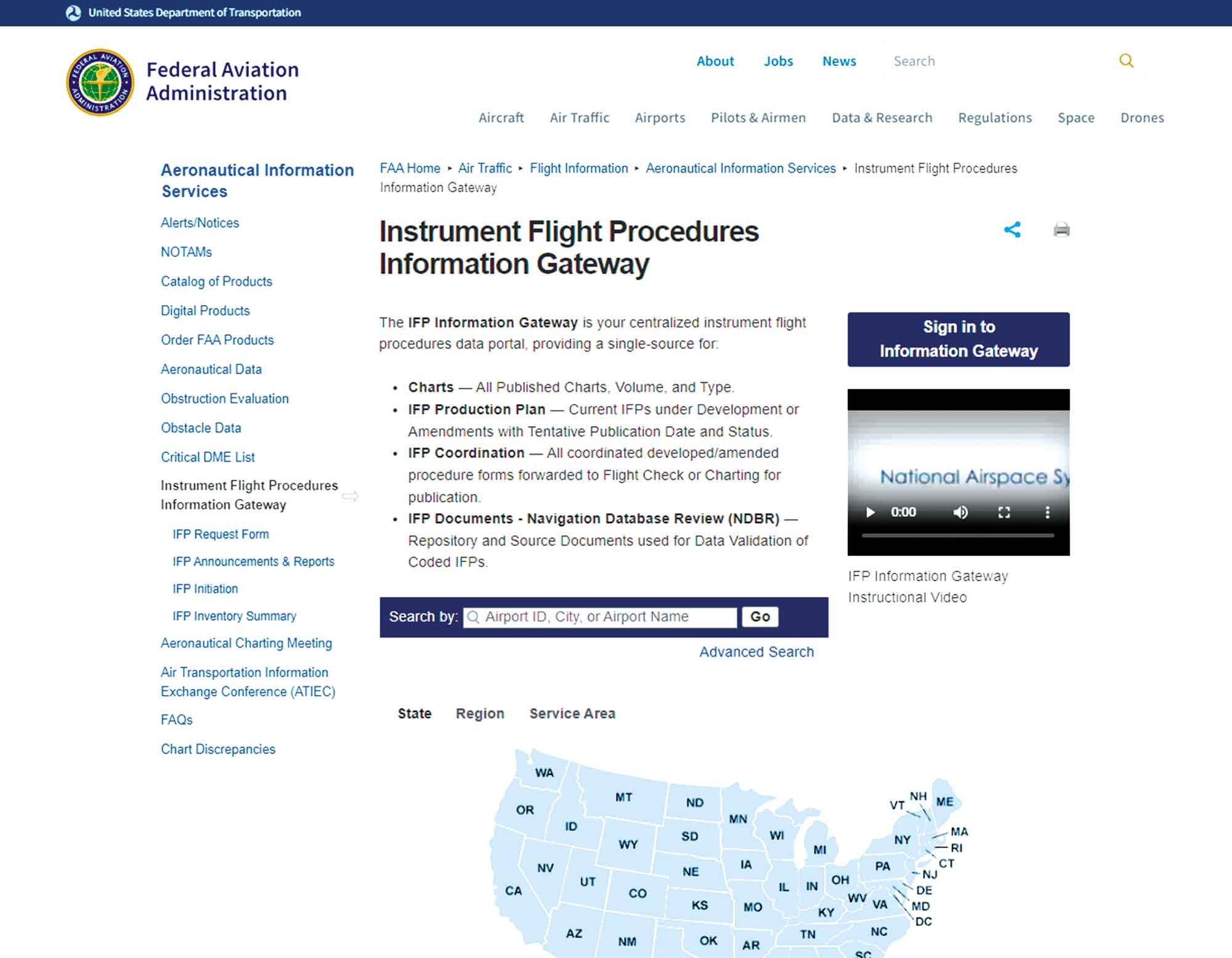
  • Pilots can utilize the FAA's Instrument Flight Procedures Gateway to set up automated notifications for planned and recent changes to instrument procedures at specific airports.
See a mistake? Contact us.

Block 10 For a Flying Club

Thank you for unraveling the mystery of flight plan block 10: “Equipment” in the May 2024 article, “Flight Plan Codes.”

I belong to a large flying club that does not track the type of ADS-B equipment in each airplane. For those that are Performance Based Navigation equipped, does it make any difference to ATC if I report the airplane has extended squitter when it is actually UAT, or vice versa?


You have a great magazine and I invariably learn something new in every edition.

—David Wallace, San Diego, California

David, we forwarded your question to Luca Bencini-Tibo, author of that article. His reply was quite detailed, so here’s a summary of his high points:

  • PBN is for navigation, today usually via GPS, and is independent from ADS-B concerns.
  • ADS-B Out (ADS-B In is irrelevant to ATC) is surveillance equipment, allowing ATC to see you better and know more about you.
    • ADS-B Out, as you mentioned, is achieved either through your transponder with Mode S and extended squitter, or via a Universal Access Transceiver, UAT
    • UATs should not be used above FL180, so if you’re flying up there you should have Mode S/ES.
  • For your “large” flying club, someone must be tracking maintenance (oil changes, 100-hour/annual inspections, IFR certs, ADs, etc.). Surely it would be relatively simple matter to do a little research one time to build a spreadsheet with the type of surveillance equipment in each aircraft and make it available to club members. 
  • Does ATC care whether you have Mode S/ES or a UAT? Probably not … until there’s an investigation for some reason (violation or accident perhaps). Best to just do the one-time research and do it correctly.

Hope this helps, David. Thanks for the question and for reading IFR.

DIY Transponder Checks?

I recently did my 24-month transponder check and it got me thinking Why do we still go through this nonsense? In the regs, §91.413 really needs a refresh, especially for VFR certification, but also for IFR. It made sense 20 years ago, but not with newer digital equipment with built in encoders and pressure altitude readouts.

Somehow it was okay for pilots to check VOR accuracy but not transponders? Every time I make initial contact with ATC I am given a verification of my code and an altitude readout. Why does that not suffice? The regulation is not onerous but it is unnecessary. Spending a couple hundred dollars and time scheduling, delivering, and picking up my plane is just another expense.

The avionics shops don’t get much or anything out of the process either. After their labor and test equipment certifications are done there is not much profit.

Am I missing something? Thanks for your time and great Magazine.

—Douglas Hornal, Bellingham, Washington

Douglas, sorry, but yes, you are missing something.

While §91.413 requires a transponder test every 24 months that conceivably could be completed by the pilot in cooperation with ATC—we won’t argue that point—you’re overlooking the tests required by §91.411.

If you operate under IFR, §91.411 goes further and is also required every 24 months. We tend to think of these as the same tests since they’re almost always performed by the same person at the same time, but §91.411 and §91.413 are different tests.

Think of it this way: §91.413 applies to all required transponders and has been mostly an “is it working” test for the transponder’s ability to respond to interrogation. However, now there’s ADS-B Out to check, which makes the trip to the shop for a 91.413 inspection more important.

Going further, §91.411 applies to airplanes and helicopters operating in controlled airspace under IFR and requires testing three things:

  • the static system to make sure there are no leaks (that could affect altitude indications)
  • each altimeter for accuracy
  • altitude reporting system (Mode C)

In our aging fleet, static-system leaks are not at all uncommon, so this test is important to catch and repair those leaks before they get bad enough to introduce—often undetected—altimeter errors and/or Mode C errors.

Testing the altimeters not only assures accuracy, but in our advanced aircraft with multiple altimeters, also checks agreement between the altimeters. 

Mode C systems only report altitude to a resolution of 100 feet. Thus, it’s possible (but unlikely) for there to be an error in the Mode C system encoder or wiring that goes undetected with ATC.

Finally, note that none of these inspections include the pitot system leak checks or airspeed indication checks for accuracy, although we commonly mistakenly think they do. Just as the static system should be checked for leaks, we strongly believe that the pitot system should be similarly checked for leaks and also include accuracy checks of each airspeed indicator. These can be done at the same time by the same inspector.

Monitor Airport Changes

In Lee Smith’s informative article “Is Your Data Dated” (October 2024), reminded me of a small point that can be made to help pilots learn a bit about changes to an airport.

The FAA actually makes it fairly easy to monitor airspace changes via automation if procedures at your favorite airport are about to change or have changed. Using the Instrument Flight Procedures Gateway page at https://www.faa.gov/air_traffic/flight_info/aeronav/procedures/, click on the “Sign In” button. It’s easy to establish an account. Then, in the search term in the Instrument Flight Procedures Gateway, enter the airport about which you want to remain informed.

Once the airport comes up, you’ll see a little green flag and words at the top of the page that says, “Notify me of changes to [airport]”. Click on the green words and you’ll get notices of planned and “just happened” changes to any of the published instrument procedures at that airport.

—Scott Dyer, Pleasantville, New York

Sim Challenge Inconsistency

Just wanted to say I continue to really enjoy the Sim Challenges. I look forward to the time on the simulator every time they are published. They make me do things I never do in real life flying in the Midwest and Southeast, namely ODPs, departure procedures, and holds.

For the August Sim Challenge, “I Dunno Alaska”, after practicing the PAJN (Juneau) LDA X RWY 8 normally, I practiced an emergency, low fuel approach below the MDA to a landing as recommended in the SIM Challenge.

My ELITE simulator allows my iPad running Garmin Pilot to connect to the simulator. This allows the map and approach chart in Garmin Pilot to show the position of the aircraft just as it would in flight. When descending below the MDA on the LDA approach, Garmin Pilot gave me numerous low-altitude alerts. The “Terrain, Terrain, Pull up, Pull Up” is very jarring, even in the simulator. A pop up terrain alert window came up multiple times on the iPad showing the expected site of a collision to either my right or left and remained until I dismissed it

I turned my 430W screen preference to show terrain. Interestingly, my 430W did not give me a terrain alert pop up until several minutes after Garmin Pilot. Thanks for what you guys do. Keep up the good work!

—Justin Graff, Belden, Mississippi

We read ’em all and try to answer most e-mail, but it can take a month or more. Please be sure to include your full name and location for publication. Contact us at Frank@IFR-Magazine.com.

Ready to Sell Your Aircraft?

List your airplane on AircraftForSale.com and reach qualified buyers.

List Your Aircraft
AircraftForSale Logo | FLYING Logo
Pilot in aircraft
Sign-up for newsletters & special offers!

Get the latest stories & special offers delivered directly to your inbox.

SUBSCRIBE