













Register

Should I Be Doing This?

Gemini Sparkle

Key Takeaways:

  • Pilots often face a disconnect between what is "legal" and what is "safe" in aviation, as regulations don't always cover all edge cases.
  • To navigate these situations, pilots should evaluate potential actions by imagining them in an accident report or through an examiner's eyes, ensuring they are ultimately defensible.
  • In critical situations where safety might require deviating from regulations (e.g., lost communication), declaring an emergency or taking reasoned, justifiable actions that prioritize the preservation of life will likely lead to understanding rather than punitive action.
See a mistake? Contact us.

Many times in these pages we’ve discussed the disconnect of safe versus legal. As our regs guru, Mark Kolber, in this issue covers lost-comm procedures and their examples of what’s legal versus what makes sense, I again mused on this.

While the regulations usually mandate safe actions, there are exceptions where safe isn’t legal and legal isn’t necessarily safe. How can you tell the difference? I have long used two different, but related, measures.


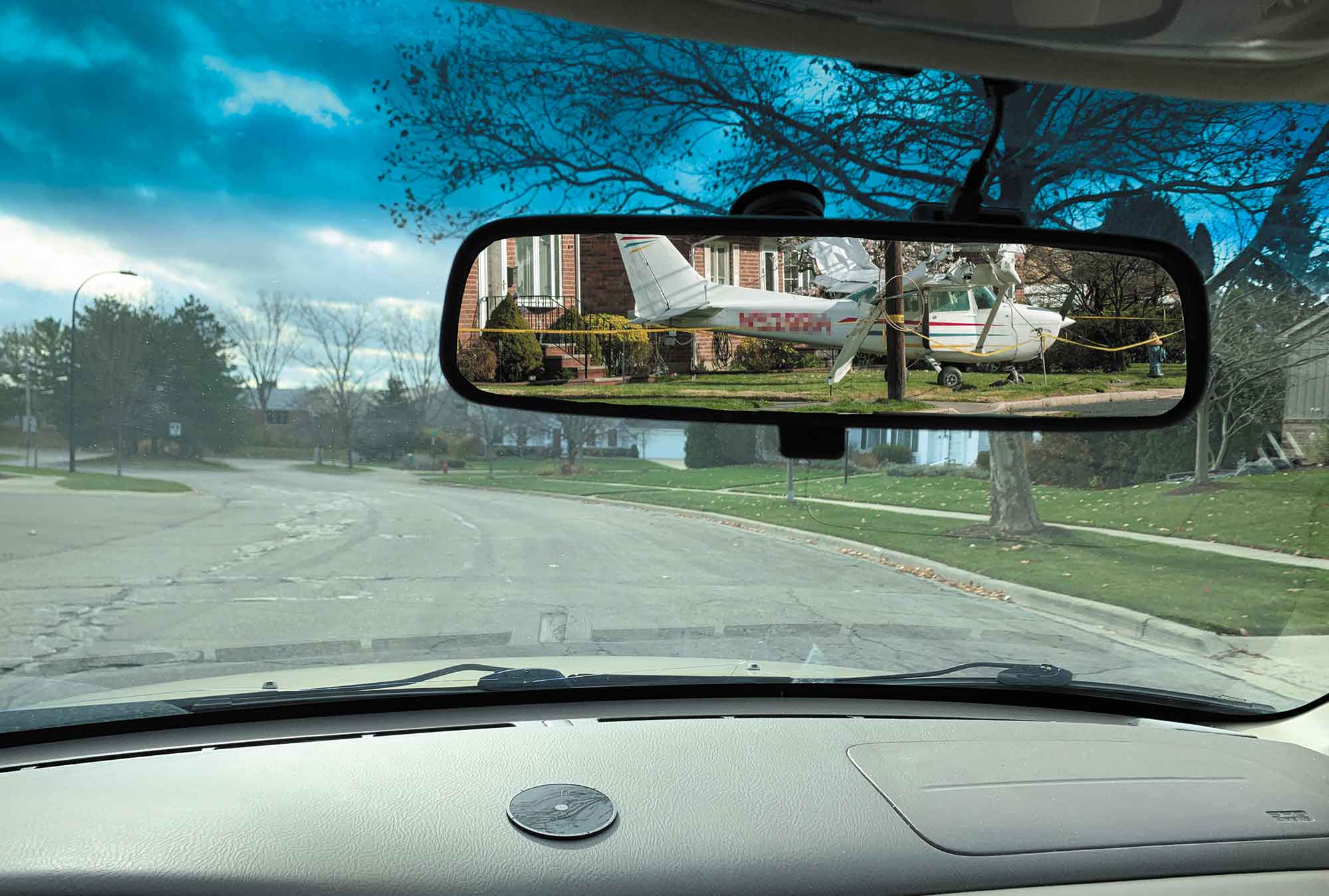
First, if I find myself doing something, well, questionable, I ask myself how the accident report would seem in the rear-view mirror of life. For example, “The airline-transport-rated pilot was flying at 50 feet AGL over his house and the landing gear snagged a power line…” isn’t defensible from either a safety or a legal perspective. But, perhaps, “The airline-transport-rated pilot was on an instrument approach to minimums of 200-½ with reported weather at minimums. As the pilot flared to land, the aircraft struck a deer and was substantially damaged,” resonates as both legal and, presumably safe (until the deer appeared, of course). 

Anyway, if the view in that imaginary accident-report rear-view mirror isn’t defensible, don’t proceed. Of course, the challenge is to have the awareness to ask about that view. We should all strive to maintain that level of situational awareness.

Next, I imagine an examiner in the right seat. How would that examiner evaluate my choices? Clearly in the buzzing example above, the examiner would go ballistic and should recommend certificate action. But, in the second example of the deer on the runway in minimum visibility, hopefully the examiner would see it as simply an unforeseen situation beyond my control.

Granted, both examples are extreme and resulted in damage. The first was clearly reckless and violated multiple regulations. Hopefully, a quick glance in that rear-view mirror would result in more reasoned behavior. But what about those edge cases that might seem safer and more prudent than the regulations, such as Mark outlines in his article on lost comm?

Your proverbial get-out-of-jail-free card is to declare an emergency. As long as your subsequent actions are defensible from a reasonable and prudent perspective, chances are high that you’ll avoid any certificate action. In fact, even if you don’t declare an emergency—lost comm and lost transponder from loss of electrical power—as long as you keep your head and proceed in a reasoned manner that you can explain and justify later, chances are you’ll just be congratulated by the investigator.

Remember, your biggest responsibility is to preserve life. In a no-win situation, choose the action that’s safest, or least dangerous. For example, part of my pre-takeoff briefing in my twin is, “…if I lose an engine I’ll abort the takeoff up until the gear is in transit, even if it means putting it back down on the runway and going off the end.” Bottom line: Do whatever you believe produces the best (or least bad) result so you can be there to argue your actions at a hearing—if even there is one.

Ready to Sell Your Aircraft?

List your airplane on AircraftForSale.com and reach qualified buyers.

List Your Aircraft
AircraftForSale Logo | FLYING Logo
Pilot in aircraft
Sign-up for newsletters & special offers!

Get the latest stories & special offers delivered directly to your inbox.

SUBSCRIBE