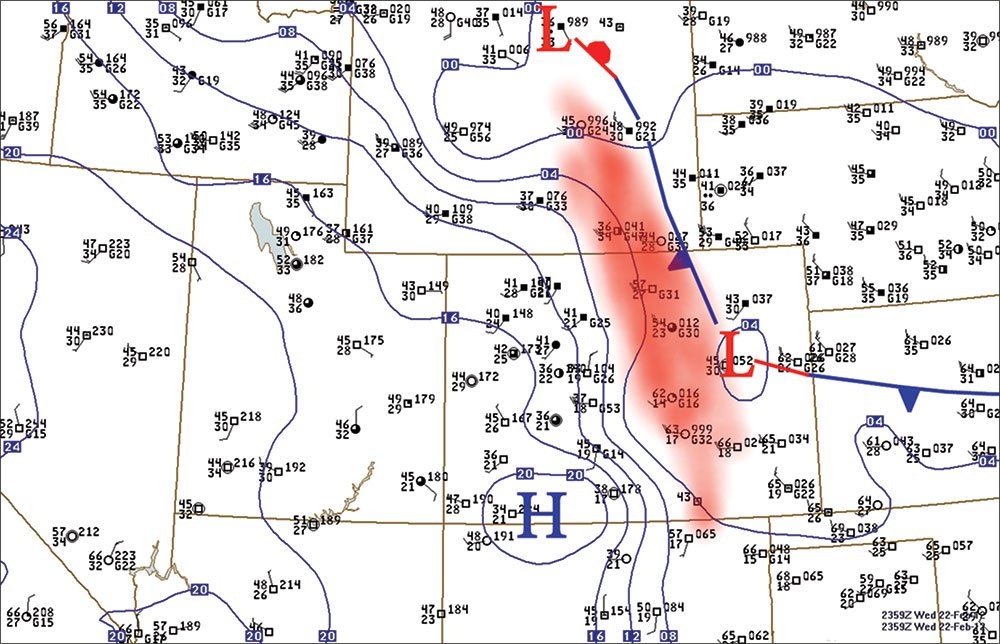
In 1892, E.B. Garriott wrote for the fledgling U.S. Weather Bureau, Following a period of intense cold the Chinook wind is a welcome visitor in the Northwest. The icy clutch of winter is loosened. The earth throws off its winding sheet of snow. Humanity ventures forth to inhale the balmy, spring-like air. Animate nature rejoices.
Chinook winds are powerful, warm, downslope foehn winds occurring in the Rocky Mountains, characterized by rapid temperature increases and most common between November and March.
These winds result from specific pressure gradients along mountain ranges and complex atmospheric flow dynamics involving supercritical and subcritical airflows.
Chinooks present significant aviation hazards due to severe turbulence, wind shear, hydraulic jumps, and dangerous rotor circulations, particularly downwind of mountain ranges.
Forecasting chinook effects is challenging, as surface charts are often deceptive and numerical models struggle to resolve their localized intensity and fine-scale phenomena, requiring pilots to have a conceptual understanding and review diverse data sources.
In 1892, E.B. Garriott wrote for the fledgling U.S. Weather Bureau, “Following a period of intense cold the Chinook wind is a welcome visitor in the Northwest. The icy clutch of winter is loosened. The earth throws off its winding sheet of snow. Humanity ventures forth to inhale the balmy, spring-like air. Animate nature rejoices.”
CREATE A FREE ACCOUNT
Sign up to keep reading
Create a free account to continue. Already a member? Sign in below.