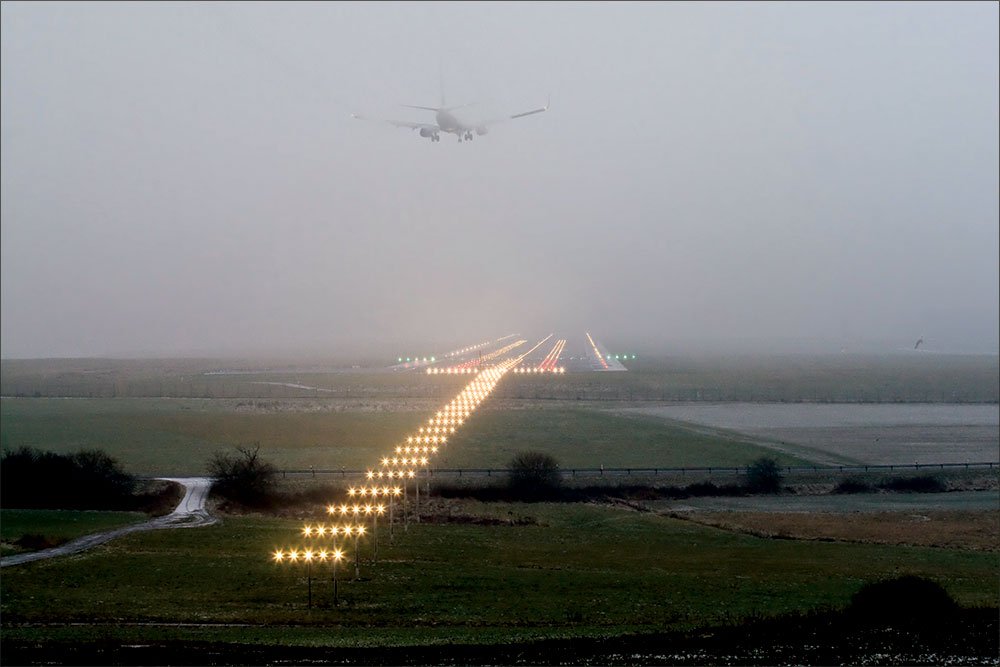
As much as we drill instrument students on the 10 items from FAR 91.175 (c) you could see to go below DA/MDA, in the real world if we see anything that might be part of the runway, we land on it. Its nearly certain that youll first see the ALS, allowing you to descend to 100 feet AGL and search for something resembling a runway.
Approach Lighting Systems (ALS) are essential for transitioning from instrument to visual flight, providing critical orientation, guidance, and a visual means to estimate flight visibility.
Various ALS configurations exist, with the ALSF-2 being the most common, featuring sequenced flashing lights, a 1000-foot roll bar, and red side-row lights to aid in runway acquisition and alignment.
Pilots must brief the expected ALS to correctly interpret visual cues, verify flight visibility in accordance with regulations like FAR 91.175, and effectively manage lighting adjustments via ATC or pilot-controlled systems.
As much as we drill instrument students on the 10 items from FAR 91.175 (c) you could see to go below DA/MDA, in the real world if we see anything that might be part of the runway, we land on it. It’s nearly certain that you’ll first see the ALS, allowing you to descend to 100 feet AGL and search for something resembling a runway.
CREATE A FREE ACCOUNT
Sign up to keep reading
Create a free account to continue. Already a member? Sign in below.