











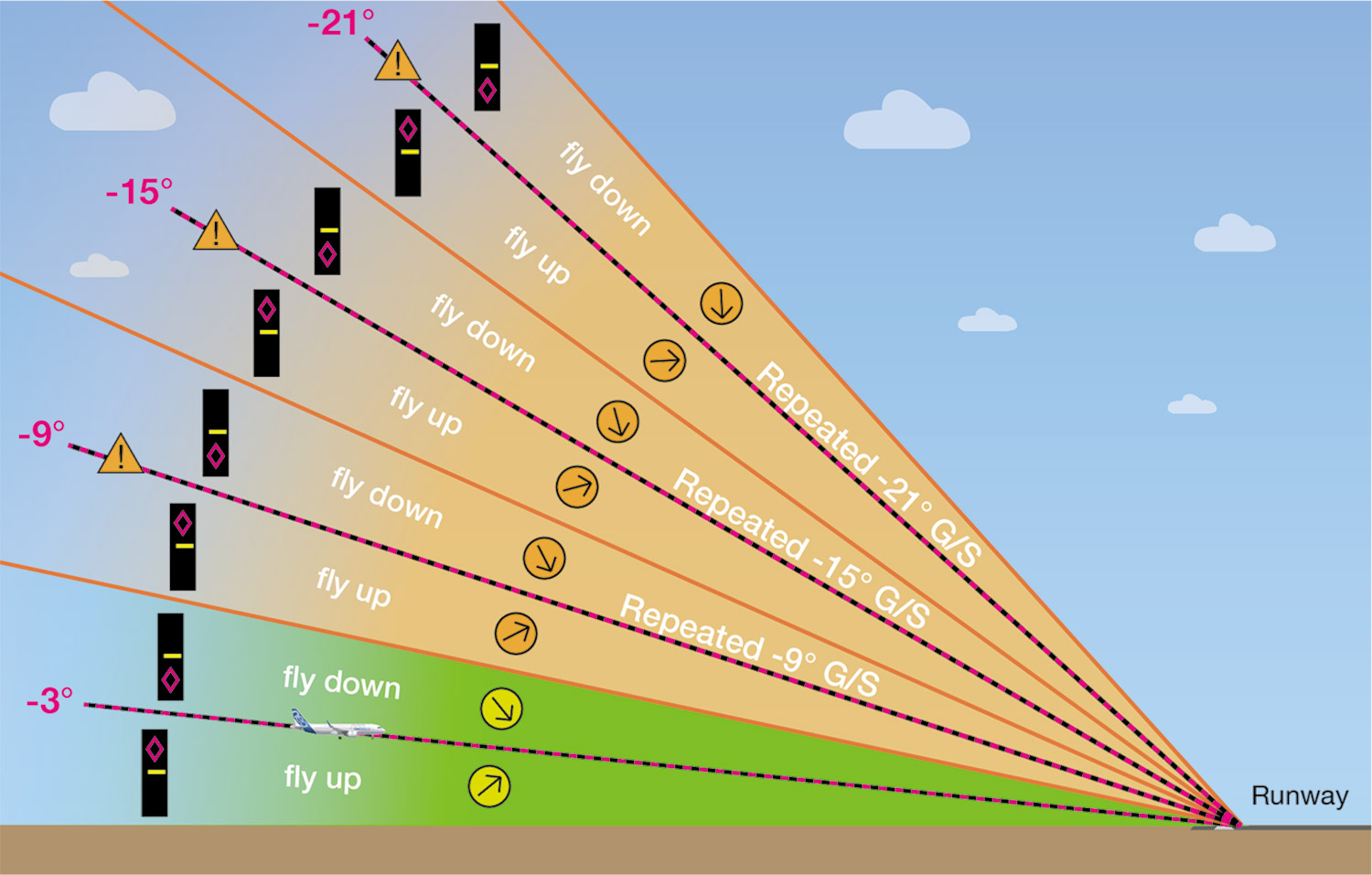


While instrument landing systems (ILS) see far less use today with the increasing development of RNAV (GPS) approaches, ILS approaches are still common and form the backbone of precision approaches available today. With the bonus of possible added precision beyond what GPS can provide and immunity from GPS interference, these approaches will remain a staple for years to come. In this world of GPS as king, we should remain proficient in ILS use and be careful to avoid their few gotchas.
Fundamentals
A complete ILS installation consists of the localizer and the glideslope, each being related but separate systems. The localizer transmitter and antenna array were developed in the late 1930s which was quickly followed by the glideslope transmitter and its antenna array. Both the LOC and GS are ground-based navigation aids as opposed to satellite-based aids. (See sidebar for GNSS glidepath guidance). The ILS uses a radio signal whose beam is formed by an antenna array.

