











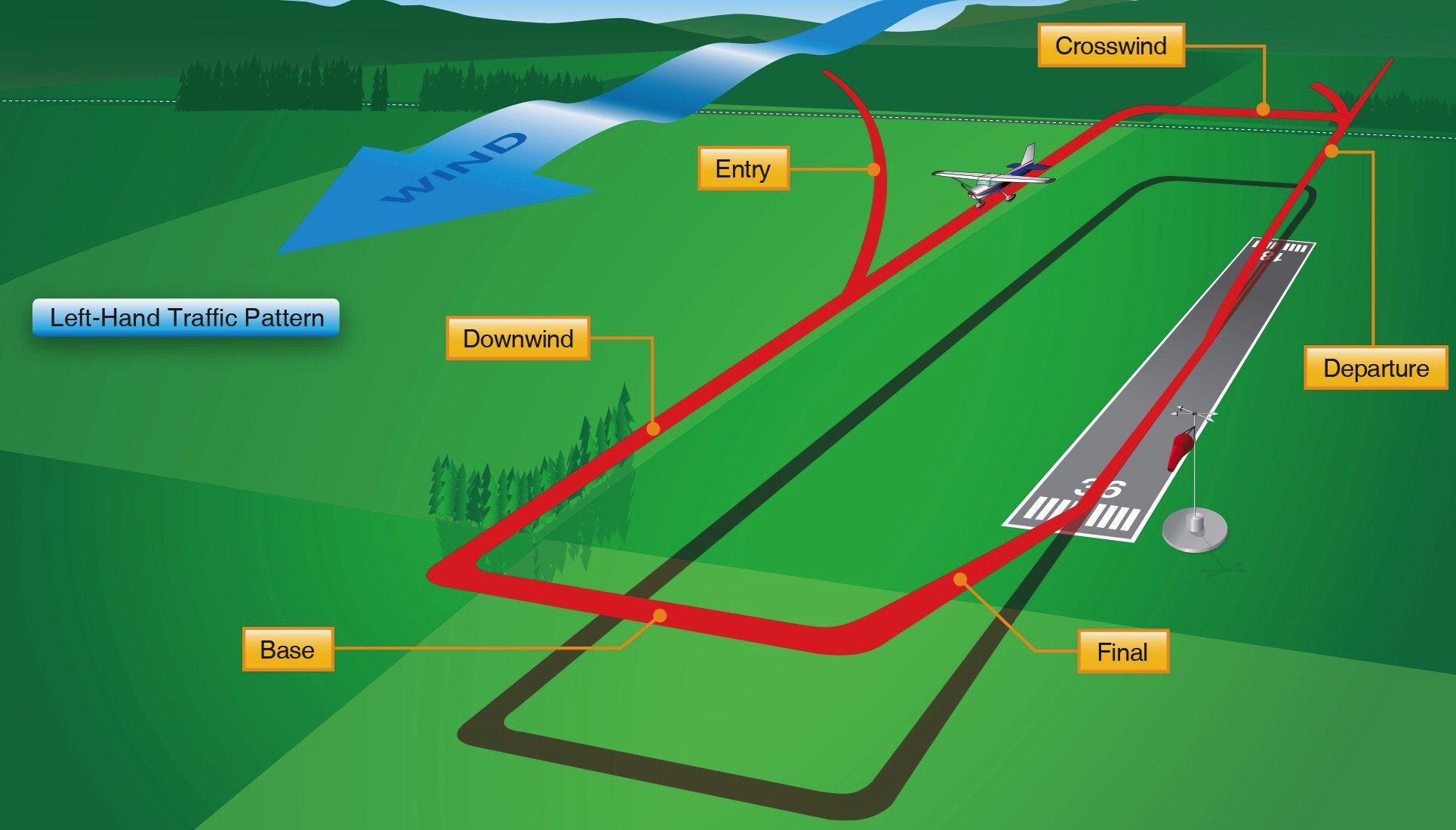


Likely you either practice approaches to non-towered airports or fly into airfields with part-time control towers. Non-towered airports, hotbeds of GA activities, present our greatest risk of a midair collision; a risk mitigated by a “disciplined adherence to procedures (proper entry into landing patterns, proper departure patterns) and proper use of the UNICOM frequency at uncontrolled airports.” (FAA Aviation News, May/June 2001) Therefore, it’s important that instrument pilots play nice around the pattern. The updated AC 90-66 covering non-towered airports specifically identifies instrument pilots, maybe because of some past misbehavior.
A Little Refresher
Default left turns, tiered altitude structure (500-foot helicopter, 1000-foot standard, and 1500-foot large aircraft pattern) and the basic box shape of a traffic pattern haven’t changed in decades. Yet there is a surprising amount of dispute on what the lines of a pattern are actually called. The AIM defines a departure leg as the “flight path which begins after takeoff and continues straight ahead along the extended runway centerline.” (4-3-2 c. 6.) This diverges from the explanation in the in the Pilot/Controller Glossary, which states the “components of a typical traffic pattern are upwind leg, crosswind leg, downwind leg, base leg, and final approach”—implying an upwind leg is synonymous with a departure leg. It isn’t.

