After World War I, the Treaty of Versailles forbade the defeated Germans to build any military aircraft. Nevertheless, perhaps because something forbidden — even a mere apple — becomes irresistibly desirable, Germany in the 1930s surpassed all other nations in aeronautical technology.
Technicalities: Unflinching
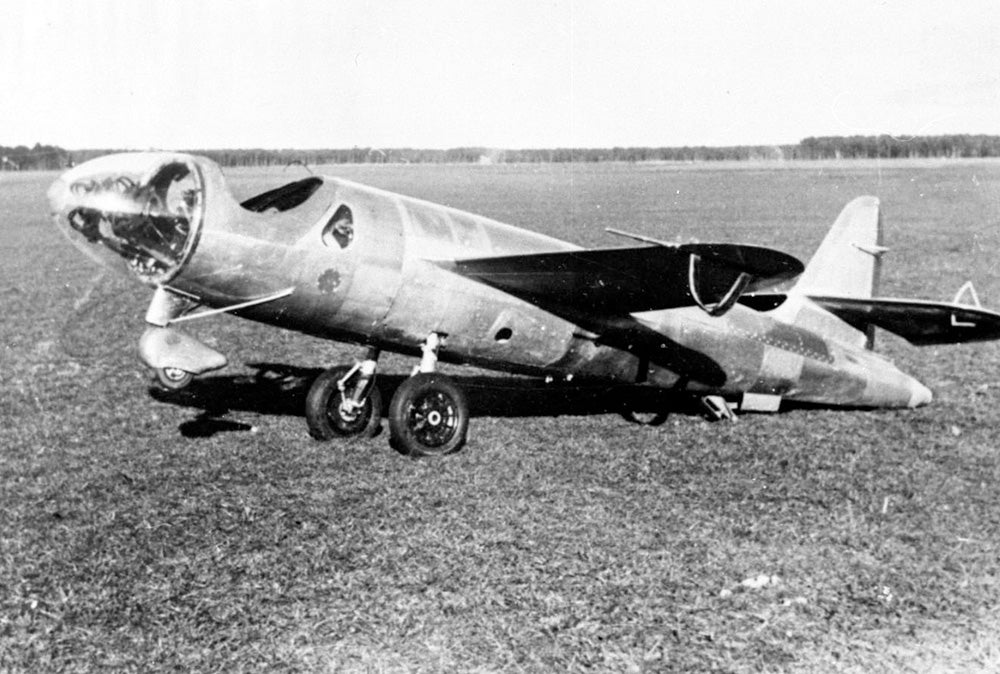
the minuscule He 176 rocket plane attained
400 knots within a minute of starting its
takeoff roll. Courtesy of Lutz Warsitz

Key Takeaways:
- Despite post-WWI restrictions, Germany rapidly advanced aeronautical technology in the 1930s, with designer Ernst Heinkel championing the development of reaction engines (rockets and jets) to overcome propeller limitations and achieve greater speeds.
- Daring test pilot Erich Warsitz was recruited for secret flight tests, initially working with Wernher von Braun on liquid-fueled rocket engines for aircraft propulsion.
- Warsitz achieved two historic firsts: piloting the tiny He 176, the world's first pure rocket airplane, and then the He 178, the world's first jet airplane, which flew on August 27, 1939.
- Warsitz's courage in testing these extremely dangerous, groundbreaking aircraft was pivotal in advancing aviation technology, solidifying his legacy as "the first jet pilot."
Key takeaways sponsored by Aviator Pro | Start Your Training ->
See a mistake? Contact us.