











Shortly after getting my Cessna 340, one afternoon I was flying an ILS into Modesto, CA, where we’d found a temporary home for our airplane. I’d recently achieved the heady milestone of 1000 hours total time and a whopping 100 hours of multi-engine time. Plus, I’d just gotten all my I’s (CFI, CFII, MEI), so, of course, I was truly a great pilot. I’d then gotten my initial training (ground and sim) in the 340, finished off with 25 hours with an experienced Twin Cessna instructor pilot. Humility wasn’t in my self-image that afternoon. By evening, it had returned with a vengeance.
Are You Ever Stable?
Shortly after getting my Cessna 340, one afternoon I was flying an ILS into Modesto, CA, where wed found a temporary home for our airplane. Id recently achieved the heady milestone of 1000 hours total time and a whopping 100 hours of multi-engine time. Plus, Id just gotten all my Is (CFI, CFII, MEI), so, of course, I was truly a great pilot. Id then gotten my initial training (ground and sim) in the 340, finished off with 25 hours with an experienced Twin Cessna instructor pilot. Humility wasnt in my self-image that afternoon. By evening, it had returned with a vengeance.
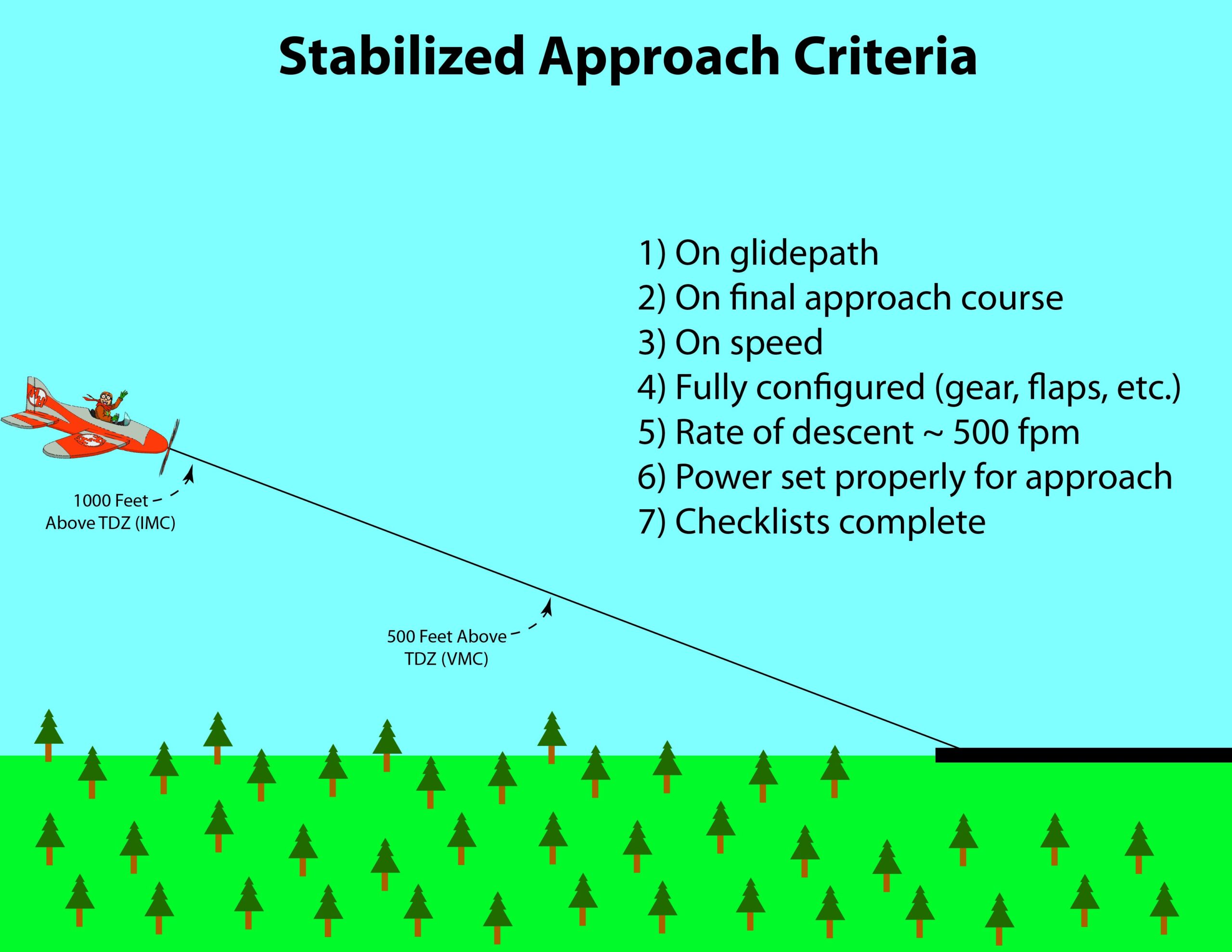

Key Takeaways:
- A personal flying incident underscored the critical importance of a stabilized approach, highlighting how even experienced pilots can be caught off guard by an unstabilized condition.
- FAA guidelines (AC 61-98C) define a stabilized approach with specific criteria and call for stabilization by 1000 feet AGL in IMC or 500 feet AGL in VMC.
- The author advises pilots to personalize these guidelines, accepting minor final adjustments as stability is achieved, but maintaining absolute adherence to critical safety parameters like lateral/vertical guidance and precise airspeed.
Key takeaways sponsored by Aviator Pro | Start Your Training ->
See a mistake? Contact us.

