













Register

More Weather Radar

In our last issue, we talked about the building blocks of weather radar-how it was developed, the basics of radio waves, problems with radar sampling, and the important differences between composite and base reflectivity. If you havent read that, I highly recommend you do so to get a good grounding in radar fundamentals. In this issue well take that knowledge and teach you a bit about interpretation.

Gemini Sparkle

Key Takeaways:

  • Storm severity is primarily determined by the atmospheric environment (instability, shear), making pre-flight checks like Storm Prediction Center convective outlooks essential for interpreting radar data.
  • Radar detects large water and ice particles (not water vapor or small cloud droplets), with high reflectivity (above 60 dBZ) and elevated high reflectivity indicating dangerous conditions like large hail and strong updrafts.
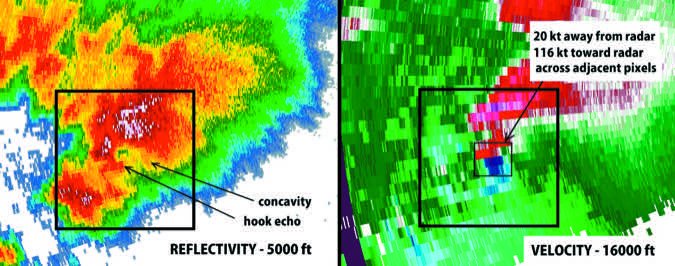
  • Key radar patterns to watch for include strong reflectivity gradients (marking updrafts), unusual concavities or hook echoes, V-shapes, and isolated intense cells, all signifying severe weather with potential for strong winds, turbulence, and tornadoes.
  • Recognize radar limitations such as airborne attenuation and data delays in cockpit displays; use radar for planning, but prioritize pre-flight information, visual observation, and ATC for real-time flight safety.
See a mistake? Contact us.

In our last issue, we talked about the building blocks of weather radar—how it was developed, the basics of radio waves, problems with radar sampling, and the important differences between composite and base reflectivity. If you haven’t read that, I highly recommend you do so to get a good grounding in radar fundamentals. In this issue we’ll take that knowledge and teach you a bit about interpretation.

My background is primarily in meteorology and I hold a certification on the NEXRAD radar, so with this grounding in weather radar I can teach you some tricks and techniques to help you make sense of what you’re seeing. I hope this article helps you think like a forecaster so you can adapt to the data available in the cockpit and make decisions that will assure a safe flight. You can also use the information just sitting at home as a storm rolls into your city.


Ready to Sell Your Aircraft?

List your airplane on AircraftForSale.com and reach qualified buyers.

List Your Aircraft
AircraftForSale Logo | FLYING Logo
Pilot in aircraft
Sign-up for newsletters & special offers!

Get the latest stories & special offers delivered directly to your inbox.

SUBSCRIBE