











In spring 2003, I was halfway through my flight training. My instructor and I were chatting about air traffic control. He’d just visited the local TRACON. From his description, I pictured a dark room filled with the intense chatter of men and women half-lit by radar scopes and blinking sci-fi lights.
A few short years later, I’d be a radar controller in one of those dark rooms. My imagination hadn’t been far off. In due course, I also became a tower controller.
Well Structured ATC

Key Takeaways:
- The U.S. air traffic control (ATC) system is a layered and complex network designed to ensure the "safe, orderly, and expeditious flow of aircraft" using a universal rulebook and standardized phraseology.
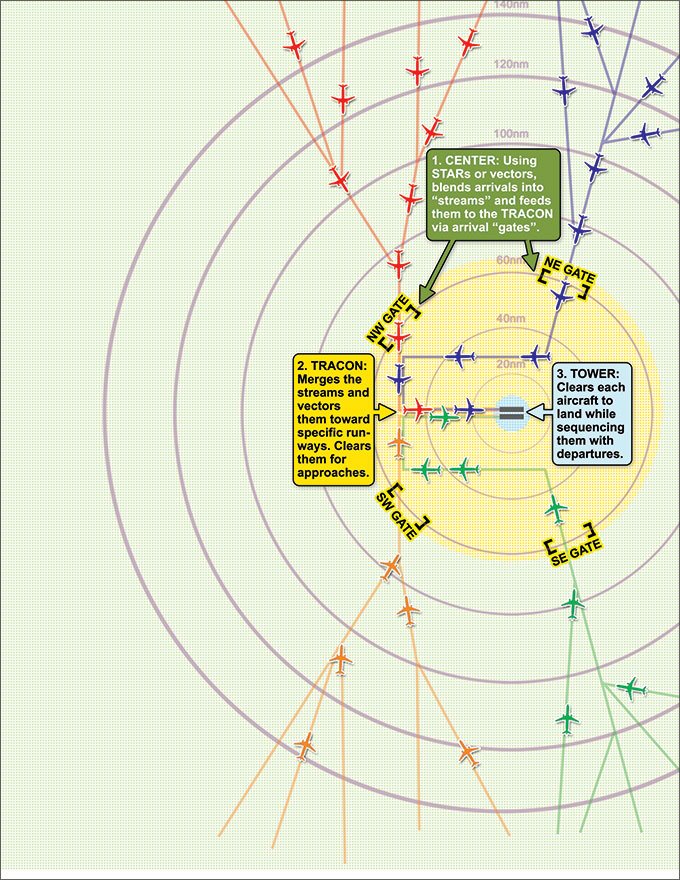
- ATC operations are divided among three main types of interconnected facilities: Control Towers (managing runways and immediate airport airspace), Terminal Radar Approach Controls (TRACONs, handling denser traffic near major airports), and Air Route Traffic Control Centers (ARTCCs, managing vast en route airspace).
- Each facility plays a specific role, coordinating extensively through letters of agreement and verbal communication to sequence and separate aircraft, guide them through different phases of flight, and manage traffic flows.
- The system relies on a combination of advanced automation (such as ERAM for flight plan management and data transfer) and human coordination, including voice landlines, to ensure seamless operation, particularly during system failures or weather challenges.
Key takeaways sponsored by Aviator Pro | Start Your Training ->
See a mistake? Contact us.

