











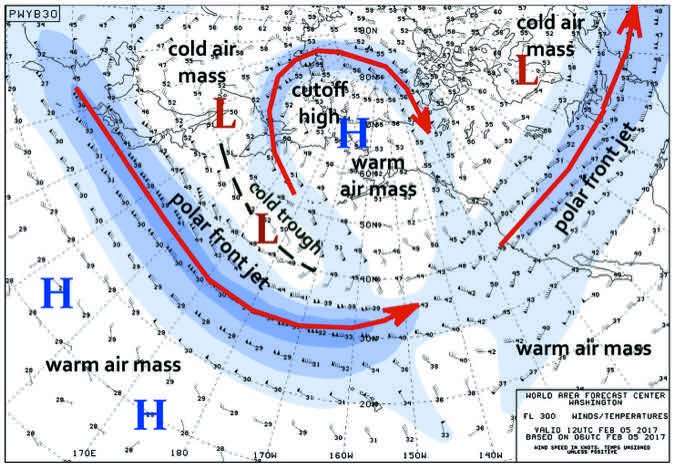


In Wx Smarts, we go beyond the basics you learned in flight school. Sure, you know that winds are stronger at higher altitudes, and that you find fronts near where the jet stream is, but why? What makes the winds flow from the southwest at 20,000 feet when there’s a storm system approaching? Let’s go past the usual weather playbook to look at why the given upper-air pattern is in place. The principles here form a sort of bedrock that will help you understand weather around the globe, which is a big ace card to have when you’re flying into exotic and unexpected locations, whether it’s Waterloo, Iowa or Zurich, Switzerland.
It’s All in the Temperature
Temperature is ultimately what drives all the weather patterns, from seasonal changes to the daily shift in patterns for your cross-country flight. This was recognized as far back as the 17th century, when British scientist Edmond Halley identified heat as the powerhouse that fuels the weather patterns. His efforts helped spark Royal Navy efforts to investigate the trade winds and develop better ways to forecast them for quick trips across the ocean. Edmond Halley, by the way, is the same guy who located that comet bearing his name.

