














Register

Rock and Sump

Gemini Sparkle

Key Takeaways:

  • Always sump aircraft fuel before every flight to check for water (appearing as clear bubbles below fuel) and to ensure the correct fuel type (e.g., blue for 100LL).
  • Be aware that water can collect in outboard portions of fuel tanks or other sections without strainers, especially in airplanes with little dihedral.
  • To dislodge this hidden water, rock the airplane's wingtips back and forth, wait a few minutes for the water to settle into the sump areas, and then thoroughly sump the tanks.
See a mistake? Contact us.

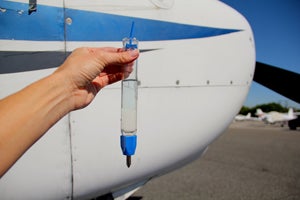
Piston engines don’t run well on water or anything other than what they’re designed to burn. Water can be present in the fuel from condensation, particularly if the tanks are not kept full. Since water is heavier than fuel, it collects at the lowest points in the tanks, where the fuel strainers are located. That’s why we sump the fuel before starting up the airplane. If your airplane runs on 100LL, you’re most likely also used to looking for that slight blue color in the fuel tester to ensure that the correct type of fuel is in the tanks. Any water in the fuel tester will appear as a clear bubble below the blue fuel.

None of this should be news to you. But in some airplanes it may not be enough to simply push a fuel tester into a strainer to remove the water from the fuel. Airplanes, particularly those without much dihedral such as the Cessna Cardinal, may collect water in the outboard portions of the wings or other sections where there are no strainers.


To prevent corrosion and the potential for major problems over time, you can simply grab one wingtip and rock the airplane back and forth a few times. This way, any water that is stuck in the outboard portions of the fuel tanks will slosh down into the fuel sump areas. Wait a few minutes before sumping the tanks after rocking the wings to allow the water to settle.

Sumping is not to be taken lightly. A few years ago I flew with a student in his Mooney. The airplane had not been flown for a couple of months. When we sumped the fuel, I noticed that there was no color. We continued sumping several fuel testers full of water from each wing before we finally got to the good stuff.

Sump the airplane each time you fly, make sure the right type of fuel is in the tanks and rock the wings regularly to dislodge any water that may have settled away from the strainers.

Read more Flying Tips here.

Pia Bergqvist

Pia Bergqvist joined FLYING in December 2010. A passionate aviator, Pia started flying in 1999 and quickly obtained her single- and multi-engine commercial, instrument and instructor ratings. After a decade of working in general aviation, Pia has accumulated almost 3,000 hours of flight time in nearly 40 different types of aircraft.

Ready to Sell Your Aircraft?

List your airplane on AircraftForSale.com and reach qualified buyers.

List Your Aircraft
AircraftForSale Logo | FLYING Logo
Pilot in aircraft
Sign-up for newsletters & special offers!

Get the latest stories & special offers delivered directly to your inbox.

SUBSCRIBE
