














Southwest Airlines Pilot Makes Exceptional Emergency Landing

Gemini Sparkle

Key Takeaways:

  • Engine failure on Southwest Flight 1380, caused by a sheared fan blade and suspected metal fatigue, resulted in an emergency landing in Philadelphia.
  • One passenger died after being partially sucked out of a shattered cabin window due to engine debris.
  • The pilots' calm and professional response, along with effective air traffic control coordination, minimized casualties.
  • The incident prompted increased metal fatigue inspections on Boeing 737 engines across multiple airlines.
See a mistake? Contact us.

Embed from Getty Imageswindow.gie=window.gie||function(c){(gie.q=gie.q||[]).push(c)};gie(function(){gie.widgets.load({id:’fLj6a9mDRGlP-YPRwFUNkw’,sig:’VoUiF6fIb-tIATKuBjjtw3u3qrfgbf3JLZ6mgnUo2fI=’,w:’728px’,h:’364px’,items:’947834098′,caption: true ,tld:’com’,is360: false })});

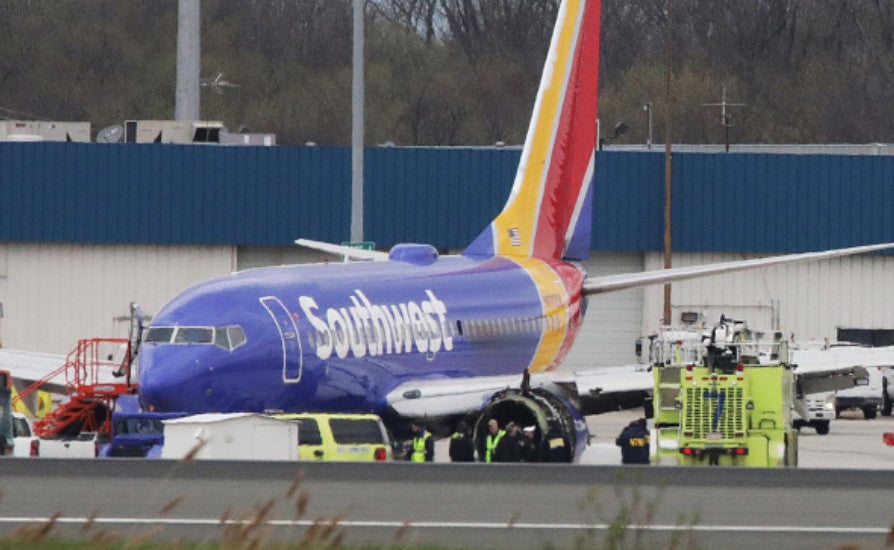
A catastrophic engine failure caused Southwest Flight 1380 to make an emergency diversion to the Philadelphia International Airport (PHL) yesterday. The Boeing 737 was on its way from New York to Dallas when the engine exploded. Robert Sumwalt, chairman of the National Transportation Safety Board, already announced that a fan blade sheered off of the CFM engine and that metal fatigue was suspected. A similar event happened to a Southwest flight two years ago. As a result, the engines of many Boeing 737s from multiple airlines are now undergoing additional metal fatigue inspections.


A window in the main cabin of Flight 1380 shattered when debris from the engine hit it, and a female passenger was nearly sucked out. According to witness reports, passengers and flight attendants were able to pull the woman back into the cabin. However, unfortunately, she died from the wounds she suffered in the process, becoming the first fatality from any incident with a U.S.-based airline since 2009, an impressive record considering the millions of people who travel domestically and internationally each year.

Despite the harrowing event, Captain Tammy Jo Shults, a former Navy F/A-18 pilot, and her copilot remained completely cool. In a recording between them and ATC, the pilots calmly explained their situation and what they needed to safely make the emergency descent. The cooperation between ATC and the other pilots approaching PHL also demonstrates the professionalism that exists in our national airspace system.

Shults’ demeanor and quick action saved all but one of the 149 people onboard despite their apparent lack of attention to the safety briefing. Pictures released on Facebook and Twitter revealed that many passengers were wearing their oxygen masks incorrectly by not covering their noses.

Pia Bergqvist

Pia Bergqvist joined FLYING in December 2010. A passionate aviator, Pia started flying in 1999 and quickly obtained her single- and multi-engine commercial, instrument and instructor ratings. After a decade of working in general aviation, Pia has accumulated almost 3,000 hours of flight time in nearly 40 different types of aircraft.

Ready to Sell Your Aircraft?

List your airplane on AircraftForSale.com and reach qualified buyers.

List Your Aircraft
AircraftForSale Logo | FLYING Logo
Pilot in aircraft
Sign-up for newsletters & special offers!

Get the latest stories & special offers delivered directly to your inbox.

SUBSCRIBE
