











My first time landing on something other than pavement was with an instructor in a Piper Arrow. I had yet to earn my private certificate, and we were out doing a combination of familiarizing me with a complex/high-performance airplane and transporting some items for the FBO. The most memorable occasion also involved an instructor: We were returning from a spin-training session to a grass strip just 288
Going Soft
My first time landing on something other than pavement was with an instructor in a Piper Arrow. I had yet to earn my private certificate, and we were out doing a combination of familiarizing me with a complex/high-performance airplane and transporting some items for the FBO. The most memorable occasion also involved an instructor: We were returning from a spin-training session to a grass strip just soaked by a passing shower. He landed long, locked the 152s brakes in standing water and we sluiced our way to within 30 feet of the fence at the far end. More than anything, that was a demonstration of how not to do it.
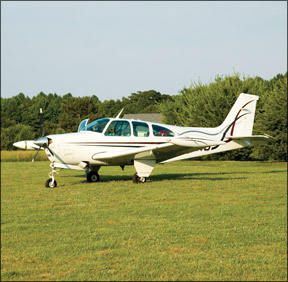

Key Takeaways:
- Always verify the condition of a grass strip, ideally with a low pass, to identify potential hazards and assess the surface before landing.
- For landing, use full flaps to achieve the slowest possible touchdown speed on the main gear, and maintain pitch authority to gently control the nosewheel's contact with the turf.
- During ground operations and taxiing, avoid using brakes, maintain constant movement, and keep the nosewheel light (pitch control fully aft) to protect the propeller and nose gear.
- For takeoff, perform a rolling run-up, maintain a nose-high attitude with the nosewheel just off the ground during acceleration, allowing the aircraft to fly off naturally, then accelerate in ground effect before climbing.
Key takeaways sponsored by Aviator Pro | Start Your Training ->
See a mistake? Contact us.

