













Register

Climb Via Clearances

Gemini Sparkle

Key Takeaways:

  • "Climb/descend via" clearances were introduced to alleviate airspace and frequency congestion by simplifying ATC communication and streamlining aircraft routing in terminal areas.
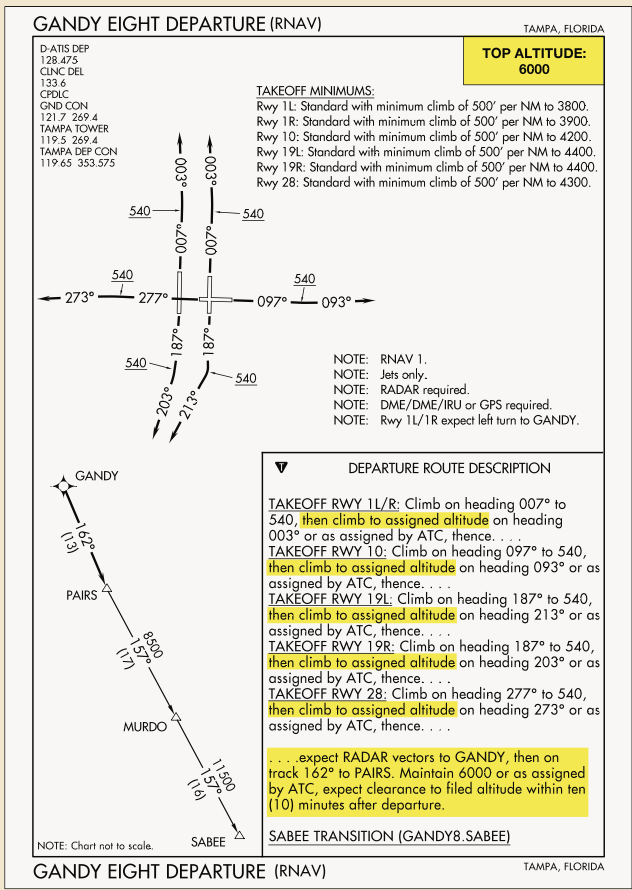
  • These clearances are specific to Standard Instrument Departures (SIDs) and Standard Terminal Arrivals (STARs), requiring pilots to comply with published lateral paths, speed, and altitude restrictions.
  • An ATC-issued altitude clearance overrides published SID altitudes (but not ODP restrictions), though speed and lateral path requirements generally remain unless explicitly canceled.
  • The implementation initially led to cockpit confusion and altitude busts, highlighting the need for pilots to carefully manage published and ATC-assigned altitude restrictions and inform ATC upon handoff.
See a mistake? Contact us.

There’s only so much airspace. Without minimizing separation requirements—as was implemented with reduced vertical separation minimums, or RVSM, in certain airspace—there’s no way to squeeze more aircraft into a finite area. At the same time, there are only so many ATC facilities and controllers staffing them. Anyone who has flown down the U.S. East Coast lately probably has seen how the Jacksonville ARTCC is often saturated to the extent it forms an ATC bottleneck.

Meanwhile, more and more aircraft of all sizes and performance capabilities are plying the airways, many of them all wanting to arrive at LaGuardia at 1700 local. Increased frequency congestion is one outcome, as anyone trying to get VFR flight following near a major terminal on a good-weather Friday evening likely can attest. Some things have to give.


Ready to Sell Your Aircraft?

List your airplane on AircraftForSale.com and reach qualified buyers.

List Your Aircraft
AircraftForSale Logo | FLYING Logo
Pilot in aircraft
Sign-up for newsletters & special offers!

Get the latest stories & special offers delivered directly to your inbox.

SUBSCRIBE