











Cessna 421C Corroded Oxygen Line While in process of checking the individual oxygen masks during an annual inspection and five-year O2 bottle re-certification, a technician heard a very faint sound of a gas leak in the overhead interior paneling of the aircraft. After pulling the headliner for a closer inspection and plumbing in low-pressure nitrogen for troubleshooting, the technician narrowed down the “hiss” to a line just forward of the cabin door (p/n 5100107-46). To access this line, which passes through a structural beam in the overhead, it 288
Just Plain Broken
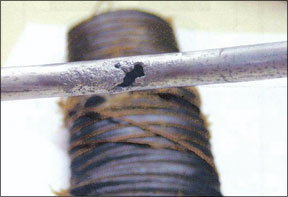
While in process of checking the individual oxygen masks during an annual inspection and five-year O2 bottle re-certification, a technician heard a very faint sound of a gas leak in the overhead interior paneling of the aircraft. After pulling the headliner for a closer inspection and plumbing in low-pressure nitrogen for troubleshooting, the technician narrowed down the "hiss" to a line just forward of the cabin door (p/n 5100107-46). To access this line, which passes through a structural beam in the overhead, it was necessary to drill out approximately 40 rivets securing a thin honeycomb panel to the overhead (structure). Above the panel is the ducting supplying the cabin Wemac vents. The line as pictured has been cleaned up and the corrosion removed for clarity. The corrosion occurred where the ducting passed under it. The ducting was removed to facilitate line removal, and was found to be totally deteriorated.

Key Takeaways:
- A corroded oxygen line was discovered in a Cessna 421C during an annual inspection, attributed to deteriorated adjacent ducting.
- Technicians are cautioning about frequently found cracked flap handle support mounts in Piper PA28 aircraft, suspected to be caused by fatigue.
- A newly installed oil cooler in a Robinson R22-A helicopter cracked after only 16.8 hours, leading to oil loss and an unscheduled landing.
- New through-bolts in a Continental IO-520 C engine have repeatedly snapped shortly after torque application, indicating a potential defect in a specific lot of parts.
Key takeaways sponsored by Aviator Pro | Start Your Training ->
See a mistake? Contact us.

