











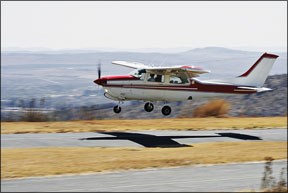
The short-field approach and landing is something we all learned as student pilots. Commercial students get to show some additional expertise. However, both the private and even commercial requirements are a bit relaxed and dont really prepare us for that maximum performance, white-knuckle experience of putting the airplane down on that postage stamp some joker sadistically calls a runway. 288
True Short Field Landings
The short-field approach and landing is something we all learned as student pilots. Commercial students get to show some additional expertise. However, both the private and even commercial requirements are a bit relaxed and dont really prepare us for that maximum performance, white-knuckle experience of putting the airplane down on that postage stamp some joker sadistically calls a runway. When we say "short-field approach and landing," were really talking about two entirely different situations with different techniques. Obstacles at the approach end of the runway determine how we will make the approach-whether we can "drag it in" a few feet off the ground, or if we have to make a steep descent to clear the FAAs standard-issue 50-foot tree right at the runway threshold.

Key Takeaways:
- Mastering short-field landings requires consistent practice of precision approaches, focusing on stable patterns, exact airspeed control (especially in slow flight), and managing glidepath with power and pitch to achieve a stabilized approach.
- Specific landing techniques vary based on obstacles: temporary power boosts to clear obstacles or "dragging it in" low with power and ground effect for unobstructed runways, both aiming for a firm, minimum-airspeed touchdown.
- After landing, maximize stopping distance by applying full back elevator, raising flaps, and braking effectively; for short-field takeoffs, precise VX control is paramount to clear obstacles efficiently.
Key takeaways sponsored by Aviator Pro | Start Your Training ->
See a mistake? Contact us.

